
In the second episode of Creativity Gym, we look at how to improve our ability to generate new ideas.
We know creativity to be:
the ability to see and connect different "dots" to solve a problem or produce new ideas.
We are hunters of "dots" and builders of bridges between them.
Everything depends on the number and spread of the dots available to us and our ability to connect them.
How can we increase the dots we can connect, and what do they depend on?
First of all, they depend on our expertise, knowledge and experience: the more we know, the wider the pool of concepts we can draw on.
Physical and mental journeys, through reading and culture, also offer us useful new elements.
Finally, we can discover new dots by looking at things differently.
This is a superpower that computers and artificial intelligence cannot replicate, and it develops by training lateral thinking.
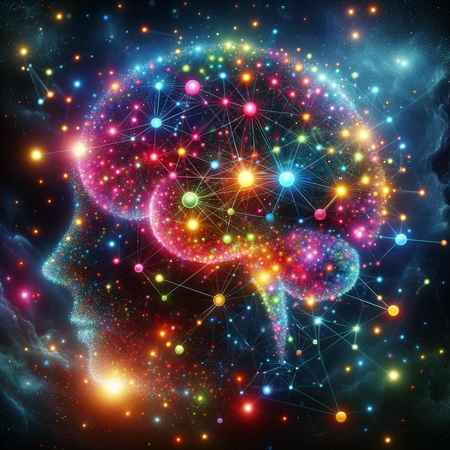
But the secret to going further is randomness 🍀
Chance generates new dots and unexpected elements that join our neural constellation and can create unique combinations.
The Scottish biologist and pharmacologist, Alexander Fleming, returned from a holiday in 1928 to discover that a bacterial culture he had inadvertently left open in his laboratory had become contaminated with mould.
Before throwing the culture away, however, the observant Fleming noticed that the bacteria inside it had disappeared.
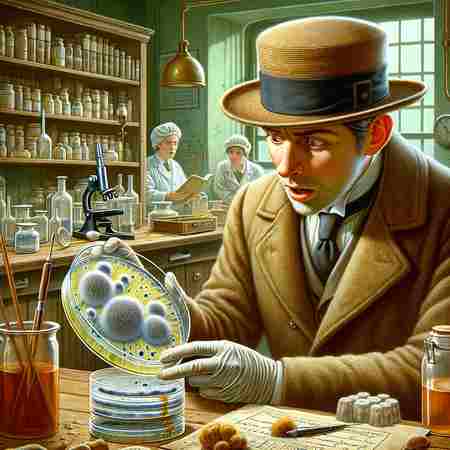
Intrigued by what had happened, he immediately isolated the type of fungus responsible for killing the bacteria and tested it in different situations. The results were always the same: the fungus killed the bacteria.
This led to Penicillin an antibiotic that has saved many lives, effective in treating pneumonia, meningitis and a great many infections.
It all began with a chance event and, thanks to Fleming's ability to connect the dots, became an extraordinary idea and discovery.
The history of science and research is full of cases like Fleming's, but in business too, many great ideas have emerged by chance.
How can we make use of randomness without having to wait for a chance event?
How can we improve our ability to connect the dots?
We can use tools that generate random stimuli and practise connecting the different elements within the context that interests us.
In the workout video, we started with the need to generate ideas for a new advertisement for De Cecco pasta.
With that context in mind, we used my lateral thinking tool www.wandery.it to generate two random words.

By imagining connections between the words and the context, we came up with two different campaigns.
By constantly practising these techniques, we improve our ability to connect random elements with those already in our minds, enabling us to generate useful ideas for our business and our lives.
Below is the outcome of the exercise. Watch the video at the beginning to understand how we got there.

Chance favours the prepared mind. - Louis Pasteur
I think that, generally, luck is distributed fairly evenly among people, with exceptions in both directions.
The difference then comes from our minds, our powers of observation and our ability to stay in the present to make the most of a chance event.
Often even an unfortunate event can become a great opportunity: it forces us to take paths we would otherwise never have followed, along which we find valuable rewards.