
What does Empathy mean? What does it mean to empathise with another person?
The word comes from Greek: "en", within, and "pathos", feeling.
Exploring the concept further, we can reach a complete definition of Empathy:
the ability to recognise and understand another person's feelings, thoughts and emotional circumstances; the ability to identify with others and understand their perspectives, concerns and moods in general.
The most fitting synonym is probably "identification": being able to put yourself in another person's position, or, as the English say, put yourself in someone else's shoes.
It is often incorrectly used as a synonym for rapport. Empathy can help create rapport, but it must be present on both sides; rapport can also arise without necessarily understanding the other person's emotions.
Examples include a teacher understanding a pupil's difficulties (also remembering their own school days) and rephrasing and adjusting the message. Another is a good doctor who puts a patient at ease and understands the discomfort and problems caused by illness.
But what is empathy for?
Human beings are born empathetic and develop this sensitivity as they grow because it helps our species survive and cooperate. It creates social attachment and keeps people together.

Indeed, to build relationships of trust and friendship, understanding others' thoughts is fundamental.
Empathy helps us make moral decisions and fight injustice.
For individual survival, it can help detect danger signals, such as sensing the intentions of a stranger or intruder; empathy can save our lives.
In business, the ability to identify with the customer is a fundamental marketing attitude. Only in this way can we understand and anticipate people's needs, expectations and desires.
But you do not need to be a multinational or marketing guru to use empathy in business. A good local shopkeeper knows each customer well and understands their moods and thoughts, offering each the best products and solutions.
How to improve empathy and the art of listening
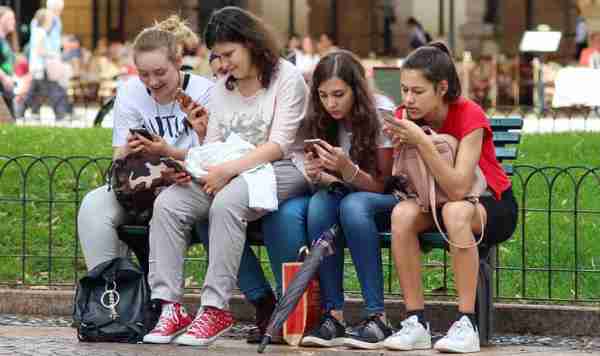
We are in the midst of the digital revolution, and the sources and stimuli we receive daily exceed what we can manage. Research from the University of Michigan analysed how today's university students are 40% less empathetic than students in the 1980s and 1990s.
The major danger is increasing isolation and the atrophy of our empathy muscle.
How often do we see groups of young people who are not talking to each other, but all bent over smartphones! Or adults at dinner focused on the latest notifications instead of conversation!
How can we train empathy?
The first thing to do is listen! Practise listening.
As the Greek philosopher Zeno said:
The reason we have two ears and only one mouth is that we should listen more and speak less.
Or, quoting the Dalai Lama:
When you speak, you only repeat what you know. When you listen, you can learn something new.
When talking to others, try to maintain eye contact: look them in the eyes.
Eye contact increases focus and our ability to stay concentrated on the other person. Definitely do not pick up your phone!
Be curious and ask the other person questions to show interest; passive listening is not enough.
Attention is the rarest and purest form of generosity. — Simone Weil
Another important exercise is suspending judgement: practise listening without judging and do not let cognitive biases deceive you.
As Mother Teresa of Calcutta said:
If you judge people, you have no time to love them.
Several studies have shown that the following activities can increase empathy:
- spending more time with different people
- reading novels
- teaching
- meditating
Regarding meditation, mindfulness techniques train awareness of the moment and can certainly help us be more present and listen fully to another person.
In Denmark, empathy education has been compulsory since 1993: one hour a week for all pupils aged 6 to 16.
According to the Danish school system, learning empathy is extremely important because it helps build relationships, prevent injustice and succeed at work.
Great leaders are those who can listen and understand people's needs.
Empathetic young people tend to be more successful because they focus on goals more than their narcissistic peers.
It may be no coincidence that Denmark is among the world's happiest countries every year, according to the UN's World Happiness Report.
Empathy underlies a fundamental human moral teaching (which also transcends religions):
do not do to others what you would not want done to yourself
To apply this rule, simply put yourself in the other person's shoes.
Storytelling and empathy
One characteristic of empathy is that it extends beyond other people to animals and invented, imaginary characters.
The power of a film or novel lies in its ability to transport the audience into the characters.
It does not matter whether they are real or belong to a fairy tale.

When using Storytelling and communicating through stories empathy plays a key role in generating emotions.
Emotions imprint information and experiences indelibly on our brains.
Story writers need characters to strike a chord with readers so they can identify with them completely.
Human beings are made to identify with stories: that is how knowledge and traditions have been handed down over the years.
Neuroscience has discovered that an important part of empathy can be attributed to mirror neurons (find out more).
In business, empathy is widely used to activate the audience's emotional sphere.
Think of the effect of hearing from someone who faced the same problem and difficulties as us, then solved them through a particular service or product.
Using an endorser with a story that resonates with the audience is also very powerful.
Empathy also activates the effects identified years ago by psychologist Robert Cialdini: liking, unity and social proof.
Too much and too little empathy
Excessive identification can lead people to put others' feelings and perspectives above their own, feel empty or alienated, and develop generalised anxiety or depression.
Doctors, journalists and humanitarian workers constantly confront others' pain. They may show high empathy or, conversely, exhaust it and become insensitive to others' suffering.
Could we say too much empathy is harmful?
We probably need to find a balance between understanding and reading other people's feelings and the temptation to take everything upon ourselves.
Empathy in companies
Research by Ernst & Young on the American labour market found that 90% of workers with empathetic managers reported a positive effect on team productivity, loyalty to the company and, not least, job satisfaction.
A leading advocate for the importance of empathy is certainly Satya Nadella, the CEO who restored Microsoft's success through the path of kindness.

Satya Nadella
In an interview, Nadella said:
"Empathy is not a soft skill. In fact, it is the hardest skill we learn: relating to the world, relating to the people who matter most to us."
Quotes and aphorisms about empathy
Peace cannot be maintained by force; it can only be achieved through understanding others. — Albert Einstein
If there is a secret to success, it lies in the ability to understand the other person's point of view and see things through their eyes as well as our own. — Henry Ford
When preparing to speak to people, I spend two-thirds of my time thinking about what they want to hear and one-third thinking about what I want to say. — Abraham Lincoln