What skills do you need to become a good marketing manager or, more generally, a marketer?
SWOT and PEST analysis, segmentation, positioning, targeting, studying the buying cycle and the marketing mix (4Ps) are just some of marketing's technical concepts. In the past, I thought this technical knowledge was fundamental and sufficient to make someone a good marketer.
Over time, observing great entrepreneurs — who often had little theoretical knowledge of marketing — and talented marketers, I realised that technical skills are not enough. A series of soft skills is also needed to create what we might call a "marketing mindset". I am not referring to the usual soft skills such as teamwork, communication, stress management and so on.
Besides, technical skills are easier to learn because they are easier to identify than aptitude.
In my humble opinion, there are 4 specific soft skills for the modern marketing manager:
- Empathy
- Powers of observation
- Creativity
- Courage
The order is not important, but I have tried to suggest a logical sequence: empathy and observation allow us to analyse the market, creativity generates new ideas, and courage helps us put them into action.
Empathy
The first soft skill of a marketing professional isEMPATHY:
the ability to put yourself in another person's position until you understand their thoughts and feelings.
Like a good actor, the marketer must use the Stanislavski method and identify with the customer so deeply as to reach their most intimate, hidden side.
We must learn to understand how human beings dream, decide and act.

To emphasise this point, Jeff Bezos is said to have always had an empty chair left in meetings to symbolise the customer's chair as a reminder of empathy.
One advantage of illustrating our target audience through customer personas is that it helps the whole company identify with them.
It is much easier to put yourself in the shoes of Mario, a 45-year-old office worker from Brianza, married with two young children and a passion for travel and model-making, than to identify with a man with a family from northern Italy.
Empathy helps us improve the customer experience and discover new needs and desires to fulfil.
But this last activity also requires another ability: observation!
Observation and curiosity
The power of observation is the second essential ability of a successful marketer.
By observation, I mean the ability to spot weak signals in society before others do, to understand how values, behaviour, beliefs and lifestyles change, and consequently how desires and needs change.
We need to be curious and observe the world around us carefully: what people do and say in supermarkets, on the underground, on social media and so on.
Good comedians, particularly stand-up comedians, are artists at experiencing the world around them and finding material to rework in original, entertaining ways.
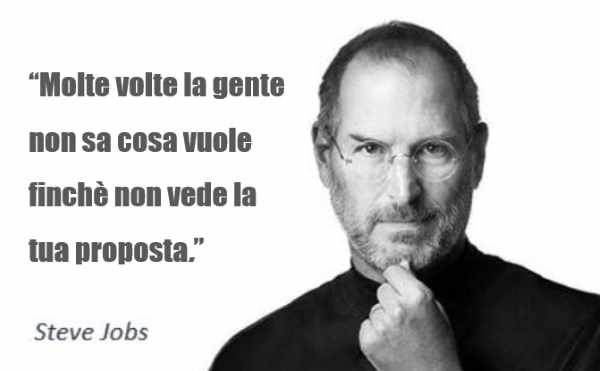
The iPhone is said to have originated from Steve Jobs observing people using their mobile phones in a café.
The poor User eXperience and the inability to use the phone with one hand provided the inspiration for creating the first modern smartphone.
This ability is what allows us to innovate. If we ask customers what they want, we remain on familiar ground: a user-centred approach, useful for improving UX. It rarely produces disruptive innovation. At product level, it generally moves only in more quantitative directions — also called market-pull or incremental innovation — such as higher resolution, more power, wider bandwidth or a larger screen in inches.
Henry Ford's famous phrase captures the concept well:
If I had asked my customers what they wanted, their answer would have been: faster horses. -Henry Ford-
Curious observation must allow us to see things from a different perspective in order to identify new meanings (design-driven innovation) and new propositions to bring to the market.
There are many examples of design-driven innovation: the Swatch watch, the Walkman, the Wii, the iPod, the iPhone and so on.
You know the famous Pocket Coffee chocolates!
The idea came in the 1960s from noticing that Autogrill motorway service stations had no cafés!
So they created a product for motorists and people who worked on the road, such as lorry drivers, who needed a little boost to get through their work.
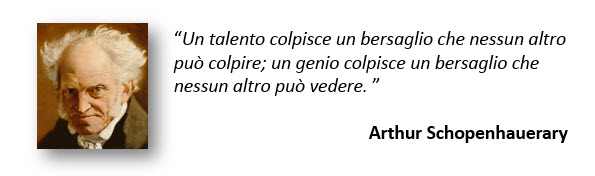
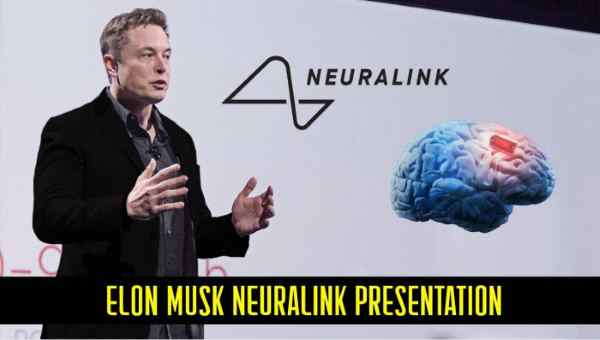
People such as Steve Jobs, Jeff Bezos and Elon Musk saw before others what people might want and what could improve their lives.
We must be the ones to make a proposition to the market, whether a new technology (technology push) or new meanings (design driven), rather than wait to be explicitly asked.
But devising a proposition requires the third ability: creativity.
Creativity
The third ability is CREATIVITY. Perhaps the most obvious, but fundamental for a marketing professional.
After analysing through empathy and observation, we need to come up with ideas.
In a perfectly informed market dominated by "me too" strategies, making a difference becomes increasingly difficult.
As professionals, we must understand that with artificial intelligence, in the near future, the battle for knowledge against computers is lost before it begins.
Creativity is our salvation.
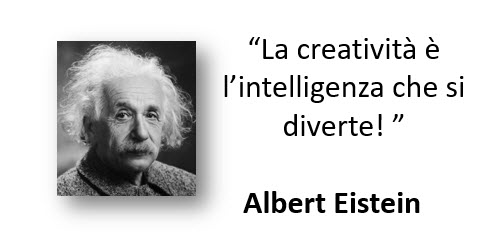
Do you feel as creative as a German registry office clerk? Sorry to German registry clerks, but I could not think of another example; besides, Einstein was one of them 😊.
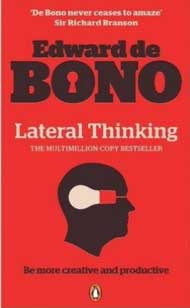
The truth is that creativity can be improved and trained. The great Edward de Bono, the psychologist who first explored the creative process in depth and in a practical way, said:
Intelligence is something we are born with. Thinking is a skill that must be learned. -Edward De Bono-
I have collected everything I have learned and tried on the subject in the article linked here: Creativity: how to develop and train it.
Courage
My fourth and final ability is COURAGE. The courage to stand by your ideas, believe in them fully and act.
We have analysed the market through empathy and observation and generated ideas through creativity. Now we need to get practical and put them into action.
Action has always mattered, but in my view it matters more today than yesterday. Only by trying can we discover new territory; only by getting lost do we find new paths.
We need visionary Execution: acting while paying attention to what happens around us, so that we can use chance in our favour. We can also call this the mindset of Incidental Marketing.
In my view, this is the area with the most opportunities: everyone is good at talking, but action reveals the best.
The queue outside the room where things get done is always the shortest! 😊
A strong ally of courage is optimism. Seeing the glass as half full, as my grandmother used to say, is essential if we are not to lose heart at the first difficulties!
The higher the peak you want to reach, the longer your rope of optimism must be.
The cost of being wrong is less than the cost of doing nothing. - Seth Godin -
Conclusions
These are, IMHO, the 4 abilities a marketer and digital marketer need. I will have forgotten several, but I consider these the most important and wanted to keep the number manageable enough to remember.
Let us remember that, in practice, the digital marketer is simply a marketer working in a digital world and therefore must inherit the basic skills.
I think emotions and creativity are the critical success factors for the marketer of the future. Starting from these soft skills lets us view the marketing management process from a more emotional perspective.
When recruiting for marketing and digital marketing roles, I suggest assessing the qualities discussed so far, alongside the familiar hard and soft skills.