
Does a manager really need to know the work of the people they lead? Must they be able to do it themselves, or is understanding how different skills fit together enough?
That is the question I was left with after John Elkann's interview with Nikolay Storonsky, co-founder and CEO of Revolut, at Wave in Turin. A conversation that starts with music and reaches one of management's most controversial questions: how close to execution do you need to be to lead a company well?
The manager as an orchestra conductor
Using the analogy of an orchestra, Elkann asked Storonsky:
‘To be a good conductor, do you need to know how to play the instruments, or is it enough to understand their sound and how they fit together?’
Nikolay's response:
‘In my view, you should be able to play almost all the instruments, although not necessarily at the level of your team members. To understand who is playing well, you need to have tried playing that instrument.
Getting into the details and understanding in depth how things work is essential. This trains your ear to recognise nuances and distinguish a good result from a mediocre one.
If you have never played an instrument, how can you know whether the person playing it is doing a good job?’
This is exactly the point I find interesting: you do not need to be the orchestra's best musician, but you do need to train your ear. And to do that, according to Storonsky, you need to have tried playing.
The same philosophy is embraced by many founders of tech companies, such as Elon Musk
Napoleon or Braveheart?
In my view, this is one of management's most controversial questions: should a manager be the general on the hill or the fighter on the front line leading the army's charge? Napoleon or Braveheart?
I use these two images as metaphors. On one side is the leader who observes the battlefield from above, holds the whole picture together, chooses priorities and coordinates resources.

On the other is the leader who joins the action, knows the tools, tackles problems alongside the team and also leads by example.

There are pros and cons, of course, and much depends on the market and the company's stage of development. Distance can help you see the overall picture, but it can also make you lose touch with reality. Being in the field helps you understand problems, but can lead you to take care of everything and become a bottleneck.
Why I prefer a leader in the field in startups
Personally, I think that in startups or sectors with a high level of technological innovation, the second model is the most effective. When products, tools and markets change quickly, knowing the work in depth helps you evaluate choices and recognise quality.
This is also true in marketing. Having tried to build a campaign, read the data or work on a piece of content helps you ask better questions, understand difficulties and distinguish good execution from a convincing presentation.
Be careful: the fact that a manager knows the technical details does not mean they should do the specialist's job; a manager should not take over. It is a serious mistake for a manager to intervene constantly in every detail, risking taking away people's autonomy and slowing down the work.
Know the work so you can lead it, without having to do it.
That is the balance I find most convincing: go into enough detail to understand, assess and help, while giving people the space to apply their expertise.
In my own modest experience, I started with a background in marketing and economics, and when I entered digital marketing in the early days of the Internet, I felt a strong need to understand the underlying technical side. That is why I learned to write code and understand how technological architectures work, not to become a developer or systems administrator. It proved very useful for communicating better with technical departments and understanding their work.
Arrigo Sacchi, the jockey and the horse
Personally, I have never had much faith in a football coach who has never played football.
Arrigo Sacchi used to say:
‘I didn't know that to become a good jockey you first had to have been a horse.’
Yet he had played amateur football. He had not been a champion, but had solid experience on the pitch.
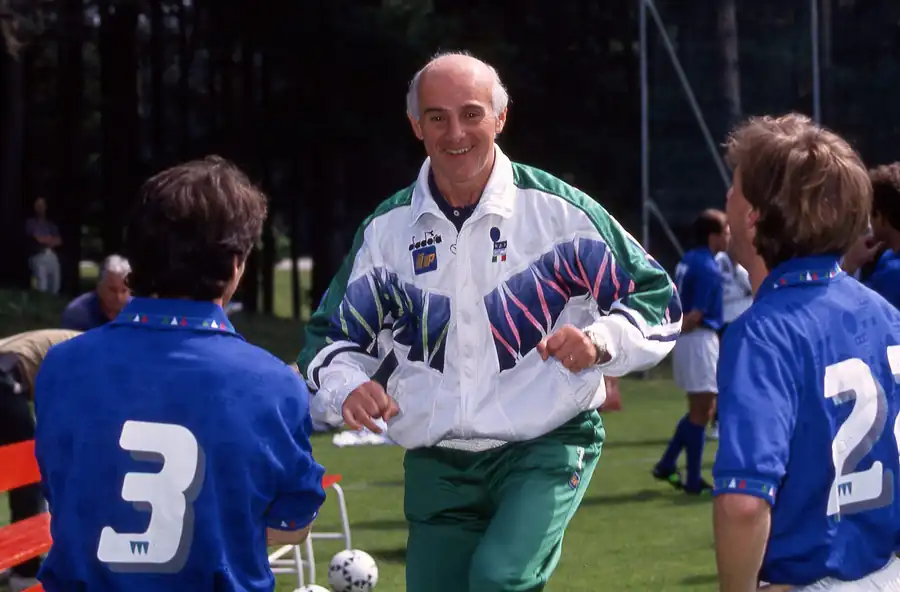
Perhaps we could rephrase the great Arrigo's maxim by saying that, to become a great jockey, you do not need to have been a horse capable of winning the Prix de l’Arc de Triomphe! 😉
This brings me back to Storonsky's orchestra: you do not necessarily have to play at the level of your team members. But you do need the tools to understand what they are doing and recognise when they are doing it well.