
What elements make an idea, a message or a post go viral?
Two brothers, Chip and Dan Heath, who teach business at two prestigious American universities, Stanford and Duke, asked themselves this question.
The two professors examined advertising campaigns, urban myths and compelling stories that had spread virally. They identified common characteristics and drew up a list of elements that can increase an idea's chances of spreading — or, as their book title puts it, "Made to Stick": stories designed to be sticky, to remain in our minds.
 The book Made to Stick
Let's look at these key elements for spreading our ideas.
They identified 6 elements:
- Simplicity
- Unexpectedness
- Concreteness
- Credibility
- Emotions
- Stories
1 - Simplicity of the message
We need to get to the heart of the idea and use few but meaningful words! We need to be compact.
This is also a characteristic of many proverbs and maxims that have survived across eras and generations.
Analogies also make a message immediately understandable because they use a familiar context to explain an unfamiliar one.
2 - Unexpectedness
This is essential to capturing our audience's attention.
Capturing people's attention is harder than ever today: we live in a world full of stimuli and interruptions that overwhelm our ability to process incoming messages. Through a kind of Darwinian adaptation, our brains begin filtering out anything that follows patterns we consider of little use.
The most striking example is advertising and banner blindness. We have learned the standard formats and placements, so we pay less and less attention to their messages.
The solution? Be unpredictable, break patterns, surprise people!
Unexpectedness is also fundamental after capturing attention. Once we have it, we need to create interest. To do so, we must generate what the authors call a "knowledge gap", which creates curiosity and moves people from attention to interest in our message.
This dynamic also matters greatly in teaching, keeping students engaged until the end instead of losing them after the first concepts.
3 - Concreteness
When explaining our ideas and concepts, we must be concrete and describe them in terms of human actions and sensory experience, not abstractions.
We live in the age of buzzwords, but the concepts we remember best are those we can experience through our senses.
An experiment with a group of people demonstrated how difficult humans find abstraction. For the first 5 minutes, they had to write down everything white that came to mind. They were then asked to list things they could think of in their refrigerators.
Although the first set was much broader than the second, people wrote many more words in the second case.
4 - Credibility
When considering our concept, our credibility matters, as does supporting our ideas with reliable data and sources.
Made to Stick cites two Australian researchers from Perth, Marshall and Warren, who discovered in the early 1980s that a bacterium caused ulcers.
It took a long time for their theories to be accepted because their credibility within the scientific community was low. Only in 2005 did they receive due recognition with the Nobel Prize in Medicine.
5 - Emotions and the bucket effect
To make an idea go viral, we need to work at an emotional level.
We must build empathy and let our audience experience the message we want to convey.
We need to help people identify with it and be specific.
A test by the charity Save the Children helps explain this phenomenon.
A group of people completed a questionnaire about technology products and received $5 for doing so. They were then given an envelope with a letter inviting them to donate money to African children.
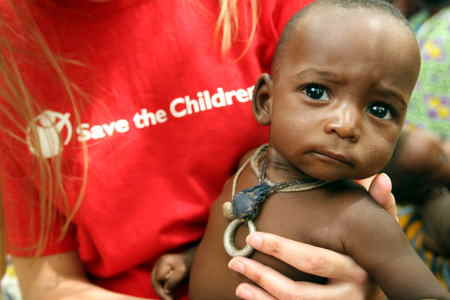
In fact, two different letters were distributed. The first presented statistics about poverty and famine in Africa, including problems in Zambia, Malawi and Ethiopia, such as 11 million people in Ethiopia facing food shortages. The second told the story of Rokia, a 7-year-old girl in Mali who struggled every day to survive because of a lack of food.
Both letters ended with a call to donate, but the second was more specific: Save the Children could help Rokia's family and community secure better conditions.
Result:: people who read Rokia's story donated twice as much as the others.
Why?
Because showing statistics puts our audience's brains into analytical mode, activating Kahneman's System 2, or the modern/rational brain. This mode leaves less room for emotional involvement.
The bucket effect comes into play.
The bucket effect (A drop in the bucket): when we see phenomena at a high, aggregated level, we struggle to empathise. With an individual case, we can identify with the person and therefore feel emotion.
The following quote from Mother Teresa of Calcutta captures the phenomenon well:
"If I look at the mass, I will never act. If I look at the one, will."
"If I look at the mass, I will never act. If I look at the individual, I will."
Another experiment explored how rational thinking limits empathy.
Before showing the letter about Rokia, the researchers created two groups of people, A and B.
The first group received a maths exercise, not complex but still requiring analytical effort. The second was asked to write down every feeling and thought evoked by the word "child".
Result: people in the first group donated half as much as those in the second.
Here we can see how having the first group do calculations put them in an analytical frame of mind that switched off their capacity for emotion.
Another secret is to talk about the benefit someone can gain and address the message in the second person singular rather than an abstract third person.
For example, instead of saying "people can enjoy a sense of security when they use Goodyear tyres", it is better to say "You enjoy a sense of security when you use Goodyear tyres".
This is the principle of self-interest:
People care about what you can do for them and the benefit they receive. We need to help them imagine the value, advantage or transformation they will gain.
Another powerful approach is to work with identity and belonging to a world of values and meanings. For example, communicating with sports and nature enthusiasts requires specific language that allows them to immediately see themselves in, and identify with, certain values.
6 - Stories: building narratives (storytelling)
There is much talk today about storytelling, the art of communicating through stories.
A story brings all the preceding points together: it creates curiosity and empathy, makes our idea sticky and spreads the message within it.
“The first use of any product is inside the consumers’ minds”.
“The first use of any product takes place in consumers' minds”.
Through a story, we create representations into which people can project themselves and directly experience emotions, allowing customers to imagine their own film.
Three narrative formats work in storytelling:
- The challenge
- Connection
- Creativity
The challenge: David and Goliath, or Rocky. The underdog who wins, the person who reaches their goal despite the obstacles.

A connection story concerns relationships between people who build bridges across cultures, races and religions. This includes all emotional connections, such as love, friendship and family.
A creativity-based story offers a different perspective, a new way of approaching and solving problems.
Spreading the message and the tipping point
Having a sticky idea or message is not enough, however. A book to read alongside Made to Stick is The Tipping Point by Malcolm Gladwell.
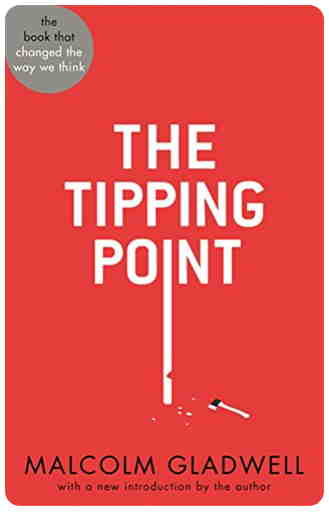
For an idea to spread, it must reach a critical mass, a tipping point, after which it spreads like an epidemic.
Of course, viral dynamics are not exclusive to the Internet; they existed before it. The difference today is the greater scale of propagation and the reach of each individual item: a social media post, for instance, can reach millions.
Gladwell also tells us that reaching the tipping point requires people who seed the epidemic of our idea: people capable of distributing the message.
This is where the famous Pareto principle comes in: just 20% of carriers of our concept can infect the remaining 80%.
Among that 20% of carriers, we need three types of people:
- Connectors => they have enormous social networks, know many people and allow ideas to spread from one social group to another
- Salesmen => they believe in and sell the ideas they love, and their incredibly positive energy is contagious
- Mavens => they possess and gather the most information about the context of ideas, are authoritative sources of advice and have a major influence on others
Understanding these dynamics and the people involved can help us build strategies and action plans that greatly increase a message's chances of spreading.