In an episode of the Tintoria podcast, Gialappa's Band told a story about Daniele Luttazzi. During the television show Mai dire Gol, Luttazzi would arrive with a notebook full of jokes to propose to the Gialappa's editorial team for his satirical news programme.

The first three jokes or monologues were so extreme and unacceptable that they deeply embarrassed anyone hearing them and were rejected immediately.
After establishing how far he could go — actually far beyond the usual limit — Luttazzi followed with other strong jokes that seemed less outrageous by comparison. These less extreme jokes passed scrutiny because the people approving them felt reassured by having vetoed something truly unacceptable.
The result: material normally considered excessive was approved because comparison with the initial proposal had shifted the threshold of acceptability.
Luttazzi's technique relies on the effect of Anchoring (Anchoring).
What is anchoring, and why does it work?
The anchoring is a cognitive bias that occurs when the first information received about a subject influences later decisions.
Our brains tend to give greater weight to the first piece of information encountered, using it as a reference point for evaluating what follows.
Generally, decisions rely on mental anchors. We cannot decide without reference points from which to start and make adjustments towards our assessment.
In Luttazzi's case:
- The first three jokes acted as an anchor — an extreme, deliberately excessive reference point.
- After them, jokes that were still provocative seemed more moderate and acceptable by comparison.
- Having rejected the first jokes, the censors felt more inclined to accept the following ones, as though they had found a compromise.
Kahneman and Tversky's anchoring experiments 👨🔬
Interestingly, anchoring can also rely on information that is completely unrelated.
In behavioural economics, Daniel Kahneman and Amos Tversky conducted experiments demonstrating anchoring.
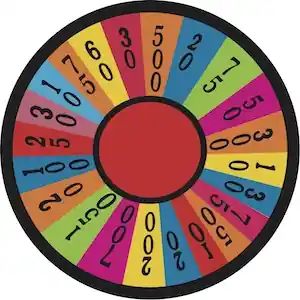
In one, participants spun a rigged wheel of fortune that could stop only on 10 or 65.
After seeing their number, they estimated the percentage of African nations in the UN. Surprisingly, those who saw 10 gave a much lower average estimate than those who saw 65.
This demonstrated that the initial number, although entirely random and irrelevant, significantly influenced subsequent judgement.
Psychology and marketing: how anchoring is used in marketing🪄
Anchoring is used everywhere, but finds its fullest expression in marketing and sales, where it influences consumer choices.
Brands and sellers use anchoring to shape price perceptions, evaluation of offers and the perceived value of products or services.

Discounts and promotions that cross out the original price and show the reduced one are by far the most powerful tools using anchoring.
Anchoring is an automatic mechanism over which our rational side has no power, even when we understand how it works.
The technique also works when setting prices without discounts, such as €99 or €999.

Our minds anchor to the first digit and perceive the prices as €90 and €900 respectively.
For this reason, they are called psychological prices, because they draw on cognitive psychology.
As Kahneman and Tversky demonstrated, anchoring is so powerful that any initial number can act as a reference, even without a direct connection to the price.
For example, a landing page can place the number of customers who have already bought the service beside its price, as in the following image.

For that number to act as an anchor and make the price seem less costly, it obviously needs to be significantly larger than the price itself.
In negotiations too, starting with a high asking price can lead to higher final figures.
⚖️ Ethics and how to protect yourself from anchoring
In my view, marketing must be ethical by design. Anchoring is therefore acceptable, but discounts and promotions must be genuine, without inflating the starting price.
As consumers, although we cannot entirely eliminate anchoring's influence, we can limit it:
- Take time before deciding: do not let the first information dominate; evaluate other options.
- Compare different data: analyse several sources and alternatives to reduce the initial anchor's weight.
- Be aware of the technique: recognise when someone is using anchoring to manipulate perception and respond critically.