
The term "woke" derives from the English "awake": alert, attentive and aware.
It was first used in African-American culture in the expression "stay woke", indicating awareness of social injustice: remaining alert, not lowering one's guard and fighting all forms of discrimination in society.
Over time, its meaning expanded to include a broad range of social issues. Woke culture and ideology encompass:
- Racism. Opposition to racial discrimination and promotion of equality.
- Women's empowerment. Support for women's rights and equal opportunities across genders.
- LGBTQIA+. Inclusion and support for the rights of queer and trans people.
- Climate justice. Promotion of action against climate change and environmentalism.
- Recognition of the diversity of social groups.
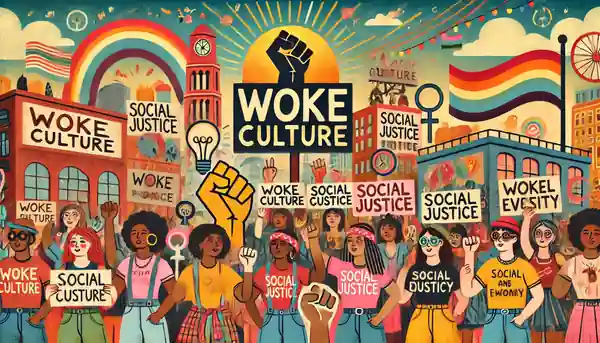
Woke culture in companies, marketing and Woke Washing
One fundamental task of a marketer is analysing a country's sociocultural context and current social trends.
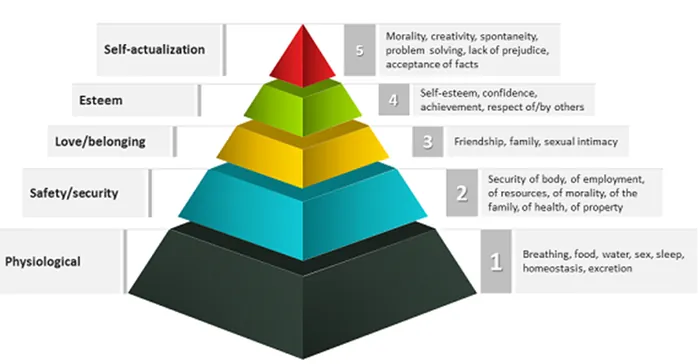
Psychologist Abraham Maslow's famous pyramid, the foundation of his theory of human motivation, tells us that people are driven to satisfy the basic needs at its bottom before moving towards the top.
At the top, within self-actualisation, are the needs for morality and freedom from prejudice that underpin Woke Culture.
Woke culture has certainly given companies a strong positive push towards having a beneficial impact on society.
When discussing value creation in business today, alongside value for the customer and the company, it is important to consider the ability to create value for society.
Many companies have adopted woke principles, introducing Corporate Social Responsibility programmes and departments to address and contribute to the issues central to this ideology.
Activities focus particularly on diversity, inclusion and environmental initiatives.
A brand's greatest impact comes through Brand Activism, when a company fights its battles directly.
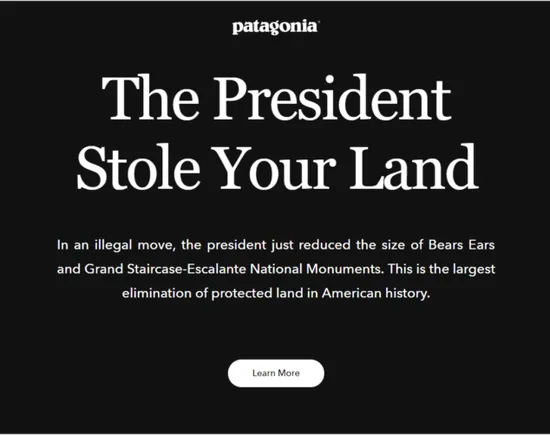
The best-known example worldwide is undoubtedly Patagonia, whose purpose places environmental activism at its centre.
We are in business to save our planet.
We aim to use the resources we have — our voice, our business and our community — to do something about the climate crisis.
Embracing woke ideology has become a tool for many companies to build a good reputation. However, this does not always reflect authentic brand values, and obvious mistakes sometimes reveal the opportunism behind inclusion and sustainability initiatives.
In these cases, we speak of "Woke Washing": the opportunistic adoption of progressive values to improve one's image, with washing suggesting cleansing or cleaning up.
These activities are often superficial and purely cosmetic, lacking real substance or impact and aimed solely at improving reputation.
A very famous case of perceived woke washing involved influencer Chiara Ferragni. Her apology video, published on Instagram, appears below.
Cancel Culture 🚫 and criticism of the concept of woke
Woke culture is certainly commendable and has the potential to lead us towards a better world. However, excessive sensitivity to social issues can sometimes generate a backlash, leading to extremes that risk limiting freedom of expression and deepening social divisions.
This phenomenon is represented by the term "Cancel Culture", but what is it?
Cancel Culture is a social and cultural phenomenon in which individuals, groups or entities are boycotted, excluded or cancelled from areas of public life because of behaviour or opinions considered offensive, controversial or contrary to woke culture's concerns. It often manifests through social media campaigns, economic boycotts and public pressure to remove people or entities from positions of power or influence.
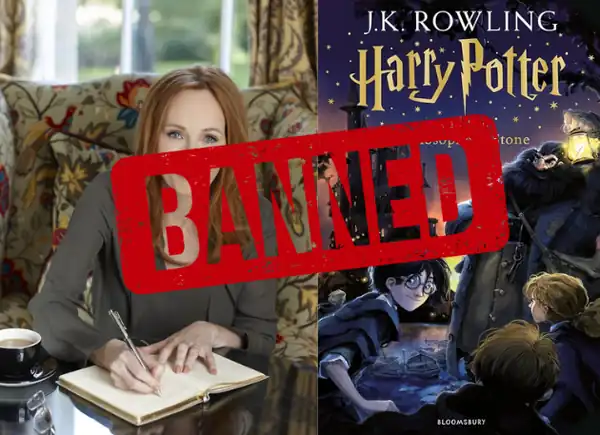
For example, J.K. Rowling, the author of "Harry Potter", has faced criticism and boycotts over her views on transgender people, expressed in tweets and articles. Many fans and activists have called for boycotts of her books and future projects.
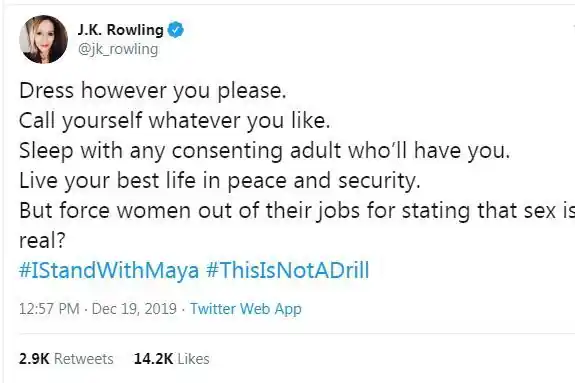
Below is the first Rowling tweet that inflamed the debate. It supported Maya Forstater, a British researcher who had lost her job after stating that biological sex is immutable:
Dress as you please. Call yourself whatever you like. Sleep with any consenting adult who wants you. Live your best life, in peace and safety. But forcing women out of their jobs for saying that sex is real? #IStandWithMaya #ThisIsNotADrill
In the age of Social Intelligence, when we are all connected to everything, where is the boundary between freedom of expression and legitimately opposing discrimination?
Personally, I find this difficult, but I think we should be guided by common sense and the source's history and reputation.
Woke culture in the United States 🗽 and Trump's presidency with Elon Musk
At a social level, an uncompromising and aggressive embrace of woke culture may be perceived, particularly by economically disadvantaged groups, as radical chic and virtue signalling: an attempt to appear morally superior.
A measure of this perception was the 2024 US presidential election, won by Trump, who opposed Woke Culture.
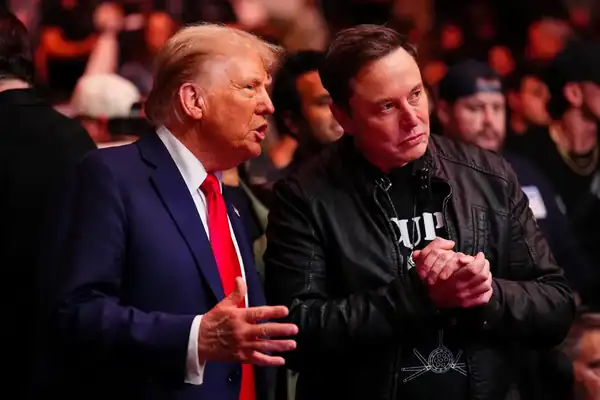
Republicans reached Americans facing serious economic difficulties who, while recognising their legitimacy, did not place woke ideology's central issues at the top of their priorities.
As soon as Donald Trump entered the White House, he signed executive orders and measures reflecting political priorities that could euphemistically be described as not very pro-Woke Culture. Here is a summary:
- Abolition of federal Diversity, Equity and Inclusion (DEI) programmes
- Declaration that only two sexes exist: During his inaugural address, Trump stated that only two genders exist, male and female, committing himself to a merit-based society without positive discrimination.
- Education system reforms: Trump outlined a plan to remove what he calls wokeness from American education, proposing abolition of the Department of Education and the elimination of diversity programmes in schools and universities.
- Withdrawal from the Paris climate agreement: he declared a national energy emergency and announced US withdrawal from the Paris Agreement.
- Restrictive measures to control immigration from Mexico: Donald Trump took several actions to limit immigration from Mexico, including declaring a national border emergency, deploying military troops, resuming border-wall construction, reinstating the Remain in Mexico policy for asylum seekers, suspending refugee admissions and eliminating birthright citizenship for children of undocumented immigrants.
Musk's criticism of woke culture: the case of care for transgender minors
Elon Musk developed strong opposition to woke culture for both personal and ideological reasons.
One significant event was the gender transition of his eldest child, Xavier, who adopted the name Vivian Wilson and cut ties with her father in 2022. Musk said he had been "tricked into signing documents" approving his child's transition, describing what happened as an effect of the "woke mind virus".
In the following interview with Jordan Peterson, Musk says he was told his child might die by suicide if he did not consent to the transition, a statement he now believes was a lie.
Musk's stance towards gender-affirming care is very strong, particularly regarding minors: he considers it "serious medical and psychological negligence comparable to historical atrocities such as eugenics and Nazi-era practices".
This personal experience intensified Musk's criticism of woke ideology, which he considers a threat to freedom of expression and human progress.
Consistent with this thinking, Musk acquired Twitter, now X, for $44 billion in 2022, intending to counter what he perceived as censorship influenced by woke culture on the platform.