Today I open the horoscope for my sign, Sagittarius 🏹, and read: "A key moment for your success is beginning: favourable opportunities are arriving for a leap forward in your career or to secure prestigious positions. This will require commitment and effort, but there is no need to worry: a Sagittarius is perfectly capable of shouldering demanding tasks."
Could you tell me something more? 🤔
Personally, I do not believe in horoscopes, but their wording is the long-standing secret of their success.
They use what is called the Forer or Barnum effect.
What is it?
It is a cognitive bias that makes people believe statements apply specifically to them when they could actually apply to most individuals.
The career statement in my horoscope is a classic Barnum statement: it could apply to anyone, since career opportunities are there for those who seek them and work hard.
Psychologist Bertram Forer first formalised the bias in 1948 through a test given to his psychology students.
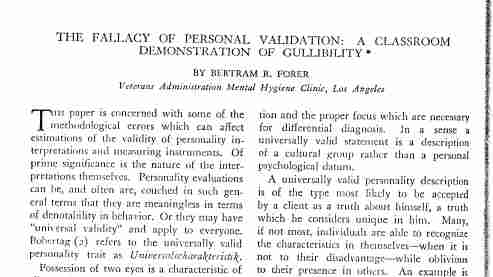
After a series of questions, the test produced personality profiles. Students rated their accuracy from 1 to 5 based on how well they matched their true personalities.
The average score was 4.26!
Were complicated algorithms used?
Absolutely not.
The profile was fake and identical for everyone, regardless of the questions 😲, but the statements were sufficiently generic.
Forer chose the name Barnum after American showman Phineas Taylor Barnum, an impresario and alleged mentalist who created the world's largest and most famous circus in the mid-1800s, inspiring the film The Greatest Showman with Hugh Jackman, Zac Efron, Michelle Williams and Rebecca Ferguson.
This effect is closely related to confirmation bias: people consider Barnum statements accurate even when they are not, because selective attention focuses on information confirming their thoughts.
Use in marketing
Mentalists, psychics, fortune-tellers and astrologers have used the Barnum effect since time immemorial, but it is also widely used in world of marketing.
Here, the proper use is not manipulation but making people feel special, as if we knew them and were giving them exactly what they were seeking.
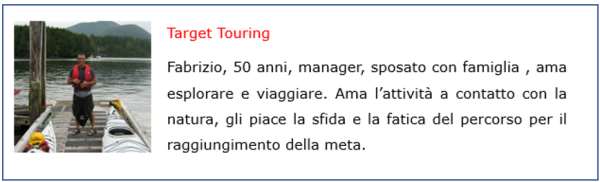
Customer persona example
Building messages around customer personas does precisely this, enabling us to use empathy and tell stories in which our audience can recognise themselves.
Remember: marketing may be increasingly hungry for data, but it remains human-centred, with psychology and the workings of the human mind playing a key role.