
Marketing is full of technical terms, many of English-language origin. Among them are payoff, tagline, headline, claim and slogan.
These concepts, although often used unconsciously in everyday life, are fundamental tools for people working in marketing and communication. Understanding their differences and using them correctly is essential to create effective brand identity strategies.
Payoff and tagline in brand identity
The term ‘payoff’ can mean a gain, outcome or advantage, but in marketing it takes on a very specific meaning.
A payoff is a phrase accompanying the brand mark, intended to express concisely a brand's personality, values, positioning and distinctive traits.
We could define it as the corporate motto, institutional signature or brand's closing line.
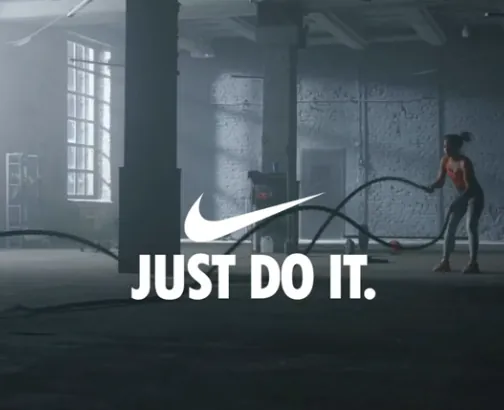
An iconic example is Nike's payoff: ‘Just do it.’ In three simple words, the brand communicates determination, action and a philosophy that goes beyond sport.
An effective payoff tells people who you are, what you stand for and why you should be remembered.
What is a tagline and how does it differ from a payoff?
To add a little confusion to the terminology, in the United States the term ‘tagline’ is often used interchangeably with ‘payoff’. However, while ‘payoff’ in European advertising refers to the brand's distinctive phrase, in the USA ‘payoff’ more commonly refers to the return on an investment.
Therefore, when we talk about ‘Just Do It’, in the United States it is correctly called a tagline, while in Italy it is more commonly called a payoff.
Examples of payoffs/taglines
Some of the world's most famous payoffs/taglines:
Apple – Think Different.
McDonald's – I'm lovin' it.
Adidas – Impossible is nothing.
Red Bull – Red Bull Gives You Wings.
L'Oréal – Because You’re Worth It.
And some Italian examples:
Unieuro – Batte. Forte. Sempre. (‘It beats. Strong. Always.’)
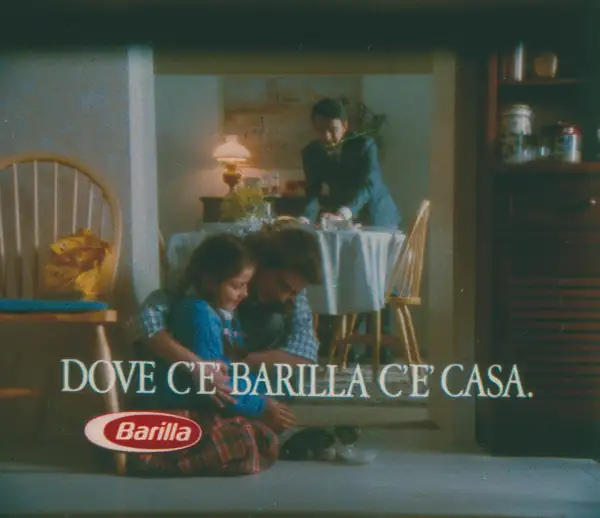
Barilla – Dove c'è Barilla c'è casa. (‘Where there is Barilla, there is home.’)
Galbani – Galbani vuol dire fiducia. (‘Galbani means trust.’)
Clearly, taglines evolve as a company changes and sometimes disappear from official communication. One example is Fastweb, which used the payoff ‘Un passo avanti’ (‘One step ahead’) in the past; it no longer features in its communication strategy.

How do you create a successful payoff?
Creating a payoff is not a random writing exercise. It is essential to find the right combination of words to capture a brand's essence, following some fundamental principles:
- Brevity and impact: it must be immediate and easy to remember.
- Uniqueness and recognisability: it must stand out from competitors.
- Evoking emotions: it must communicate a powerful idea and inspire.
- Consistency with the brand's values: it must align with the company's mission and vision.
A good payoff acts as an anchor, recalling the history and values the brand has built over time. If you cannot develop an effective one, it is better to avoid it entirely: a weak or uninspiring message risks damaging brand identity rather than strengthening it.
What is a claim and how does it differ from a tagline?
In advertising, we also often hear the word ‘claim’. The English term can mean an assertion or statement, and takes on a specific meaning in marketing.
A claim is a statement a company makes about a product or service to highlight its main benefits and influence consumer choices.
Unlike a payoff, which represents the brand's overall identity, a claim focuses on a more specific message linked to an individual advertising campaign or product.
Examples and types of advertising claims
- Benefit claim: highlights the product's fundamental benefits.
Example: an antacid may claim to act in 10 seconds.
- Performance claim: emphasises the product's performance.
Example: a car may boast acceleration from 0 to 100 km/h in under 5 seconds.
- Differentiation claim: distinguishes a product from competitors through unique features.
Example: a coffee may claim to be ‘mountain-grown’ to emphasise its quality.
- Category-membership claim: helps consumers understand which category a product belongs to.
Example: an industrial tool may claim to be ‘extremely durable’ to emphasise its professional use.
- Ambiguous claims: sometimes companies choose deliberately vague claims to avoid excluding any customer segment.
Example: ‘Better than ever’ specifies no concrete advantage, leaving room for interpretation.
Claims must be credible and truthful: misleading statements can seriously harm a company's reputation and lead to legal consequences. An effective claim strengthens consumer trust and helps build a solid, respected brand in the market.
While payoff and tagline define the brand's overall identity, a claim is a specific statement communicating the benefits of a product or service. Both tools are essential to an effective marketing strategy, and using them correctly can make the difference between an anonymous brand and one that leaves a lasting mark in consumers' minds.
What are advertising slogans and brand slogans?
A slogan is:
a memorable, impactful phrase used in marketing, particularly advertising, to communicate a clear, engaging message.
Unlike other elements of brand communication, the slogan is extremely versatile and can serve different roles as needed.
The difference between slogan, tagline and claim
A slogan can overlap with other communication elements, such as a payoff and claim, but stands out for its flexibility:
Slogan as payoff: if it becomes so iconic that it permanently represents the brand's identity, a slogan can turn into a lasting payoff. Nike's ‘Just Do It’ began as an advertising slogan before evolving into a tagline/payoff. In this case, we could call it a brand slogan because it will remain associated with the brand over time.
Slogan for an advertising campaign: when it accompanies a specific advertising campaign to emphasise a key concept. For example, Honda's ‘The Power of Dreams’, used across several campaigns.
Slogan as claim: if it communicates a clear, specific benefit of a product. I remember the Dash detergent slogan: ‘Più bianco non si può’ (‘It couldn't be whiter’).
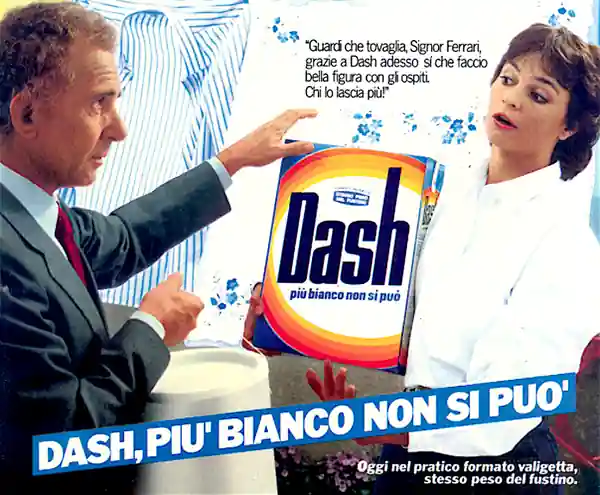
A slogan can also arise to capture a distinctive quality or a differentiating message you want to communicate to the market.
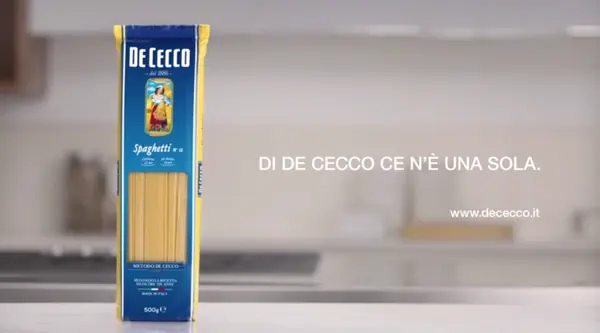
Since both payoff and claim are usually based on an impactful phrase, we could say we have the payoff's slogan and the claim's slogan.
The grammar of the message is therefore that of the slogan, while its objective is associated with the brand, product or advertising campaign, depending on the case.
Main characteristics of a slogan
A slogan's main strength is its adaptability. It can be:
- Short or long: some phrases are reduced to a few impactful words; others develop a more elaborate message.
- Emotional or rational: it can appeal to feelings and values (such as trust and inspiration), or emphasise concrete, rational advantages.
- Temporary or permanent: it can be tied to one advertising campaign or become a lasting part of the brand.
- Linked to the brand or specific products: some slogans define the entire corporate identity; others support a particular product or initiative.
What makes a slogan effective?
To have real impact, a slogan needs some fundamental characteristics:
- Memorable: it must be easy to remember and repeat.
- Easy to understand: a clear message makes it more effective.
- Consistent with the brand: it must reflect the company's values and personality.
- Able to evoke emotions or clear benefits: people must feel involved in or attracted by the message.
What is a headline?
Another term widely used in marketing is ‘headline’. If the tagline is the brand's signature, the headline is the heading and title of our specific communication content.
The main title of an advertising message or article. Its function is to attract the reader's attention and encourage them to keep reading or take an interest in the content.
An effective headline is clear, engaging and often emotional, able to convey the message's value immediately.
Below is Patagonia's famous ad with the headline: ‘Don't Buy This Jacket’.
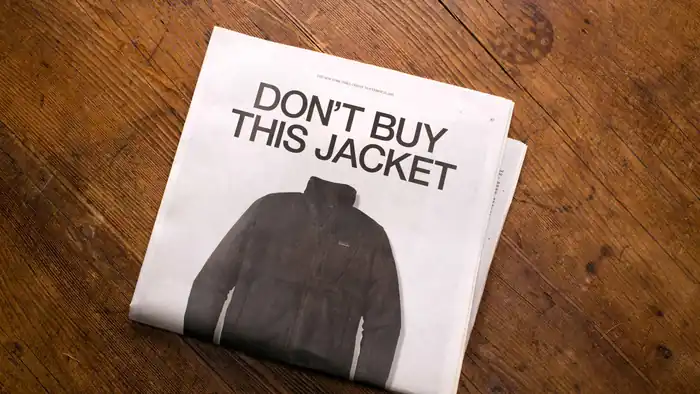
Examples of headlines
- ‘The car that changes your life’ – A headline for a car campaign focusing on the product's impact on everyday life.
- ‘Save 50% on your next bill!’ – A headline that immediately communicates a tangible benefit.
- ‘Discover the secret to perfect skin’ – A headline that creates curiosity and a desire to learn more.
In the age of information and cognitive overload, headlines have become essential for capturing attention and conveying a communication message.