
Some time ago, I took the car to have its tyres changed and went for a walk while waiting. I felt like a coffee ☕ and entered the first café I came across: bright, clean and somewhere I had never been.
As I entered, two women behind the large counter greeted me with beautiful smiles.
I only ordered a coffee, but was showered with attention and kindness (genuine, not forced).
While enjoying the coffee (which was good too), I noticed that the café was full despite the circumstances, and every customer received the same kindness I had.
The experience of having coffee became a “plunge into kindness in a sea of smiles”.
The effect was astonishing. My mood quickly became as good as it could be. I left smiling and passed that smile on to the tyre fitter! Back in the car, I easily resolved several problems on the day's agenda.
The domino effect, or Kindness Boomerang is captured well in the following video:
One test I often enjoy doing to observe the ripple effect involves cars in a queue.
If you are queuing in your car and stop to let another car in ahead of you, you will notice that 9 times out of 10, that driver then lets other cars in too.
What being kind means, and its connection with courage
Looking at dictionary definitions and the etymology of kindness, one common element is courtesy: being courteous.
This concerns manners: someone well-mannered is considered kind. In the past, nobility and courtesy were associated.
Today, however, it means much more. Kindness goes hand in hand with generosity, consideration for others, empathy and the ability to listen to and understand people.
It translates into sincere gestures without ulterior motives.
A classic cognitive bias is associating the kindest people with weakness, alongside the image of the tough person as serious and impassive.
In my own experience, fortunately, the opposite has proved true: the kindest people are the strongest, most capable and most courageous.
I find the combination of kindness and courage wonderful. As a Disney film lover, I must mention Cinderella, in which the dying mother passes on to her daughter the great secret for facing life:
Be kind and have courage
The whole film rests on this phrase, and I recommend it to everyone, especially young people facing future challenges.
Kindness is the superpower, the magical ingredient.
As someone from Abruzzo, I am deeply attached to the description of my region and its people: Abruzzo, strong 💪 and kind 🤗!
Why is being kind good for us?
Several studies have shown that doing something for others makes us feel better, as though nature had placed a mechanism in our brains encouraging us to do good.
When we are kind, two hormones are produced: dopamine and oxytocin.
Dopamine is the hormone that generates euphoria, that state of intense pleasure.
It is followed by oxytocin, a hormone produced by the hypothalamus that creates calm and serenity. It is also called the love hormone because it is associated with affection for partners and family members.
These two, together with serotonin, GABA, adrenaline and phenylethylamine, make up the 6 hormones contributing to the state of happiness in human beings.
Science, particularly biology, has discovered that oxytocin and dopamine are produced not only by the person performing a kind act, but also by the recipient (especially when the act is unexpected) and anyone watching!
If you watched the first video above, you probably felt good simply observing other people's gestures.
Here, the psychological effect of mirror neurons also comes into play, amplifying the effects around us.
Seeing others smile and help people makes us more likely to do the same, creating a virtuous effect benefiting everyone.
Cinderella's mother was right to say kindness is magical. It benefits us and others and helps create a better world (there, I said it 😂, but it is no exaggeration).
We are often so focused on what we have to do that we do not realise our faces look gloomy and troubled. The first form of kindness is simply smiling at others: it helps those around us and ourselves.
Kindness at work, emotional intelligence and why kind people are more successful
In 2014, Satya Nadella became Microsoft's new CEO and transformed a stagnant, isolated company into an economic giant within a few years!
Nadella completely overturned the company's culture by introducing a growth mindset(a mentality based on continuous improvement and seeing problems as opportunities) and kindness (inherited from his Indian background and Buddhist philosophy).
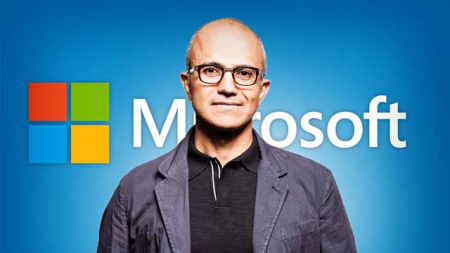
Satya Nadella
At Microsoft, aggressive behaviour and attitudes were eliminated and channelled into constructive rather than destructive dialogue. Again, this counters the stereotype of a manager asserting authority by raising their voice.
The command-and-control model gave way to a culture of learning, kindness, responsibility, trust and coaching that empowers people.
The aim is for managers to be coaches and provide a place where people can make mistakes, learn and grow.
Back in 2015, Nadella told the shareholders' meeting:
"Our ability to change our culture is the leading indicator of our future success."
In hindsight, the path of kindness has borne fruit and underpins Microsoft's current success.
But Nadella is not an isolated case. Other successful CEOs have emerged who share the same philosophy and values, such as Google CEO Sundar Pichai and former Twitter CEO Parag Agrawal (before the arrival of Elon Musk).
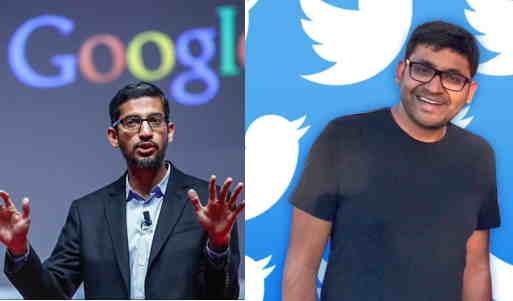
Sundar Pichai (left) and Parag Agrawal
The list continues with Arvind Krishna (IBM CEO), Shantanu Narayen (Adobe CEO), Ajaypal Singh Banga (MasterCard CEO), Rangarajan Raghuram (VMware CEO) and Anjali Sud (Vimeo CEO).
In fact, leaders of Indian origin are dominating the top ranks of American companies thanks to their new approach.
What is emotional intelligence?
Emotional Intelligence is the ability to perceive, control, assess and express our emotions, while understanding, interpreting and managing others' emotions.
Alongside intelligence quotient (IQ), people now also discuss emotional quotient (EQ) which measures our level of emotional intelligence.
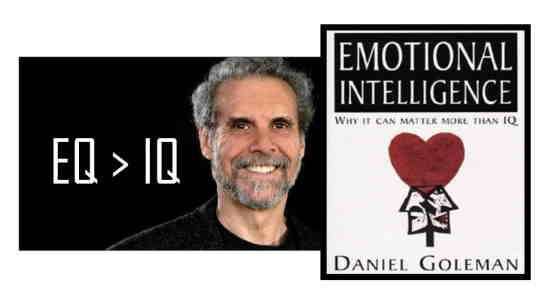
The art of kindness is one of the superpowers of people with a high emotional quotient.
Psychologists and research suggest that EQ is as important as IQ for achieving success in life.
In his book Give and Take (a New York Times and Wall Street Journal bestseller), Adam Grant reports research showing that givers — people who give unconditionally — get the most from life.
World Kindness Day
World Kindness Day is celebrated worldwide on 13 November.
The event began in Tokyo, Japan, through the Japan Small Kindness Movement, followed by organisations joining under the name World Kindness Movement.
First celebrated in 1998, it gradually spread worldwide, including Italy.
Here is the event's purpose:
World Kindness Day aims to highlight and encourage good deeds in your community.
It also reminds everyone that simple acts of kindness have great power, and that together we can work to create a kinder world.
You may wonder how one person's compassion can make a difference. It is not easy to grasp, but every kind act, however small, creates a ripple effect beyond what you can imagine.
The World Kindness Movement and World Kindness Day aim to inspire belief that we can make a global difference, one gesture at a time.
The more schools become involved, the more beautiful this day becomes. Young people can be the real driving force for improving our world.
Thinking about young people's impact and kindness's ripple effect inevitably brings to mind the wonderful film Pay It Forward (Un sogno per domani in Italian).
In the film, a visionary teacher sets this assignment:
Think of an idea to change our world, and put it into practice
A boy, Trevor McKinney, has a wonderful idea: create a chain in which everyone does a favour for 3 people ("pays it forward"), who then help another 3 (the video below shows the scene explaining the idea).
The idea creates an extraordinary progression and ripple effect, improving the community.
Aphorisms and quotes on kindness
This is my simple religion. There is no need for temples, no need for complicated philosophies. Our own mind, our own heart, is our temple; the philosophy is kindness. Dalai Lama
Kindness is a language the deaf can hear and the blind can see. Mark Twain
Character is kindness without showing it off. Paul Tournier
When restraint and kindness are added to strength, it becomes irresistible. Gandhi
I know no other sign of human superiority than being kind. Ludwig van Beethoven
Kind words are short and easy to say, but their echo is eternal. Mother Teresa
What wisdom can you find that is greater than kindness? Jean Jacques Rosseau
Conclusions
If acts of kindness are so powerful, why are they not more widespread?
The problem is the cognitive bias of negativity and positive–negative asymmetry which makes us pay more attention to negative elements than positive ones.
This phenomenon is also followed and reinforced by major social platforms (Facebook first among them), which have contributed to the growth of haters and online conflict.
It is a shame because, as we have seen, even watching kind acts makes us feel good and become more open and receptive towards others.
Perhaps a new social network based on kindness will emerge?
In our own small way, we can guide our digital diet towards more inspiring content.