
The word HATER literally means someone who hates: an enemy, an opponent, someone who is hostile. It is the noun derived from ‘hate’.
With the rise of the Internet, the word entered everyday language to identify Internet haters, whom we could broadly define as follows:
A person who frequently spreads their hatred online towards a person, place, thing, idea, concept, film, book, television programme, idea, etc.
Among the subjects and concepts targeted by hatred are the most serious forms: race, sexual orientation, religion, ethnic origin, disability, etc.
It should be said that there are three types of hater:
- Professional haters. Once they identify someone to insult, they do so regardless, without even engaging with the substance of the discussion.
- Occasional haters. They do not do it constantly, but share the superficial approach. At best, they read article or post titles and then harshly criticise and insult.
- Calculated haters. They deliberately attack well-known people in their field (regardless of the content) to gain reflected visibility and show off their skills, hoping to open a heated discussion (typically without a constructive purpose). For these purposes, they usually do not use anonymous profiles.
I do not know which of the three categories is worst, but they all share two elements:
- making no effort to understand what the source says
- launching an attack and hitting hard, to the point of insult
The psychology of the hater
Various reasons underlie haters’ behaviour, including their own prejudices/cognitive biases.
Often, a hater’s only goal is to drag their target down. They feel satisfied if the person they hate is discredited!
Situations of deep dissatisfaction lead the hater to say: if I cannot ‘rise/grow’, I will bring others down!
We could call it the Samson effect:
Let Samson die with all the Philistines!
It is not always jealousy, but simply a strong desire to bring the other person down.
Sometimes, hating is a symptom of insecurity and a desire to side with other haters to create a sense of belonging (the herd effect or stadium effect) and receive dopamine from the group’s likes and comments.

The factors that have fuelled the growth of haters are anonymity and virtuality.
People can hide behind an alias without physical exposure, giving rise to the familiar keyboard warriors.
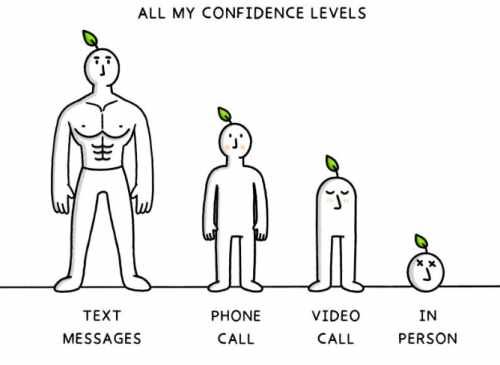
Haters have selective perception and a very strong confirmation bias: they seek and interpret information while giving greater attention and weight to what confirms their theories, hypotheses or beliefs.
So the hater will find and give more weight to aspects and information that cast negativity on the object of their hatred.
How do you manage haters? How do you manage conflict?
Let’s start with an important question: can you change a hater’s mind?
On average, no!
This is because of the Semmelweis reflex (or Semmelweis effect): the tendency to reject new evidence that contradicts a paradigm on which we base our actions (in this case, the foundations of the hater’s hatred).
Any effort to offer the hater different perspectives and evidence contrary to their paradigm may even reinforce their convictions.
Let’s start from the premise that you will not convince a hater of the opposite! They live in their own bubble, whose walls are very strong.
Managing haters is not only a problem for celebrities or prominent people in their fields: anyone can experience gratuitous conflict online.
Unfortunately, people often do not read (or pretend not to understand) what others write (or say). Often, they read only the title of a post, video or article before immediately firing off their opinion.
It is a problem of poor focus.
Furthermore, unfortunately, the convention online is becoming one of little kindness(or rudeness): we reply and contribute to posts, talking to people we do not know in a terse, abrupt way (unthinkable in the real world).
Former heavyweight boxing champion Mike Tyson says on the subject:
Social media has made people far too comfortable disrespecting others and not getting punched in the face for it.
Whatever the type of hater, the recipe for dealing with them comes from the following Zen story (Tyson might disagree):
A Zen master was teaching a group of disciples when a man approached and insulted him, intending to attack him.
In front of everyone, the master reacted with complete calm, remaining still and silent.
When the man left, one disciple, outraged by this behaviour, asked why he had allowed the stranger to mistreat him that way.
The master replied calmly: ‘If I give you a horse and you do not accept it, whose horse is it?’
After hesitating for a moment, the student said: ‘If I did not accept it, the horse would still be yours.’
The master nodded and explained that, although some people choose to waste their time insulting others, we can choose whether to accept their words, just as we would with any gift.
‘If you take it, you accept it; otherwise, the person insulting you is left holding the insult.
We cannot blame the person who insults us, because it is our decision to accept their words instead of leaving them on the same lips they came from.’
What if we might be the haters? 😲😲
Seen from the outside, genuine contributions can often be confused with those of a Pro Hater. To avoid this, I personally use these simple rules:
🥇 First, try to understand properly by asking questions, to avoid understanding only what we want to understand.
🥈 Second, put ourselves in the shoes of the person we want to ‘attack’, adopting the mindset of not doing to others what we would not want done to us.
🥉 Third, be kind: show your different point of view without insulting or getting personal. Ideally, add value to the discussion by expressing your viewpoint constructively. In communication, the ‘what’ gets through if there is also a how and a why. Poorly delivered feedback will never be taken on board by the other side.
Finally, do not reply immediately. Wait a little, and you might realise you have many other, more interesting things to do (this is my favourite technique 😂).
Haters and companies/brands
While ignoring haters is the best strategy for individuals, things are a tiny bit more complicated for companies.
Here, the key is to understand whether you are dealing with a hater or an unhappy customer.
The problem is that the resulting behaviour might be identical, even though the motivations are completely different.
If we have an unhappy customer, we absolutely cannot ignore them and must address the issue. If we are dealing with a hater, we need to understand the context and perception.
If it is a public setting where others see the problem presented and cannot tell it is a gratuitous attack, it must be addressed; otherwise, it can be left alone.
If it needs addressing, we must bring the hater out into the open: get them to be specific and put their problem with the product or service into context.
Ideally, the gratuitous nature of the attack should emerge. This may also have the positive effect of satisfied customers defending the brand, strengthening their bond with it. This is the external enemy effect!