
The customer journey for buying and consuming food is destined to change in the digital age.
Will physical restaurants still exist?
Will we still buy pasta at the supermarket? Will our kitchens at home become ever smaller?
Will takeaway prepared meals grow?
To understand where things are heading, we need to consider the following sociocultural developments together:
- the growth of the new on-demand mindset
- the tendency towards passivity and individualism
- the increase in flexible working and working from home
- the cultural value of food
Today, thanks to technology, we have everything on demand, from physical goods to entertainment content, and this purchasing and consumption experience is an integral part of younger generations' lives.
At the same time, highly personalised, multi-device video on demand itself (particularly on mobile devices) increasingly encourages individualism and private, passive consumption.
Passivity is one of the strongest trends underway. We can also see it in the new UX of social networks: stories and videos (e.g. on Reels, TikTok, FB, etc.) force passive, linear consumption (I cannot search for the story or video; it comes to me in a linear broadcast stream).
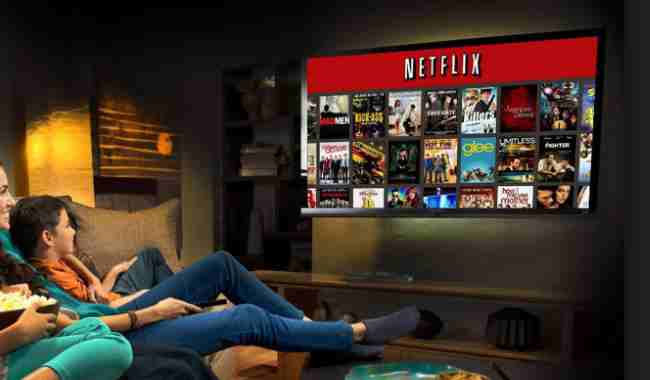
An increasingly common experience is full immersion in TV series (binge-watching), accompanied by food delivered to your home so you do not waste even a second in the kitchen after getting back from work.
The health crisis caused by COVID has significantly accelerated companies' adoption of flexible working and working from home with lasting medium- and long-term effects.
This phenomenon has a substantial impact on the experience of eating and on consumer choices, with increasing demand for prepared meals delivered to the home.
Counterbalancing these trends, which are overturning the food and restaurant business model, is the value of cooking in our country.
A value made up of flavours and traditions passed down within families and from region to region.
Restaurants and pizzerias are the leading form of entertainment in Italy and an integral part of our nature as social animals: we go out for dinner to connect with others and spend time with friends.
Moreover, in recent years, the culture of good food has been celebrated by major media productions, which have increased interest in food quality and preparation.
The industrialisation of home delivery
The industrialisation of delivery is a major contributor to the change in model. The “master of ecommerce” (Amazon) has understood that delivery speed is a critical success factor.
New behavioural theories emphasise the emotional driver of purchasing, and to take advantage of it, delivery must be extremely fast.
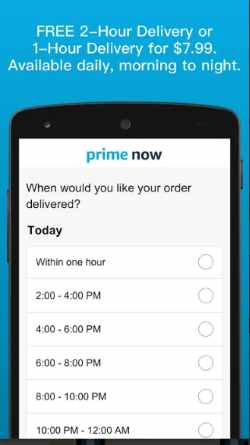 The Amazon Now app for Prime customers
In major cities, deliveries now take less than an hour, both for products (see Amazon Prime Now) and, of course, for cooked takeaway food.
It is no coincidence that Amazon has invested in Deliveroo, the British company that delivers dishes cooked by the city's best restaurants in around 30 minutes.
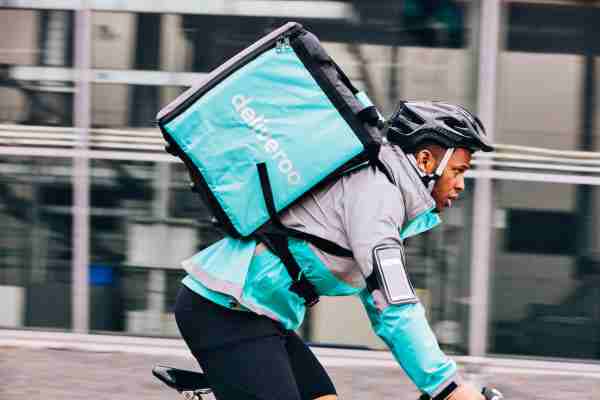 Deliveroo bicycle courier
We could say that Deliveroo is in the logistics business more than the restaurant business, since it has built the entire logistics, operations and customer service infrastructure that any restaurant can use.
Delivery is increasingly becoming a “fluid service” to be used within new Value Network models where the traditional value chain is overturned by the network.
Delivery even becomes a building block, a web service to integrate into your ecommerce platform (providers such as https://www.milkman.it are emerging, for example).
Home delivery can provide “stand-alone” value, particularly in a society like Italy's, whose population is older on average and tends to concentrate in cities.
It is no coincidence that major retail chains (such as Esselunga) have launched home delivery services independent of ecommerce (the Ikea model, to put it simply): you shop and choose your products in the store, and someone brings them to your home shortly afterwards (free for people over a certain age).
This proposition offers great value not only to older people but also to people with disabilities and, in general, anyone facing logistical difficulties.
The restaurants of the future and kitchens in the cloud (dark kitchens or cloud kitchens)
In major cities, home food delivery services are expanding rapidly, and dishes from a huge number of restaurants can be delivered to your door, ranging from pizza to cuisines from around the world.
The best-known food delivery services are Just Eat, Foodora, Deliveroo and Uber Eats.
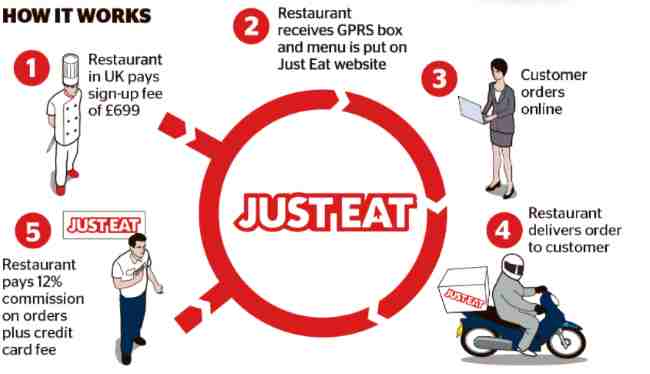 How Just Eat works
Taken to the extreme, the disintermediation of cooking could lead to the disappearance of physical restaurants (with an entrance and tables) and of kitchens in the home.
Like our data and applications in an on-demand world, cooking too will move to the cloud.
Are you a good cook? Are you a chef but unable to open your own restaurant because of high setup and operating costs?
Today you can set up your kitchen at home or in any kitchen and rely on food delivery platforms to reach the end customer.
COVID-19 has been a major problem for small restaurants, but also an opportunity to try digitising the business and complement the traditional dining experience with takeaway and home delivery.
I do not think kitchens and restaurants will disappear in Italy (because of the country's sociocultural foundations we discussed at the start), but this is certainly a phenomenon to watch carefully, as it presents both opportunities and threats.
Business opportunities for those who can use the dynamics of the web and meet the needs of this market segment.
As for threats, we need to be wary of the excessive power of delivery platforms, which control the customer relationship (which, as we have seen in the value network model, is at the heart of modern strategies).
To survive and succeed in these contexts, we need to focus on value (the quality and story of the “dish”), as well as constantly studying and experimenting to understand the new grammar of digital.
The future of restaurants certainly involves a dual dimension, online and offline, and managing relationships locally (in practice, the customers to manage are those within a fairly small radius).
The story of Freshly: from small restaurant to giant of online prepared meals
After years of working in investment banking, Michael Wystrach noticed that his waistline was expanding and his health was deteriorating.
How could he solve the problem of unhealthy quick meals?
His parents had a restaurant, which became the foundation for creating Freshly in 2012, a website selling healthy prepared meals.
How does it work? Here are the steps:
- online at https://www.freshly.com/, choose your healthy meals by subscription
- the food is conveniently delivered to your home or office at your preferred time
- heat the meal for 3 minutes in the oven or microwave, and lunch or dinner is served
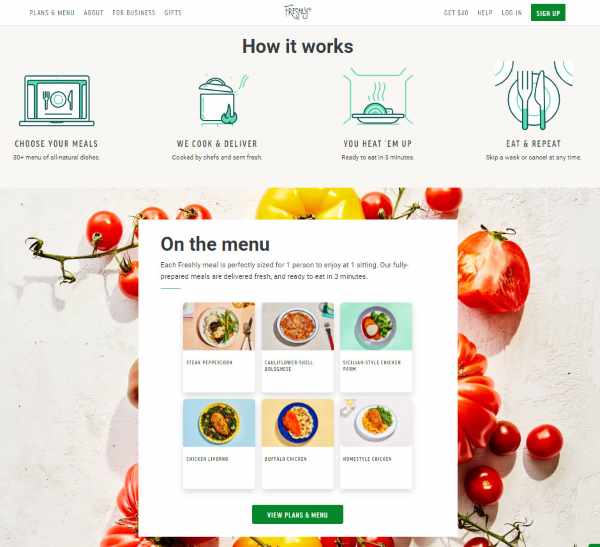 The Freshly website
Today Freshly delivers 1 million meals a week across 48 US states, and in 2020 it generated 430 million dollars in revenue (with an annual growth rate of 50%).
In November 2020 it was acquired by the giant Nestlé for $1.5 billion (much more than Facebook paid for Instagram).
Freshly's story should inspire small Italian restaurants, which need to digitise to take advantage of this new trend and overcome the difficulties caused by COVID.
Freshly started as a small traditional restaurant but understood and met new needs; after all, people working remotely have certainly not lost their appetite :-)
Food brands and large retailers
Online sales volumes are increasing in Italy's main cities, with more and more people preferring to order groceries online and have them delivered when they get home from work.
According to data from the Osservatorio eCommerce B2c and Netcomm, Italy's online Food & Grocery sector was worth 2.5 billion euros in 2020, an increase of 55% over 2019.
In the extreme scenario where home kitchens disappear with the move to cloud kitchens, consumers would no longer buy food products, and brands would sell only to those who prepare them.
This scenario is very unlikely, whereas buying food products online is much more likely.
The COVID effect sent online supermarket product sales soaring by 85%, while food delivery grew by 19%.
The emerging scenario is very interesting: which ecommerce platform will capture customers' needs?
An interesting figure is the 65% growth in food and wine ecommerce, which offers good opportunities for small entrepreneurs.
For online grocery shopping, the critical success factors are product range and delivery service. Considering these two elements, Amazon and large retailers (if they can create a quality ecommerce operation) are in pole position.
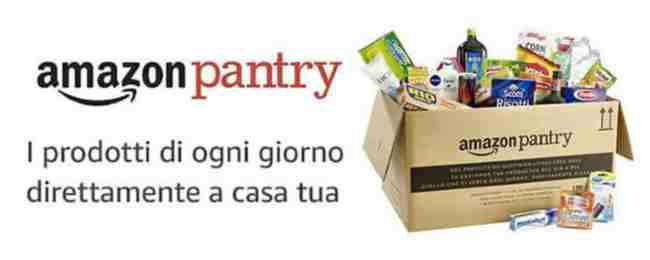 Amazon Pantry is the service for selling frequently purchased products: essentially, supermarket shopping on Amazon
What will the future hold for brands?
For a brand, will the online distribution channel be simply the physical channel transferred to the web? And does that mean there is nothing to worry about, because customers will continue to ask for the same specific brand online?
I have doubts about the platform's neutrality towards brands in the move from physical to digital (even if brand awareness is supported, which will become increasingly difficult), because those selling online are also those managing the customer relationship, and in a digital world this is fundamental (after all, it was Amazon's winning card).
A brand must be able to know who its customers are and build a direct channel. Although it lacks the product range, it has the advantage of customer trust on which to build the relationship.
Barilla and the home cooking kit
In 2015 Barilla launched the online project www.cucinabarilla.it providing a subscription kit consisting of an oven (in partnership with Whirlpool) and prepared meals.
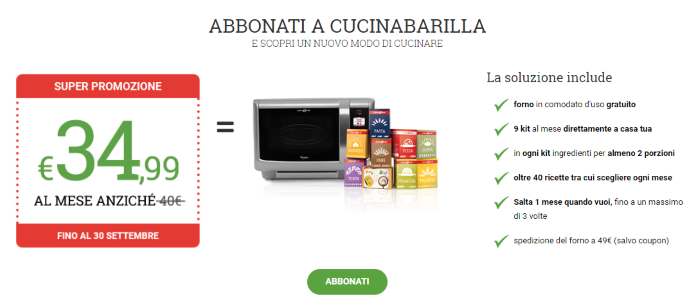 The Cucina Barilla kit
The initial proposition was not particularly attractive: it involved a one-off activation fee of 49 euros and a subscription of 34.99 euros a month for 9 kits of your choice.
More recently, CucinaBarilla has radically changed its proposition, offering kits that can be prepared in a pan or with the legendary Thermomix; the subscription requirement has also gone, and you can buy kits (a minimum of 3 per order) on demand.
Using the online streaming metaphor, it has moved from the Netflix model to the Chili model.
In practice, the approach is very similar to www.freshly.com, which we looked at earlier. From this perspective, it remains to be seen whether they will expand the catalogue towards healthy products or traditional Italian cooking (or perhaps they can be the same thing 😂).
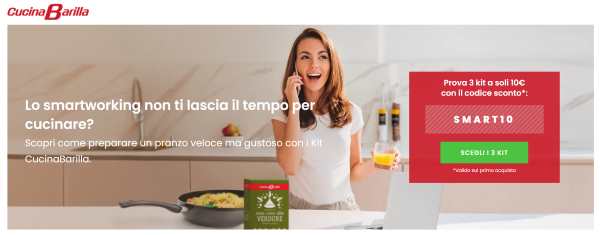
With the army of remote workers, this market could be very interesting, and removing the subscription requirement will make it possible to attract many trial customers whose loyalty can be developed over time.
I find this initiative very interesting and worth monitoring in a market such as food FMCG, which is fundamentally very traditional.
We need to experiment to succeed in the market of the future, making the most of chance and new trends (long live Incidental Marketing 😂).
A food brand must complement its brand-building and online reputation strategy with a strong inbound marketing strategy for the medium and long term.
The aim is to build a direct relationship with its customers.
A consumer goods brand has an extraordinary strength: packaging!
Millions of products are present in consumers' homes and are handled every day.