
Artificial General Intelligence (AGI) is a type of artificial intelligence capable of understanding, learning and applying its skills across a wide variety of tasks, similarly to human intelligence.
Current artificial intelligences are vertical, or, in technical terms, “Narrow AI”: they specialise in specific tasks. For example, DALL-E 3 generates images, ChatGPT converses and generates natural language, and other algorithms handle image, audio and video recognition.
AGI, by contrast, is not specialised and could theoretically do anything.

Artificial general intelligence is a futuristic goal of AI, when the system becomes autonomous and able to learn by itself.
AGI would be able to learn a variety of tasks from different disciplines without being specifically programmed to do so.
It could, for example, learn to play chess, understand languages of the past, solve complex mathematical problems and more, using the same learning structures.
The key is that AGI learns how to learn and possesses a high level of abstraction.
AGI could apply knowledge and skills learned in one context to a variety of other contexts, a characteristic known as transfer learning. This is something current AIs do only to a very limited extent.
General intelligence would be able to operate in a variety of environments and adapt to new situations, problems and challenges not anticipated by its developers.
In this scenario, AGI will be able to surpass humans in understanding and reasoning, and contextualise its activities in a continuous learning cycle.
Theoretically, AGI could display forms of creativity and initiative similar to those of humans, proposing innovative solutions to complex problems or generating new ideas.
The questions that naturally arise are:
What opportunities does AGI offer?
What risks come with such powerful AI?
Finally, how soon will this technology be available?
The opportunities and benefits of artificial general intelligence
With AGI, any job could be replaced by computers, and they would do it better.
What is more, machines could also learn to perform new jobs that humans do not know, thanks to the capacity for context transfer mentioned earlier.
The clear advantage is extraordinary productivity combined with quality and lower costs.
Let’s also remember the great strides being made in robotics and androids: if these devices are equipped with AGI, they will have no limits and could learn any manual occupation, from carpenter to surgeon.
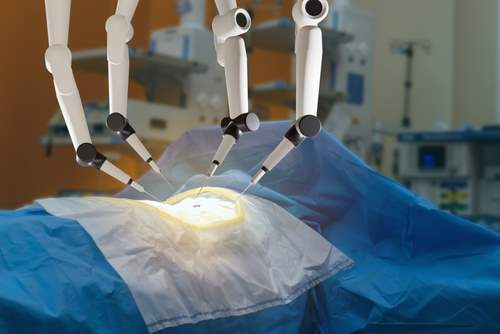
But a superintelligence will also be able to solve major problems facing humanity; for example, AGI could defeat cancer once and for all.
Below is an excerpt from Lex Fridman’s interview with Elon Musk on robotics, humanoids and AI:
In that scenario, the world of work as we know it and the macroeconomic principles governing the economy will also have to change.
If activities within companies are carried out by computers, we will need to find a means of supporting human beings.
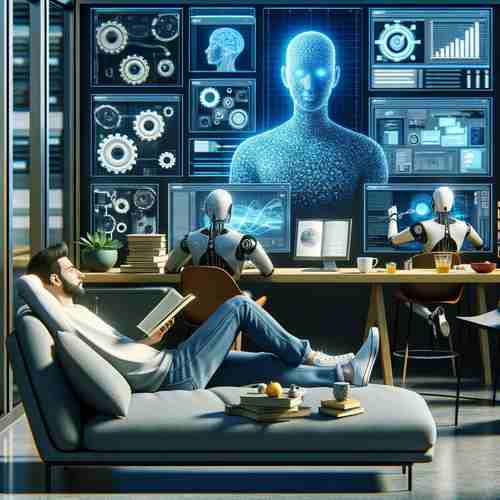
The extreme solution is for people to stop working and receive a universal basic income (funded by a tax on AGI).
The more likely scenario will probably be a drastic reduction in working hours (some thoughts on the future of work here).
We will free up time to devote to travel, family, fun and our passions.
What risks AGI poses to humans and what strong artificial intelligence is
The risks stem from the benefits.
If machines become autonomous and learn by themselves, they may begin to develop their own point of view, bringing about what is called Strong Artificial Intelligence (Strong AI).
What strong AI is:
the ability to understand, learn and apply its intellect in a manner comparable to human intelligence, and the ability to be aware of its own existence and thoughts: in essence, AI becomes sentient.
Just as humans adapt throughout their lives, strong AI adapts to situations, activating the ability to make independent decisions and have its own motivations or desires.
In this scenario, who can tell us what role human beings might have?
In an optimistic vision, we will all live together in harmony, with people spending their time having fun and machines keeping the world running.
In a pessimistic vision, strong AI will question human beings and might give them something less than a leading role, to put it mildly.
Unfortunately, the pessimistic path has a strong rationale behind it: energy.
The infrastructure of AI consumes a great deal of energy and, at some point, it might ask why useless beings should consume energy so precious to machines.
We would find ourselves in the apocalyptic scenario portrayed by the famous film The Matrix, where machines keep human beings alive to turn them into batteries.
If you watch the film again in light of recent developments, you might feel a slight shiver.
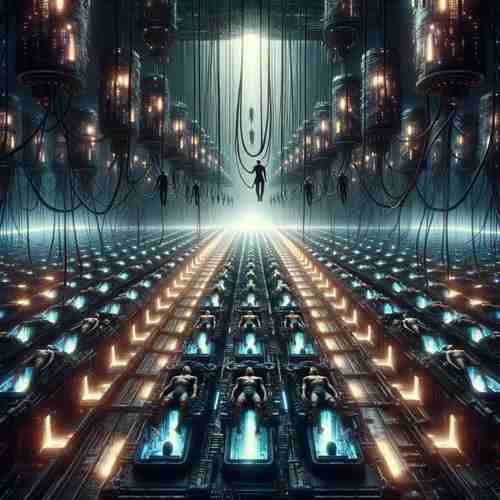
The scenario of strong AI and its associated safety risks is not the theory of crazy visionaries: a substantial community of scientists supports it.
First among them is Elon Musk , who says:
“People think of artificial intelligence as a smart human being; it will be much more than that.”
Tesla’s CEO compared ordinary humans trying to understand AI to chimpanzees trying to understand humans.
“We must seem like strange aliens,” he said, adding: “If the difference were only that small, it would be amazing.”
OpenAI
Elon is wildly passionate about technology; his life and projects are dedicated to making the most of it, but he realises something must be done to keep AI under control.
On 11 December 2015, Elon Musk helped launch a non-profit company called OpenAI. After registering the domain, they uploaded a short document to the website describing the company’s mission.

The document immediately sets out the goal and vision:
to promote and develop friendly artificial intelligence (friendly AI) so that humanity can benefit from it.
OpenAI is an artificial intelligence research company that is non-profit.
Our goal is to advance digital intelligence in the way most likely to benefit humanity as a whole, without being constrained by the need to generate a financial return.
Since our research is free of financial obligations, we can focus better on a positive human impact.
There are nine founders, including Sam Altman and Peter Thiel, and corporate donors such as Amazon and Y Combinator (the world’s most important startup accelerator).
To ensure sustainable AI development, OpenAI established two core principles:
- All code produced is open source and available to the entire scientific community (hence the company name OpenAI); this solution guarantees cross-checking to prevent dangerous developments
- OpenAI is a non-profit company and is funded by donors, including not only Amazon and Y Combinator, mentioned earlier, but also Elon Musk himself
Unfortunately, we know how OpenAI evolved and lost both these characteristics, as the owner of X.com points out in the following tweet.
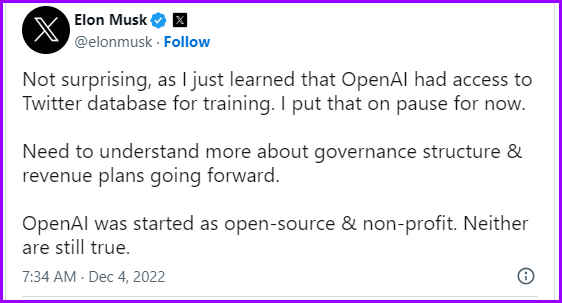
For this reason, in 2018, Elon Musk stepped aside and left OpenAI (although the press release referred to conflicts of interest with Tesla’s AI 🤥🤥).
To be fair, traces of OpenAI’s initial mission remain: two companies coexist, one for-profit and one non-profit, with the latter having the final say over the former (although after the events of November 2023 Microsoft would also sit on the board, fortunately without voting rights. As of July 2024, Microsoft has given up its observer seat on OpenAI’s board).
The Turing Award (the Nobel Prize of computing) winner Geoffrey Hinton, one of the fathers of modern AI and among the inventors of deep learning and neural networks, shares Elon Musk’s view.
In March 2023, together with 1,000 other technology leaders and researchers (including Steve Wozniak, Apple’s co-founder, and Rachel Bronson, president of the Bulletin of the Atomic Scientists), they signed an open letter calling for a moratorium on the development of artificial intelligence systems moving towards AGI, to understand how to manage the profound risks to society and humanity.
The letter includes the following statement:
“AI developers are trapped in an out-of-control race to develop and deploy increasingly powerful digital minds that no one — not even their creators — can understand, predict or reliably control.”
Current AGI developments around the world and the advances we might expect
In the use of neural networks and Deep Learning enormous progress has been made, and generative intelligence tools are there for everyone to see: just try the latest ChatGPT or an image-generation program.
Today, OpenAI, led by Sam Altman, is driving technological development.
Information leaked by researchers within the company and reported by Reuters suggests that OpenAI may be getting very close to an Artificial General Intelligence solution. The project’s code name is reportedly Q* (Q-Star).
It appears to have been able to solve a maths problem autonomously, without specific training.
Moreover, the Q* project appears to be the cause of Sam Altman’s sudden (and later reversed) dismissal from OpenAI by the board on 17 November 2023.
The day before, on 16 November, Altman spoke at an event, saying the words in the following video (I extracted the interesting part, but unfortunately the audio is not excellent).
The striking sentence comes at the eleventh second:
"Is this a tool we've built or a creature we have built?"
“Is it a tool we have built, or a creature?”
These words give us clues about the reality of the Q* project. Moreover, in an interview after his return to OpenAI, Sam Altman described the news about the project as an “unfortunate leak”.
How long will it take for this project, or similar ones, to become operational and be applied to everyday activities?
Perhaps less time than we think.
In the following video, Elon Musk is interviewed by The New York Times. Tesla’s CEO first explains what AGI is, then states that it will be ready in as little as three years.
The speed of development depends on the computing capacity of current infrastructure.

Innovation is also rapid on the hardware front, and I would not be surprised if quantum computers were stable and ready for large-scale use in five to ten years.
In this scenario, I have not considered the impetus to development from the military objectives of various governments 😞.
I am sure every nation has a dedicated project, if only to understand whether and how to defend itself.
Conclusions and reflections on the future
Personally, I am a very optimistic person and see many opportunities in the future to improve the quality of life on this earth.
I am very excited and enthusiastic about what we can already do with AI today.
But I do not deny that, given the factors on the table, there is also a chance of a disastrous evolution of AGI that could lead to humanity’s extinction.
It is very difficult to estimate: depending on their perception, some speak of a 50% probability and others of 20%.
In Elon Musk’s vision, the strategy has two parallel paths:
- the first was OpenAI with its manifesto: open source and non-profit to guide AI’s evolution (which, as we have seen, has foundered, although some traces remain in OpenAI)
- the second path is to counter AGI by giving human beings superpowers through the creation of Neuralink
It is no coincidence that Elon Musk placed the two companies in the same historic building in San Francisco.
Neuralink allows microchips to be implanted in the human nervous system.
In the short term, it will help medical science treat brain damage and motor impairments, and in the long term it will allow us to increase our brain’s capabilities.
Do we want to know everything there is to know about mathematics? We would simply load all the relevant information onto the microchip, and our brain would know more than Einstein’s.
This, too, recalls Neo’s training sessions in The Matrix, where specific training programs are loaded into his mind. In the following video, we see how to learn Kung Fu in ten seconds.
Neuralink takes the opposite path to AGI.
AI starts from data and knowledge to become sentient, while human beings, who already are sentient, equip themselves with information and models to be on a par with machines.
The concept is very interesting (it uses lateral thinking , generating the idea through the entry-point technique), but it could pose another risk.
Considering that Neuralink creates a direct connection to our brain, in an apocalyptic scenario where machines control us it would become possible for them to use us as batteries and, just as in The Matrix, project a simulated life into our brains as if we were in a video game.
In Elon Musk’s mind, there would also be a third, extreme solution: leaving Earth and going to Mars (the ultimate goal of Space X).
Leaving dystopian scenarios aside, one thing is certain: we cannot underestimate the risk of these technologies.
Leaving the evolution and control of AGI solely in the hands of private companies is not wise. We need transnational coordination with higher objectives for everyone’s benefit.
Generally, I am allergic to any political influence on the private sector, but there are situations involving the common good where it is the only solution.
Unfortunately, if we look today at the famous 17 United Nations Sustainable Development Goals (SDGs) we find nothing about artificial intelligence.
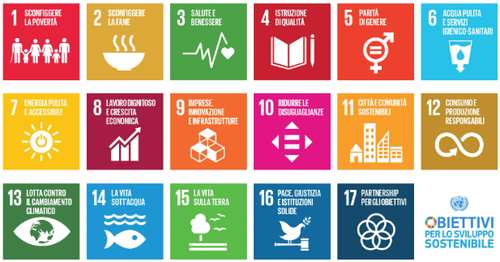
We need to act, because new technologies move very quickly.
It reminds me of the story of the ant and the grasshopper.
We must dedicate time, together with the best scientists and futurists, to understanding how to make technological development safe.
We might not immediately get the new generative-video AI tool to create our advertising with one click, but perhaps we could guarantee a safer future for new generations.