
The arrival of ChatGPT and generative AI as a whole has had an enormous impact both on content production and on how people experience that content.
If we ask ChatGPT (or Gemini or Claude) a question, we get an answer directly from a language model trained on a huge amount of online content (including ours).
The search engines, Google first and foremost, are changing the experience they offer to avoid losing users, by also giving answers directly to them.
In this scenario, how can content producers get even a tiny bit of visibility?
How can we stand out from the answers provided by AI language models?
Are we destined to be replaced by AI in creativity too?

As a content-strategy enthusiast, these are questions I have asked myself and tried to answer.
Playing with the various AI environments, I have found the following elements that can differentiate us from machines when creating any kind of content (they apply at both individual and company level).
Valuable content 💎
It may sound obvious, but it is worth remembering: to be noticed and recognised, we must provide value.
If we can help, educate, inspire or entertain, it is only a matter of time before our content is discovered (even independently of search engines) and shared.
Value has both an objective and an emotional component: let’s always remember the what, how and why.
Brand identity 🧬 and personality
It is essential to build a distinctive identity and personality of your own.
You need to make people want to read and hear how you develop a particular concept.
You need to become recognisable.
Always put something of yourself into the content authentically, especially your way of seeing the world (this applies to companies too).
Whether it is a video, a text or a photograph, you can always offer your own interpretation.

After all, much of what makes content unique and recognisable comes from this.
It is why people recognise and appreciate a writer’s pen or a director’s video.
The value of emotions ❤️
Machines do not have the same ability as people to stir emotions.
Create content that makes your readers’ hearts resonate.
No language engine can simulate the nuances of telling a good story.

Tell your personal story 🚶
Life experience is something no machine can replicate.
If you tell the story of a journey or explain how to do something, refer to what you have done in the past and include personal anecdotes.

When we ask ChatGPT for this information, it often invents the content — or, more precisely, combines the material it has so that what it says makes statistical sense.
Irony and humour 😂
I have tried asking ChatGPT to write text with ironic and humorous nuances, but the result has always been disappointing, and you can tell a mile away that it was produced artificially (except when it reproduces other people’s content).

Human beings can combine words creatively, play with meaning in unexpected ways and make us smile.
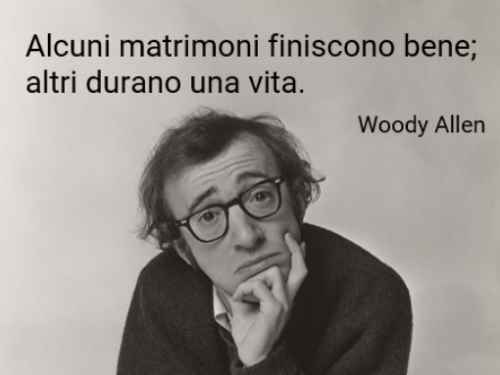
Always try to add a touch of ‘sense of humour’ when you can (as the master Woody Allen teaches). Of course, it also depends on context: a bank’s content allows less freedom than a travel company’s.
Unleash creativity 🤪
The human brain’s strength does not lie in the number of neurons it contains, but in the synapses’ ability to connect them.

Today, AI cannot match these connections (perhaps it will manage it in the future with quantum computers?).
Creativity is precisely the ability to make new connections: to combine ideas, concepts, stimuli and things in new ways.
Train your creativity, because it will allow you to create content that stands out from the rest.
Personally, I have put together a short guide to studying, training and improving creativity which I am happy to share, because I believe that since the dawn of time, humanity’s driving force has always been its creative ability.
Creativity will save us! 😉🤗
Build a relationship 🤗 and use multiple channels
Build a relationship and a community with the people who read your content.
Keep a communication channel open and accessible from any platform: people can write to you through a contact form on your website or your social profiles.
Creating a newsletter or allowing people to register on your website with an email address helps keep the relationship alive.
In Content Strategy, social platforms are very important for becoming known and keeping relationships alive by distributing your content.
But there is no point being on every social network: it is better to focus and choose those most aligned with your content and the audience likely to appreciate it.
Use images, videos, presentations, charts, etc.
Express what you want to say in formats other than text.
LLMs are strong at text, but in generating videos and images they still lag behind in their ability to communicate a concept.
Video, in particular, is the key to being unique.