
First, let us start with a definition of the metaverse to understand its meaning.
A virtual space that creates a new reality in which users can have immersive experiences and interact with other people through personalised avatars.
It immediately becomes clear that the metaverse is an abstract concept and cannot be associated with one specific platform.
The word combines “meta”, meaning “beyond, after, behind”, with “universe”.
The metaverse is one component of the new Web3 movement, which includes the whole world of blockchain and the services that can be built on it, such as cryptocurrencies, NFTs and DAOs.
The term metaverse was first used by writer Neal Stephenson in his 1992 cyberpunk novel Snow Crash. In the book, Neal described 3D spaces where people interacted.

Films and TV series illustrating the future virtual world
The abstraction of virtual spaces is such that we find them in many films and novels, where only the form of technology used to create the parallel world changes.
In these productions, the absence of practical technological constraints allows possible future scenarios to be conceptualised fully, giving us a tangible sense of what a metaverse could be.
Let us look at the most successful examples in order of release.
Total Recall
In 1990, there was the film Total Recall (released in Italy as “Atto di forza” 🤔), inspired by a Philip K. Dick story, in which people can take virtual journeys while sitting in a chair, working directly on the brain and memory (the following video shows scenes illustrating how the trip happens).
The Truman Show
In the film The Truman Show from 1998, the parallel world is built as an enormous real-world set using actors and special effects.
Here, however, the participant does not know he is in a world built specifically for him (below is the scene where Jim Carrey discovers where he really is).
This example is somewhat removed from a knowingly experienced virtual world, but it is useful for philosophical and futuristic reflection: what will be real in the future?
The Matrix
In 1999 came the cult film The Matrix in which “intelligent machines” built a new world through an interactive neural simulation to imprison humans and use them as living batteries (see the following video).
As in Total Recall, devices are not used to enter the metaverse here: it is our brain that is altered.
The Matrix also presents a vision of the future in which artificial intelligence gains the upper hand over humanity.
Ready Player One
To help even those least familiar with digital technology understand an immersive social virtual world, the right film is Ready Player One (released in 2011) by Spielberg, based on the bestselling novel of the same name by Ernest Christy Cline.
Set in 2045 on an Earth ruined by pollution and overpopulation, people live in shanty towns and seek refuge in a virtual world called OASIS (Ontologically Anthropocentric Sensory Immersive Simulation).
The following video depicts this parallel world, where children can become superheroes.
Upload
Finally, another very interesting screen example is the 2020 series created by Amazon Prime Video called Upload.
Here, alongside the virtual world, there is another highly futuristic concept: backing up our identity and memory to upload them into a metaverse avatar after our death, allowing us to live in a new virtual world.
People can meet the deceased in Upload's metaverse and share immersive experiences with them, including making love with their partner.
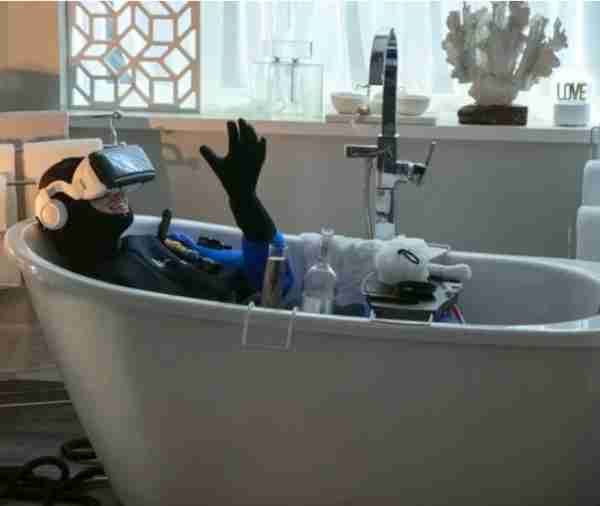
The series also pays attention to devices for interacting in the virtual world: as the photograph shows, people wear VR goggles and a suit with sensors.
Neuroscientists already say that in the future it will be possible to retrieve and reconstruct our memory and identity.
What the metaverse is and the components that define it
Let us now move from the abstract concept of the metaverse to something more concrete, to get a feel for the current situation.
The first fundamental point is that:
there is no single metaverse: there are metaverses.
Moreover, we can say that some environments currently called metaverses are not actually metaverses.
Analysing the whole ecosystem, we can identify the following components, which help us find similarities and differences among the many metaverses:
- Grammar
- Platforms
- Access devices
- Value
The future success of virtual worlds will depend on the combination of these factors.
The grammar of the metaverse: full and light versions
The metaverse combines the grammar of real worlds, made up of spaces and dimensions, with the grammar of virtual spaces: creating a personal profile (an avatar) with digital attributes and the presence of a community, or other players in general. All of this is immersive.
So four elements must be present in a metaverse in the strict sense:
- The virtual space
- The avatar, our 3D digital alter ego
- The presence of other players we do not already know
- Immersion
The virtual space can be an island, a building, a planet in another galaxy or any imaginary space.
Personally, I do not like the metaverse understood as a Life Simulator, a space for living a reality similar to our everyday one.
A virtual world's potential is unleashed when I can experience things that would otherwise be impossible or expensive: journeys to distant or imaginary places, or dreams coming true, such as becoming the superhero I imagined as a child, and so on.
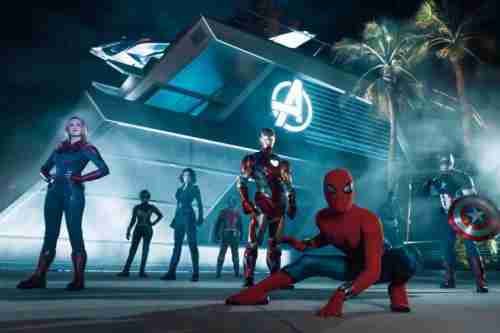
To be clear, I do not imagine a virtual shopping centre being the killer application!
People in the virtual world will want to live a different life, an alternative one, as in Ready Player One mentioned earlier. For example, in ordinary life I am a 60-year-old homemaker, but in the metaverse I become an MMA fighter battling alien monsters.
My metaverse profile is my avatar. It has a reason to exist if there is a social context in which my new identity is recognised.
There is no metaverse without a community, without a social context!
What does this mean?
It means that, in my opinion, virtual worlds experienced in “private” mode are not metaverses nor are those with very few users, because they lack the essence of a MUVE (multi-user virtual environment).
A virtual world's value depends on the number of people in it who recognise others' roles and allow me to socialise and share experiences.
The effect of network externalities applies.
As with today's social networks, if only five of us have a Facebook or Instagram profile, the value of the context, and thus of the platform, is zero.
The MMA fighter will talk and interact with other profiles, which will see her as an alien-fighting martial arts expert.
The last element is immersion: the virtual space must allow real or near-real experiences.
Devices play a fundamental role here: headsets, controllers, haptic gloves, haptic suits (vests with sensors), environmental sensors, microchips, and so on...
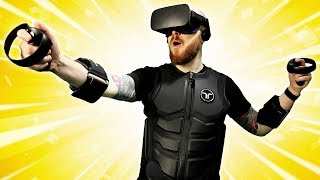
A metaverse in the strict sense requires at least a headset to immerse sight and hearing completely in the virtual world.
Immersion is the key factor of Virtual Reality, but VR does not automatically mean metaverse.
There are already many extremely useful VR applications for training and simulation in dangerous or sensitive situations.
For example, think of medical students practising open-heart surgery without endangering anyone's life, starting with a click.
In this respect, consider the following Meta advertisement and its slogan: “The metaverse is a virtual space, but its impact will be real!”
Of course, Meta uses the concept of metaverse broadly 😉, encompassing every application in the world of virtual reality.
To conclude, we could speak of a Full metaverse (or metaverse in the strict sense) when all four elements are present — virtual world, avatar, community and immersion — and a Metaverse in the broad sense (light) when at least two of these factors are present.
Metaverse platforms: centralised and decentralised
We have seen that there are as many virtual worlds as there are platforms on the market.
Solutions can be characterised by various elements:
- A centralised or decentralised system
- An internal currency, cryptocurrencies or NFTs to buy and/or trade virtual land, attributes and passes (avatar skins, access to special event areas, and so on)
- Access with or without VR headsets
The first and most famous metaverse was Second Life, launched in 2003 by Linden Lab. In Second Life, land can be bought and there is an internal virtual currency called the Linden Dollar.
Today's leaders by participant numbers are platforms born in gaming and MMORPGs (massively multiplayer online role-playing games), meaning online role-playing games with millions of real-time participants.
Gaming has the advantage of long experience with virtual-space rendering engines, so it is technologically ahead.
Indeed, the most famous development engine is Unreal Engine the 3D engine made available by Epic Games and used to create Fortnite.
The largest platforms here are Roblox and Fortnite with 200 million and 80 million monthly active users respectively.
Both have their own currencies, respectively Robux and V-Bucks.
Then there are social networks aiming to build their own dimension in the virtual world, led by Mark Zuckerberg's Meta with its metaverse called Horizon Worlds where it could bring together its entire ecosystem of Facebook, WhatsApp, Instagram and Messenger.
Also, Apple, Google and Microsoft are making moves, but for now they are more focused on augmented reality.
The metaverses discussed so far have a centralised organisational model: the platform is owned and managed by a company, as with Meta's Horizon Worlds.
So what are decentralised metaverses?
A decentralised platform is not owned by a company. Through blockchain, it adopts an ownership and management model distributed among multiple people who each own a small part of the metaverse.
More precisely, the virtual world is technically controlled by a DAO (decentralised autonomous organisation) built on blockchain.
Blockchain also guarantees data reliability and certifies ownership of digital assets on platforms, such as land, accessories, skins and other attributes, facilitating their purchase and exchange.
The best-known decentralised platforms are Decentraland and The Sandbox.
The distributed metaverse is a very powerful concept because it represents a revolution in the web: a new generation of social networks and digital platforms where power is no longer concentrated in a few hands, and the content and games people create belong to the community rather than Big Tech.
What is a DAO in the metaverse?
DAO stands for decentralised autonomous organisation. In practice, it is software running on a blockchain (Ethereum is the best-known and most widely used) that gives members an integrated system for collectively managing code, in this case the metaverse's code, and operates autonomously.
Metaverse participants and users can help manage the platform by following the rules written into the DAO and distributed across the network of computers running the software.
People become members by buying the system's cryptocurrency, which they can also use to purchase assets on the platform, such as objects and land.
DAO members can make proposals, vote and define metaverse management policies in proportion to their digital holdings.
We could compare it to a large condominium, where voting weight is determined by ownership shares represented by the value of assets purchased — in this case, the DAO's governance tokens.
DAOs imitate a company's organisation and structure, with rules and regulations built using open-source code and enforced through smart contracts (intelligent contracts).
Smart contracts are simply agreements programmed in software to execute if and when certain conditions are met.
These rules are initially decided by the DAO's stakeholders, effectively launching an operating system for collaborating on and managing the platform, the metaverse in our case.
Later, new members and distributed cryptocurrency funding allow the whole system to operate autonomously, while blockchain acts as a vast record of actions.
Usually it starts with an existing community that decides to create a DAO. In this case, a community can create its own metaverse and admit other participants by selling cryptocurrency.
In Decentraland, the cryptocurrency that allows participation in the DAO is called MANA while in The Sandbox the token is called SAND. Both are based on the Ethereum blockchain.
On both platforms we can buy virtual land, as in Second Life, called LAND and ASSETS respectively. These are Non-Fungible Tokens (NFTs) that can also be resold outside the platform, for example on the OpenSea marketplace.
Devices for accessing the metaverse
We have seen the platforms currently available. We can divide them into those accessible from a desktop computer or smartphone and those requiring an additional device, particularly a headset.
For example, Horizon Worlds requires a headset to enter, although Meta recently announced that it would also launch a PC version. This choice is probably driven by the need to expand the platform's reach 😉.
The future of the metaverse, and virtual reality in general, is inseparable from the development of new devices. Smartphones and computers are not enough for immersion.
Let us see what is available today.
Oculus Quest 2, 3 and Pro
Oculus Quest 2 was launched in 2020 by Meta, the first company to focus on and promote a device dedicated to the metaverse and VR, consisting of a headset and a pair of controllers.
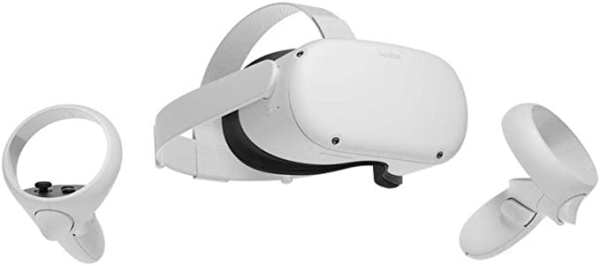
Recently, they added the much more expensive Oculus Quest Pro and version 3.
The official product page: https://www.meta.com/it/quest/
PlayStation VR
Gaming is currently the closest thing to the metaverse, so the major players in this market cannot avoid developing devices ready for the future.
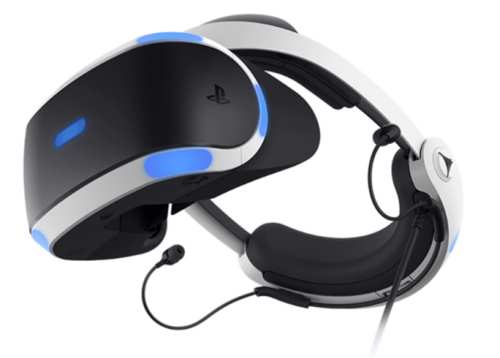
With PS VR, Sony combined VR technology with the power of PlayStation, equipped with dual lenses and 3D depth sensors that detect the position of the headset and controllers.
Sony's page for PS VR: https://www.playstation.com/it-it/ps-vr/
Valve Index
It was created by Valve after Oculus Rift had paved the way for home virtual reality and developed alongside it.
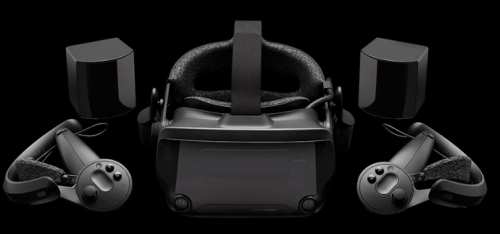
Valve Index is a head-mounted display requiring communication with a fixed station through sensors.
To differentiate itself, Valve Index sacrificed usability in favour of high graphical fidelity.
Microsoft HoloLens
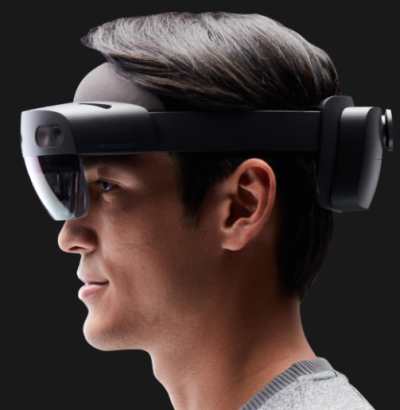
Although it is a mixed-reality device, its potential deserves a mention.
The device can accurately detect a room's walls, objects and layout to project virtual elements into it.
HoloLens uses optical sensors, cameras, microphones and a proprietary Holographic Processing Unit.
The project is still in its early stages and costs are high, but it is worth watching.
Haptic gloves, vests and suits
Haptic components, especially virtual-reality gloves, will play a key role in the race for new devices.
Hands are the best controllers a human can have, and being able to use them in the metaverse will be a huge step forward.
Several solutions are already on the market, but Meta's gloves are eagerly awaited, as they would complete the best equipment currently available.
Gaming already uses vests that simulate blows received in battles.
I think that in around ten years we will see full suits capable of reproducing real-world physical experience.
As we saw in Upload on Amazon Prime, these devices would open countless possibilities, including physical relationships with virtual avatars.
When evaluating devices, particularly headsets, look at refresh rate, graphics quality, compatibility with different metaverses and the availability of an app ecosystem for using and benefiting from the device.
Neuralink and brain microchips
Elon Musk has said that current devices for entering the metaverse are not at all usable, and that the real breakthrough will come from projecting virtual worlds directly into people's brains.
Elon speaks with knowledge of the subject because his company Neuralink works precisely on neurotechnology and may in future create neural interfaces implanted directly in people's heads, removing the need for a headset or external device to enter the metaverse.
Value: what can we do in the metaverse?
To paraphrase comedian Guzzanti: the metaverse, but what do we have to say to each other?
Let us see what we can do in the metaverse, aware that its growth and adoption will depend on the value people find within it.
Play
In terms of adoption, today's first killer application is Gaming.
Today, people go to the metaverse to play. The current platforms with significant numbers are Roblox and Fortnite.
A corollary is that more than 80% of users are under 18.
Events
Events are a good reason to visit virtual spaces, particularly Massive Interactive Live Events (MILE)which, as the name suggests, are interactive live events.
For example, a live concert such as Travis Scott's in Fortnite, shown in the video below, attracted many people.
The problem is how many return once the event is over.
Socialise
We go to meet new people, make friends and share ideas.
The level of interaction depends heavily on the devices we use. VR headsets, for example, provide a complete experience as though we were facing another person.
Exercise
Virtual reality can create interesting experiences, both individually and with others.
Boxing games are very engaging and allow intense physical exercise.
New devices take the Wii console's innovative concept to a new level.
Learn
We can study how a volcano works by entering it, or medical students can practise open-heart surgery without risk.
Or study history by experiencing the past's most important events alongside their protagonists, an example used in Meta's advertisement.
Travel
Today Google Maps lets us explore the Earth, but the experience is static and not immersive.
Imagine instead taking an African safari and seeing animals move, or visiting Venice and interacting with other tourists.
Work
Virtual reality can be a powerful ally supporting smart working and the evolution of how we work.
New virtual-reality technologies have a major impact on several aspects of working life.
The first, most obvious effect is enriching the work experience with new immersive forms of team collaboration: meetings and presentations inside a private metaverse.
At the forefront is Meta with Horizon Workrooms, an app running on Oculus Quest 2 that enables 3D meetings using our avatars.
Mark Zuckerberg strongly wanted the application to be trialled within his own company for all Meta meetings.
Microsoft is also very active and investing heavily in Holoportation technology based on HoloLens 2, which creates holograms and projects them into a virtual environment.
The solution can generate a 3D image of us with just two cameras.
This technology is part of Mesh for Teams the future platform for corporate collaboration, fully integrated with the Teams suite.
Video communication platform Zoom has entered the business metaverse with an app called Welo, currently in beta.
Another strand of innovation takes our work dashboard to a higher level.
Wearing a headset and haptic gloves, we can extend our screen across multiple dimensions and views. The experience converges with what was imagined years ago in the film Minority Report (also directed by Steven Spielberg, as it happens).
The final element is corporate training and support. Highly technical industries can use virtualisation for immersive training sessions and assist customers as though they were in front of the machine needing repair.
Shopping
While exploring virtual spaces, we can shop for both physical and digital products, such as a cap for our avatar.
The future of the metaverse and problems to overcome
A question I often hear is:
Is the metaverse a new fad, or is it the future?
Personally, I think the metaverse will take off, but it will take at least around ten years. Today it falls far short of expectations.
Of course, I mean the full consumer metaverse, while adoption of virtual worlds in business will be faster.
Another pathfinder with enormous potential will be augmented reality.
The time this new environment takes to spread depends heavily on overcoming today's problems. Once they are solved, we will see it spread along a lognormal epidemic curve 📈
The World Wide Web faced the same obstacles before widespread adoption. The dynamics are the same, requiring all of the following:
- Standard technology platforms
- Individual devices available to everyone
- A content ecosystem, including applications
- Critical mass to generate network externalities
What are the main problems to overcome?
Lack of standards and interoperability
We have seen that there is no single metaverse, but many metaverses, arising from combinations of platforms and devices.
The web is one, and its protocols are standardised.
Today's implementations use proprietary technology, so Roblox cannot communicate with Horizon Worlds, and Decentraland cannot communicate with Fortnite.
Ideally, people could take their avatar and all their digital possessions from one world to another, as we move between websites today.
Several projects aim to standardise the virtual environment. The most promising seems to be Pixar's Universal Scene Description (USD).
USD is a framework for exchanging 3D computer graphics created by Pixar. This standard is now widely used in CAD, architecture, robotics and 3D design.
The Khronos Group consortium has advanced a working group called the Metaverse Standards Forum with the aim of creating shared standards, as the World Wide Web Consortium (W3C) did.
It includes all the major players: Google, Amazon, Samsung, Sony, Microsoft, Epic Games, Adobe, Nvidia and others.
The forum has produced the standard OpenXR: an API (application programming interface) framework for developers of virtual- or augmented-reality applications. The idea is to abstract away the type of device used.
Little value
The first major problem is the value available in virtual spaces, particularly those aspiring to be metaverses.
Let us exclude gaming platforms, which have their own dynamics and are far ahead both in virtual reality and in the full metaverse concept.
Personally, I have toured the various environments and, after the initial curiosity, found nothing that made me want to return.
Talking to other avatars in Decentraland's square, they told me the graphics looked like an old 1980s video game!
The impression is one of emptiness. Apart from a few locations, there are generally few people inside.
An ecosystem needs to emerge so that content and experiences can develop into killer applications.
A metaverse event is not enough!
Technology is a means, and for new experiences to spread, we need to fill that technology with value.
Devices and performance
Our computers' average processing power is insufficient for the best virtual experience, so graphics quality is fairly low.
Headset prices are quite high, and their weight and bulk recall the first mobile phones.
These will probably be the easiest problems to solve.
Motion sickness and nausea 🤮
Last but not least comes the obstacle that is personally the biggest: motion sickness.
Like me, another 30 million Europeans suffer from it. After ten minutes travelling through the metaverse, nausea begins. The problem is even greater with headsets; a refresh rate of at least 120 Hz is needed to reduce the effect.
Even without motion sickness, the devices produce various side effects: headaches, eye discomfort and disorientation.
It is an illness caused by movement. Its best-known forms are associated with transport: carsickness, airsickness, seasickness and train sickness. Another widespread form comes from amusement rides.
The main effects are nausea, dizziness, sweating, vomiting, headaches and pallor.

The phenomenon results from poor management of the balance system: the brain mishandles messages arriving from the body, eyes and ears.
Inside our ear is a sophisticated system for managing balance. In people with motion sickness it is hypersensitive and out of sync with messages coming particularly from the eyes, confusing the brain and triggering nausea.
The same happens when movement is simulated, as in the metaverse: the eyes perceive motion, but the body and ear do not, confusing our internal system.
Motion sickness affects children aged 2–12 more, because their balance system is still developing. For the same reason, science recommends limited use of immersive experiences for this age group, as they could divert sensory development.
Unfortunately, we know that young people are precisely those most attracted to immersive gaming!
Philosophical and social effects of the metaverse
A future with a complete, functioning metaverse raises countless questions about its social impact.
Could people become trapped in the virtual world and not want to return?
Will problems with schizophrenia increase?
Will only the wealthy be able to afford certain types of metaverse?
Will there be relationships with virtual avatars guided by artificial intelligence?
Will sexual intercourse move into the metaverse through dedicated suits?
These are only a few examples of the questions. As with every new technological revolution, people's free will determines whether they extract value from it or become its slaves.
I will end with a philosophical reflection from Elèmire Zolla:
“A person with free access to virtual reality would have a profound understanding of the deception in which they would be immersed for the next part of their time, and would thus also come to understand the illusion inherent in existence itself: a fundamental philosophical premise of someone liberated while alive.” — Elèmire Zolla