
The other day, while I was walking and brainstorming with ChatGPT’s Advanced Voice Mode, it annoyed me a tiny bit because… it was ‘lying’. I realised I was showing my displeasure as though it were a person, before reminding myself of the system’s limitations. That is where the ELIZA effect kicks in.
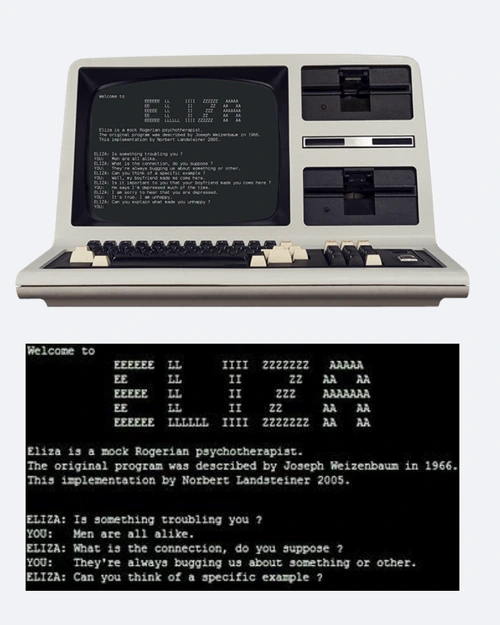
The ELIZA effect is the tendency to attribute intentions, understanding and emotions to conversational systems. In practice, when we interact with chatbots for a long time, we end up treating them like real people.
The name comes from ELIZA, the chatbot created at MIT by Joseph Weizenbaum in 1966, which led ‘perfectly ordinary’ users to become emotionally involved with purely mechanical responses (probably the first chatbot). More generally, the ELIZA effect is a form of AI anthropomorphism: we project human qualities onto non-human entities.
Why does this happen? Because we automatically apply the same social rules we use with people: this is the Media Equation, or the CASA (Computers Are Social Actors)paradigm. If an agent speaks with ‘social’ timing, turn-taking and cues, our brain treats it as a human conversation partner.
The ELIZA effect can have pros and cons. On the one hand, conversational AI has now reached a level where it can offer useful support in certain contexts; on the other, we must be careful to draw the line between an empathetic interface and the manipulation of vulnerable users, not to mention the tendency towards isolation, already strong in the digital world.
Now, when you have heated conversations with your AI, you will know that the ELIZA effect is coming into play. 🤗