
Who does not remember Giovanni Rana's commercials?
The advertising campaign, which began in the 1980s, is an industry success story and had a major impact on the pasta maker's business.
An amusing anecdote has it that when the commercial was being planned, the recommendation was to choose an actor who looked like the entrepreneur.
At that moment, Giovanni Rana's instinct kicked in and he said:
“What actor? I'll do the commercial myself!”
He was probably among the pioneers of CEO Branding, which is simply modern Personal Branding applied to the chief executive.
The entrepreneur or CEO puts their face to the company, talking about its values and meanings, its products and the conceptual areas close to the brand (for Giovanni Rana, for example, these might include good food, tradition, Made in Italy, and so on).
CEO Branding and, more generally, Executive Communications are fundamental for any brand and involve all company leaders: every modern manager must communicate through digital channels.
Think of the role of Elon Musk, Jeff Bezos, Richard Branson, Bill Gates, GaryVee, and so on.
The evolution lies in the content of the communication, which spans various areas, including those outside the company.
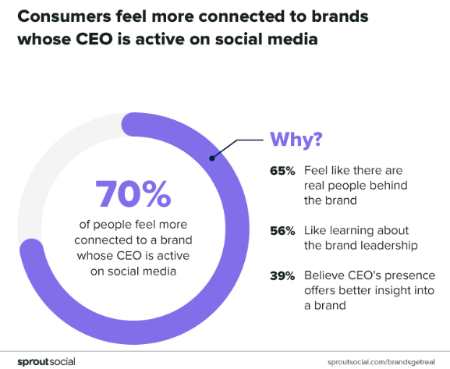
Research by Social Sprout found that:
fully 70% of respondents felt more connected to brands whose CEOs were active on social media and personally represented them.
CEOs who share thoughts and reflections seem more approachable, accessible, human, honest and trustworthy.
People like to feel that there are real people behind companies.
The asset of trust is a corporate resource that matters more than ever today, and people are more inclined to trust other people than an abstract brand.
Authenticity wins over the technical quality of the medium: there is no need to make videos with actors, elaborate lighting and sets.
A CEO does not necessarily need to reach a mass audience through their communications; opinion leaders or highly receptive audiences may be enough. One example is a chief executive sharing their thoughts on the LinkedIn platform.
We know this social network does not have Facebook's reach, but its audience is valuable and, through its authority, can influence many others.
External executive communications allow the CEO's vision and thinking to reach people inside the company much more effectively too, for the same reasons expressed by customers.
People working in a large company often cannot maintain regular contact with the CEO (or another top manager), so that leader's communications create an emotional bridge and help align everyone with the strategic direction.
Modern leaders work on their team's trust, autonomy and responsibility and must communicate continuously to maintain their leadership.
Across the Atlantic, they are further ahead in Executive Communications, partly because they are historically more accustomed to it and have a positive relationship with success.
The key is to provide useful content.
CEOs need their own Content Strategy, aimed at informing, educating, inspiring, helping and sometimes also entertaining their audience and nurturing a shared passion.
Some famous examples of successful CEO-led entertainment are Blendtec and Dollar Shave Club.
Blendtec's CEO, engineer Tom Dickson, began making videos in which he experimented with his blenders in search of the perfect product.
Michael Dubin, CEO of DollarShaveClub.com, entered communications history with videos telling the story of his company and its products.
Below is the most famous one, which went viral and inspired the communications of many startups.
Thanks to the digital revolution, there are now countless opportunities to communicate your ideas with zero barriers to entry, accessible even to the CEO of a small startup.
The best platforms for distributing content depend on the audience and what you want to convey. Personally, I recommend:
- A blog or a section in the corporate area of the company website
- A personal website, preferably using the CEO's first and last name (this allows a wider range of content)
- the www.medium.com platform
- YouTube
- LinkedIn Pulse for publishing articles
- Newsletter platforms (e.g. Substack)
- Podcasts
Depending on the circumstances, X, TikTok, Instagram and Facebook can also be used.
X can make sense as a discovery channel that distributes (perhaps automatically) content published on other platforms (such as LinkedIn).
The CEO content strategy for personal branding will become an integral part of their skills, like reading a balance sheet or creating a marketing plan, and they will devote the appropriate time to it.
Apple's advertisement with Mother Nature and Tim Cook
Apple too has embraced the power of executive communications, featuring its CEO Tim Cook in the commercial launched in September 2023.
The commercial shows Mother Nature (played by Oscar-winning actress Octavia Spencer) visiting Apple's offices to check what they are doing about sustainability.
Tim Cook and his Apple team show their progress in using clean energy, the goal of carbon neutrality by 2030 and the launch of Apple's first zero-emissions product.
Apple's CEO tells Mother Nature: “As you can see, we have innovated and reorganised almost every part of our process to reduce our impact on the planet, but there is still much work to do, and there is something else we wanted to share with you.”
They then show the new zero-emissions Apple Watch.
Mother Nature looks pleased and raises the bar, saying she wants to see more products like this.
Tim Cook replies firmly that she will, and that by 2030 all devices will have a neutral impact on the environment.
This is a perfect example of how the CEO personally stands behind the company and viewers of the commercial connect emotionally, feeling as though the promise is being made to us!
What is interesting is that the commercial features not only the CEO but also other company managers, particularly Lisa Jackson (vice president of Environment, Policy and Social Initiatives), who shows the zero-impact products.
In modern markets, besides delivering value to customers and the company (through profits and cash flow), a brand must think about providing value to society and the community in which it operates.
For this last point, direct communication from the CEO is essential, as Tim Cook demonstrates.
The Tesla and Elon Musk case
Do you know which car is the best-selling in the world, in Europe and in Italy?
One name, one brand: Tesla.
Tesla is the world's best-selling electric car. In Europe, it is also the best-selling car across the entire market (both combustion and electric cars), and second worldwide.
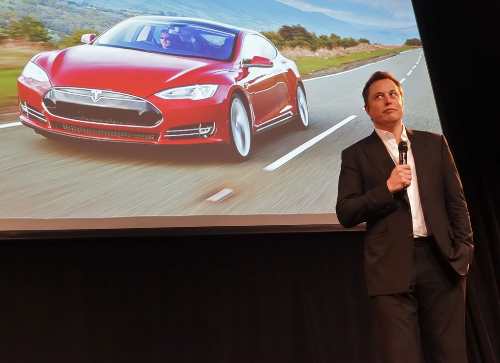
But how much has Tesla invested in advertising to become No. 1?
So far, ZERO. No commercials, no banners.
All the visibility and audience reach it has achieved is organic.
A key role in all this is played by the Personal Brand of Elon Musk and his Executive Communications.
Elon Musk is effectively a media outlet in his own right.
It is no coincidence that, immediately after the US elections, he wrote:
You are the media now.
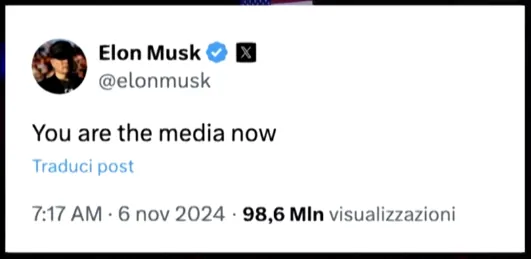
Musk is a competent CEO with a strong personality, capable of communicating his ideas and worldview both outside and within his companies.
Everyone associates Musk with Tesla. Despite the product's value, without the halo effect generated by Elon, nobody would know this car.
Please note: this does not mean advertising is unnecessary, but it demonstrates the power of the Personal Brand of a company's CEO.
Moreover, at the annual shareholders' meeting, Elon Musk announced that perhaps it was time to invest a little in advertising and that they would start experimenting. His exact words were: “We'll try a little advertising and see how it goes*.”
When will we see the first video commercials?
Will Musk appear in them, as we have seen with Rana, Doris and Cook?
Tesla has high brand awareness but advertising will also let it work on frequency and impact.
Mark Zuckerberg and Meta's communications
Zuck has lost his car! 🚗
Do you know how he finds it? 🤔
In the video, the CEO of Meta personally demonstrates a new feature of Ray-Ban Meta Glasses 🕶️ that helps remember actions, such as where you parked your car.
We are in the midst of a communications revolution.
The abstract brand is becoming less effective: to gain attention and build trust, a brand needs a face. But that face must be authentic, not the result of “plastic” communications.
Looking at Zuckerberg's social channels and content, it is clear how much he is investing in this kind of communication (also to repair a brand that has not enjoyed a great reputation recently).
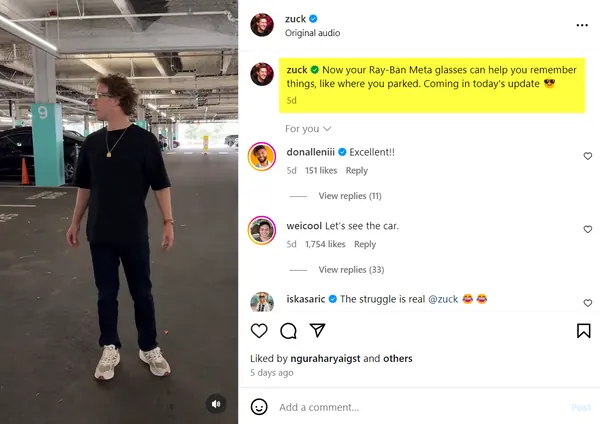
The CEO sheds institutional formality and communicates, experiencing the products authentically as a potential customer would.
He is not being asked to act, but to be himself: the technology-loving nerd who enjoyed writing code in his university room.
Zuck has been excellent in his keynotes too, conveying his passion and the value of innovation.
As we learn from across the Atlantic, Executive Communications, involving all the company's key figures (and beyond), is a very effective model. 🌍🗣️
Jensen Huang, NVIDIA's founder and CEO
Jensen Huang, NVIDIA's founder and CEO, has built a strong personal identity closely linked to the company brand.
His iconic black leather jacket has become a distinctive symbol of his brand identity, comparable to Steve Jobs's turtleneck or Sergio Marchionne's sweater.
During the keynote at CES in Las Vegas, Huang even appeared as an avatar, taking centre stage in presentations and official communications on NVIDIA's website.
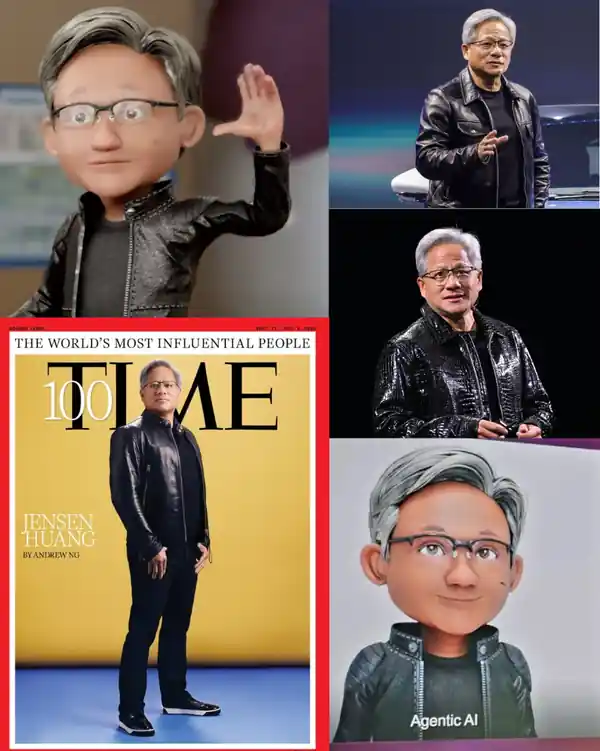
CEO branding is not limited to clothing: it concerns the public's entire perception of the leader.
A strong CEO identity can positively influence the company's reputation, build trust and differentiate the brand in the market. In Huang's case, his image as an authentic, visionary leader in artificial intelligence has helped lift NVIDIA to new levels of global recognition.
Investing in CEO branding means building an authentic narrative that reflects the values of both company and leader, creating an emotional connection with the public and everyone inside the company.
Banca Mediolanum, from Ennio Doris to Massimo Doris
Banca Mediolanum is a unique case: first founder and CEO Ennio Doris and then, after his death, his son (the current CEO) put themselves in front of the camera in the company's commercials.
Below is Ennio Doris's commercial from the early 2000s, in which he explains that his bank is built around you, drawing a circle in the sand of a salt lake in Tunisia.
Below is one of the many commercials featuring Massimo Doris explaining the company's products and services.
The personal brands of company managers and teams
Suppose we are mountain bike enthusiasts and follow Mario on various online channels.
Mario is a mountain bike expert who shares lots of useful, exciting content on the subject: videos, social posts and articles on his blog.
Through this content, we appreciate Mario's knowledge, experience and passion for mountain biking, and realise that we share the same values, beliefs and convictions.

Imagine Mario owns a mountain bike shop, for example, or works for a mountain bike retailer.
When we decide to replace our bike with a new one, where do you think we will go first for information and advice?
The value of employees' personal brands transfers to the company they work for.
In this case, Mario's reputation will directly benefit his company's reputation and business.
This applies to any activity: if I perceive the team as valuable, my trust in the brand increases.
Social Sprout's research tells us that 72% of people feel more connected to brands whose employees share information and value on social media.
This trust stems from the desire to know the people working in a company and to know that there are flesh-and-blood people there, just like all of us.
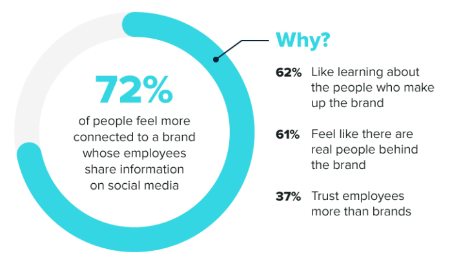
It follows that today, even during recruitment, it is essential to understand people's personal branding potential.
At the same time, more and more companies are working on Employee Branding and Employee Advocacy to train employees in external communications.
Employee Branding is the activity through which a company develops employees into Brand Ambassadors who become spokespeople for the brand across various platforms (Brand Advocacy).
Typically, this involves training in using different platforms and creating content. More advanced companies also have a content hub from which Ambassadors can draw material and/or inspiration.
This is a first step, but the greatest benefits come when the skills and passions of the people working in the company also emerge (as we saw in Mario's case).
If you are a Cyber Security expert at ACME, simply sharing your company's initiatives and products in the field is not enough: you need to build your own reputation in your area of expertise.
You will therefore make videos showing and explaining hackers' latest attack techniques, share reports, advice and solutions, describe problems you have faced and how you solved them, and offer your point of view and vision of where Cyber Security should be heading, and so on.
Simply creating and sharing this content will convey expertise and passion which, through the halo effect, will transfer to ACME.
Many companies have begun to understand the need to invest in training people.
Recently, CISCO launched a training programme on using LinkedIn for Employer Branding, Employee Branding and Advocacy.
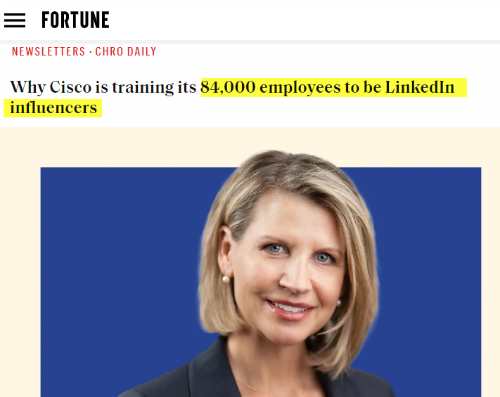
For CISCO's head of human resources, Kelly Jones, finding and hiring new talent is a team sport.
Employer branding focuses primarily on the company. It helps the organisation be perceived as an attractive place to work, both by current employees and potential candidates.
The telecommunications giant is training its more than 84,000 employees to act as talent influencers for the company, with the idea that each person can be a first-rate talent recruiter for the organisation.
CISCO has discovered the power of LinkedIn for Employee Branding, particularly when managers are active and make their voices and ideas heard.
The ability to tell stories and tell your own story becomes the critical success factor.
Conclusions
I am increasingly convinced that building a Personal Brand and communicating must be among the fundamental skills of the managers and chief executives of the future.
CEOs must have the desire, time and willingness to study, learn and experiment with CEO branding.
We are entering a new era: from digital transformation to content transformation.
To remain relevant, companies will need to transform themselves into Media companies too, to establish a presence in the themes and values around which they are positioned and acquire today's two most valuable assets: Attention and Trust.
The people in a company must become authentic media voices, with branding and personal branding merging as never before.