
Concentration problems? Easily distracted?
Do you struggle to maintain attention at work and while studying?
The inability to concentrate is now a common problem for many people, caused mainly by the exponential growth in the stimuli we receive.
Our brain would like to manage all the information, but ends up following every interruption and losing its mental focus.
Several studies have shown that today, while carrying out a task, we manage to stay focused for at most 35–40 seconds before our mind immediately starts seeking new stimuli. Our brain loves distractions because we are attracted to novelty (the novelty cognitive bias). While doing something, we check our smartphone without realising it, even when there are no notifications.

What is concentration?
The definition is very simple: it is focused attention: the ability to pay attention to a single source of information while ignoring other incoming stimuli. It also includes the ability to maintain this state for an extended period.
To stay focused, we need to be good at managing and living with the stimuli and potential interruptions we encounter every day.
Mental focus is essential in work and study. Paradoxically, 30 minutes fully immersed in an activity are worth more than five hours managing distractions.
Two quotations I like on this subject. The first, from Satya Nadella (Microsoft's CEO), says:
“We are moving from a world where computing power was scarce to a place where it is now almost unlimited, and where the truly scarce commodity is increasingly human attention.” (Satya Nadella)
The second quotation is from a great mind, Herbert Simon, a mathematician and economist who won the world's two most important intellectual prizes: Turing Award in 1975 (the highest honour in computing) and the Nobel Prize in Economics in 1978:
“What information consumes is fairly obvious: it consumes the attention of its recipients. So a wealth of information creates a poverty of attention and a need to distribute that attention efficiently among the overabundance of information sources that might consume it.” (Herbert Simon)
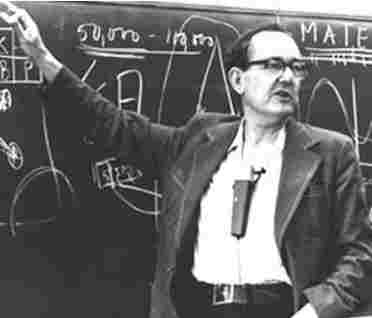 Herbert Simon
I like to describe today's overload of stimuli as the Paradox of the information society :
We have all knowledge at our fingertips, in whatever forms and formats we want, yet our mind risks losing its most important weapon: concentration!
We see the effects at work and in everyday life. Meetings are held because people do not want to concentrate on analysing problems, and those meetings last longer than necessary because mental energy is easily dispersed.
We live amid constant notifications and distractions; we live in a world of interrupts!
I remember my university days, when concentration was so intense that we lost our sense of time.
It is as though we have the most delicious, abundant banquet in history but no longer have any teeth 😟
How can we improve concentration? How can we regain that power?
Let us look at the best techniques science offers and some methods I have tried that work very well (for me so far, but I am confident they can help others too).
Let us begin by tackling and solving the first major problem: smartphones and social networks.
Concentration problems and the dopamine produced by social media and smartphones
When I was a boy, sources of interruption and information were far fewer than today: someone ringing the intercom, a call on the landline, and little else. Perhaps the only enemy was television.
Today there are more sources, platforms (social media, email, messaging), devices and moments of interruption. Our social circle has also expanded considerably, and we receive notifications and information from a much larger ecosystem.
For social media, we are a product to be exploited and sold.
The companies running social networks pursue business goals, and the currency of this world is users' continuous attention.
Facebook, Instagram, LinkedIn and the others want us to spend as much time as possible on their platforms.
To achieve this, they use methods intended to create dependence, an approach commonly called “Addiction by design”.
Addiction design is built on three closely related main factors:
- Vanity metrics: the number of followers, friends, likes, comments, and so on...
- Push notifications: interrupting our attention to redirect it towards social media
- Smartphones: inseparable from the previous factor, they keep us constantly connected, reachable and dependent on notifications
The mechanisms resemble those of gambling: small rewards are given to secure users' continuous attention. In behavioural theory, these mechanisms are called: “variable reinforcement schedules”.
Social networks give us unpredictable rewards that glue us to our phone screens and prompt us to check them even without notifications, unconsciously seeking social rewards that raise our dopamine levels (for example, the number of likes on our latest Facebook, Instagram or LinkedIn post).
Alongside social media, other tools naturally consume much of our attention, chiefly instant messaging apps (WhatsApp, Messenger and so on) and email.
In business, instant messaging is increasingly used alongside email for quick communication.
Apps such as WhatsApp, however, create expectations of almost real-time replies and consequently constant message checking.
 Reality ignored!
All these stimuli also affect our attention to the moment and our perception of reality!
The solution to counter the problem is simple and involves a progressive series of actions.
Turn off notification sounds for every app (email, messaging, social media)
The very first thing to do is turn off audible smartphone notifications.
On Android phones, simply go to Settings > Sounds and vibration > Notification sound > choose the SIM here and select the first option, “Silent”.
On some phones, the option is under Settings > Notifications
The procedure on iPhone is similar: silence the notification sound.
Remove indicators of received messages
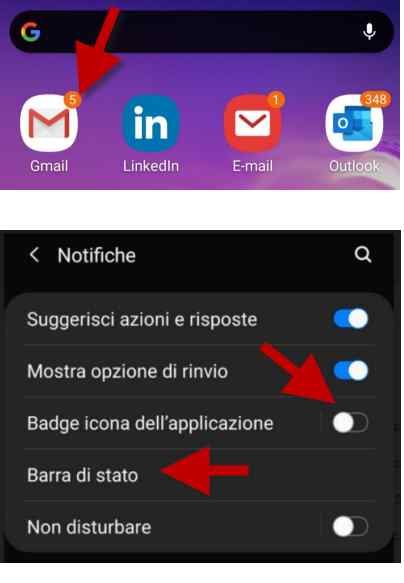
The next step is to remove visual notifications from the phone's home screen too, so that you are not tempted to read a message as soon as it arrives.
On Android, go to Settings > Notifications and deselect “App icon badges” and, under Status bar, “Show notification icons”. The wording may vary depending on the phone and Android version. Similar features are available in the Notifications area on iPhone.
An extreme technique for eliminating smartphone distractions is to put it in airplane mode. This takes the phone completely offline and also prevents interruptions from calls.
Organise email and message management (no multitasking)
A good habit for avoiding constant checks of work emails and messages, whose sound and visual alerts we have already silenced, is to set specific times to check them. Ideally, check first thing when starting work in the morning, again before or after lunch, and finally at the end of the day.
Clearly, we can increase or even reduce the frequency depending on the situation.
The problem with emails is that they often make us lose concentration completely and shift our brain onto other subjects.
It is as though someone stops us while we are running and starts talking to us. When we set off again, we have lost rhythm and time (sometimes we are even forced to stop).
Confirmation comes from studies by MIT neuroscientists, who have shown that Multitasking is only a myth: our brain cannot concentrate on two things at the same time.
In practice, when we think we are multitasking, we are task-switching.
Switching from one activity to another results in a productivity loss of as much as 40%!
I analysed all my work emails over a period of time and realised that very few required an immediate response. Moreover, if something is urgent, the telephone exists precisely to raise its priority.
It is not as easy as it sounds, but we can start with small steps and gradually increase the interval.
University of Washington studies on “attention residue” offer another reason not to check incoming messages constantly. Even a quick check draws our attention to something we cannot handle immediately. When we return to the original task, our mind suffers the negative effect of an unfinished activity.
It is as though part of our brain remains on the unfinished task, reducing performance on the current one.
A complete detox on holiday
When you go on holiday, take a break from your smartphone too. Switch off mobile data for 7–10 days to remove distractions.
After eight days of detox, you will have minimised the urge to interrupt yourself and significantly improved your ability to pay attention.
The following video shows the detox experiment at TED in Manchester and its effects on our brain.
A wonderful technique for improving concentration and creativity is Bill Gates's Think Week during which you disconnect from all external stimuli.
Meditation and managing the mind
The greatest minds, athletes and entrepreneurs meditate regularly! One of the greatest benefits of this practice is improved concentration and better management of mental energy.
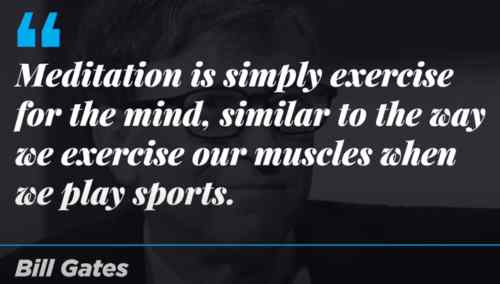
There are many forms of meditation (you do not have to become a disciple of the Dalai Lama 😃), from relaxation techniques and autogenic training to mindfulness, which has become very fashionable recently.
These techniques minimise the negative effects of stress, a major enemy of concentration. Meditation also requires training mental focus to direct all our attention to a specific point (our arm, our breathing and the air passing through our nose, an image, a sound, an image, and so on).
During the exercises, we learn to control distractions and thoughts that try to take us elsewhere.
Sport improves concentration
Exercise is known to help the brain work better, both creatively and in terms of concentration.
The improvement in our mind comes from the increased blood flow and oxygen it receives through exercise, and the release of chemicals such as serotonin, dopamine, endorphins and oxytocin, which help develop a positive attitude.
Another element not to overlook is sport's ability to relax the nervous system. As we saw when discussing meditation, relaxation is fundamental to a focused mind.
The best sports for relaxation are aerobic sports, preferably outdoors.
Sports combining skill and aerobic activity train our concentration twice over, because the brain must calculate constantly: tennis and basketball are perfect from this perspective.

A Northwestern University study involving around a thousand students found that people who regularly play sport have a unique ability to suppress “noise in the brain” and are therefore less easily distracted.
People who play sport are more focused and can therefore be more productive in the same time. Moreover, precisely because they need to manage time for physical activity, athletes are typically very organised and focused when working, to make the best use of their time.
Other research has shown that young people who exercise consistently achieve better academic results than those who do not.
Sport is also fundamental to young people's overall psychological, physical and mental development. Our culture needs to classify it not only as recreation but also, and above all, as an educational activity.
“The main difficulty in tennis is staying focused. After half an hour or an hour it becomes difficult, but little by little I learned the art of concentration.” Björn Borg
Tennis is the marathon of concentration.
How did the great Borg train himself to maintain intense focus?
His coach, Lennart Bergelin, encouraged him to play every single rally, whether in training or the first game of a match, as though it were the most important of his life!
Borg says that at first he could manage 30 minutes, but gradually the mindset took hold. The result was clear to everyone: one of the Swedish player's strengths was precisely his mental strength and ability to stay focused on court for over four hours.
Indeed, when interviewed about this strength, Borg said:
In every training session I played as though it were an important final, as though I were at Roland Garros or Wimbledon. Then, in tournaments, I managed to play as though I were training, without feeling any particular pressure.
In practice, this technique applies everywhere, including our work. Let us constantly imagine that the email or presentation we are preparing is the most important of our life. Over time, our brain will adapt to devote all its resources to what we are doing, without distractions.
Writing and thinking
The best exercise for improving concentration is writing!
Write something every day that expresses a thought: keep a diary or a blog, or develop an interesting idea on social media.
What matters is exercising our thinking and our ability to express ideas.
Writing requires concentration, so the more we write, the more being focused becomes a habit.
Reading is wonderful and useful, but every so often we need to stop and develop our own thoughts and opinions.
The Pomodoro technique and time management
What is the Pomodoro technique?
It is a method as simple as it is effective for managing concentration by dividing time into precise intervals (called pomodoros).
Here is how it works:
- choose an activity to carry out
- set a 25-minute timer on your phone and turn off every source of distraction
- when the timer rings, take a five-minute break
- repeat the process with another 25-minute interval (you can change activities or continue the original one; in that case, it helps to divide it into subtasks manageable within each interval)
- after four 25-minute intervals/pomodoros, take a longer break of 15–30 minutes .
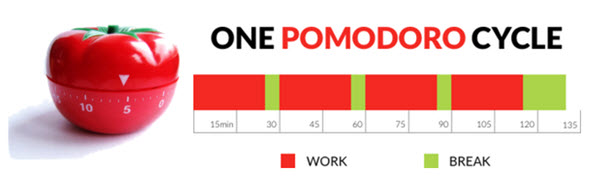
Ultimately, it is a creative way to make a pact with ourselves: stay focused for 25 minutes!
At first, we can train with shorter intervals. The aim is to practise full immersion in what we do, giving the brain the anchor of a break. Each of us can then adapt and modify the pact to suit our own characteristics.
The Pomodoro technique was invented in the 1980s by the Italian Francesco Cirillo. The name comes from the tomato-shaped timer he used when studying.
Today this technique is known worldwide and used by many brilliant minds!
Its strength lies in combining full concentration during an xx-minute interval with a break at the end.
During the break, I recommend wandering into a phase of “mind wandering” to keep the creative side active too.
Pre-visualising
One technique that gives me good results is to picture the activity I need to do beforehand. For example, if I need to prepare a presentation, I first imagine the most important elements to include.
It is a warm-up on the subject I need to work on, allowing me to start quickly and already be immersed in it. This can be done while exercising, walking, showering or having a coffee.
After all, the biggest obstacle is always getting started.
A corollary of this technique is to think through the next day's activities the evening before. It is also very useful to make a to-do list in the morning before starting work.
Do what you enjoy
It is obvious, but if we do something we are passionate about, concentration comes automatically!
That is why it is essential to follow our passions, bringing them into line with our talents and what the market wants.
Diet
Heavy meals slow brain function, including concentration. Whatever we eat, it is preferable not to eat too much and perhaps to have frequent snacks. At the same time, we need to prevent hunger itself from becoming a distraction.
A useful trick is to drink water regularly alongside snacks to increase the feeling of fullness.
As for foods, coffee, tea and chocolate (preferably dark) objectively increase our attention.
EFSA (the European Food Safety Authority) has confirmed increased attention from drinking a cup of espresso, and a 10% increase in our speed of processing information.
Clearly, caffeine use needs to be managed carefully, otherwise we risk overstimulating our nervous system, producing the opposite effect on attention.
Managing fatigue and mental tiredness
I have always loved physical exertion 🏃: you reach a point where your body tells you to stop, and it makes itself very clear.
Like the scene in the film Forrest Gump where, after running continuously for 3 years, 2 months, 14 days and 16 hours, the protagonist suddenly stops in the Monument Valley desert and says the famous words: “I'm a little tired” (translated from the Italian version; in English, “I'm pretty tired”).
By contrast, I have always struggled to understand mental tiredness 🧠. Sometimes I confuse it with a lack of motivation, so I persist and push, but I am wrong to do so.
Science tells us that mental and physical tiredness are assessed differently.
Physical fatigue is generally easier to identify and quantify because it relies on obvious, sometimes measurable signals. There is also greater awareness of the risk, which leads people to stop or slow down.
Mental fatigue is more subjective: awareness of its presence and risks is less immediate. We often underestimate it, thinking we can continue working despite signs of tiredness.
I have discovered how important it is to learn to recognise mental fatigue before it is too late.
To recognise mental tiredness, we can adopt some practical strategies:
- Listen to your body and mind: pay attention to the signals your body sends, such as difficulty concentrating or feeling irritable.
- Monitor your productivity: a significant drop in the quality of your work or an increase in mistakes may signal mental fatigue.
- Recognise the physical symptoms of mental tiredness: mental tiredness sometimes also manifests through physical symptoms, such as headaches, muscle tension or sleep problems.
- Practise self-reflection: taking time to reflect on how we feel mentally and physically can help identify early signs of mental fatigue. Keeping a diary or simply taking a few minutes each day to assess your mental state can help (meditation also supports this self-assessment).
If we fail to recognise the signals and force our mind to continue, we will achieve the opposite of what we want: reduced cognitive efficiency and more mistakes in complex tasks.
A break, a pause, allows the brain to recharge and reorganise, maintaining a high standard of quality.
I have learned that we need to treat the mind like an athlete's muscles and follow three fundamental elements: training, recovery and nutrition.
The ideal training for the mind is learning something new, while recovery comes less from physical rest than from activities different from and far removed from what we are doing (a lovely weekend trip, for example).
In this way, we can increase our brain's efficiency and longevity.
Forrest Gump was released in 1994, directed by Robert Zemeckis and starring Tom Hanks. It won six Academy Awards in 1995 in the following categories:
- Best Picture
- Best Director — Robert Zemeckis
- Best Actor — Tom Hanks
- Best Adapted Screenplay — Eric Roth
- Best Film Editing — Arthur Schmidt
- Best Visual Effects

Forrest Gump is a wonderful film that I loved, and I recommend it to young people, particularly those struggling to find a “role” in society.
The film's message is that anyone, even with major limitations, can fulfil their dreams and have a positive impact on the world.
Conclusions
Those who can master stimuli and interruptions and remain focused will have a competitive advantage.
Concentration is the weapon of the future.
The Holy Grail of focus is achieving the Flow State, that state of maximum focus in which our performance reaches the full extent of our potential.
Several studies have concluded that although people spend eight hours at work, they actually manage to concentrate for only three!
This means that, in theory, if we can control our attention, we could work half as much (four hours) and be more productive.
The new rich of the future will be those who have more time and an excellent balance between their working and personal lives (work–life balance).