
When discussing job satisfaction with friends and colleagues, I often notice that everyone's assessment is naturally subjective, but the underlying factors are always the same.
I have tried to set out the 6 key factors for evaluating our job and would like to share them:
- Professional satisfaction
- Monetary and non-monetary rewards
- Relationship with the direct manager
- Relationships with colleagues
- Logistics
- Work–life balance
These factors are fairly intuitive, perhaps even obvious, but they have helped me considerably in my own assessments.
I often ask myself the naive question: why do I work? Answering helps me understand what I am looking for and where I want to go.
Their relative importance depends on the person, role and stage of life.
“Find a job you love and you will never work a day in your life.” — Confucius
Professional satisfaction
Do you enjoy what you do? Are you constantly learning, expanding your skills and exploring new areas?
Can you express your vision and ideas and influence the company's future?
Do the organisation and your colleagues trust you? One measure is being asked for opinions: what do you think of...? What would you do if...?

These are just some questions that help assess professional satisfaction, depending on individual career goals and where we are in our working lives (for new recruits, learning matters more; for senior people, expression and influence matter more).
It is always worth checking our compass rather than suddenly discovering we are off course and must turn back.
Work routines have extraordinary inertia: years can pass before we realise our professional direction is wrong.
Of course, understanding our path is not always easy 😁
In our earliest jobs, we are fortunate if we earn money using what we studied. Then come satisfaction, freedom and the ability to express ourselves.
Monetary and non-monetary rewards
We may enjoy our work and be regarded as capable, but over the medium to long term, our value and pay need to align. Starting a family also significantly increases financial needs.
Unfortunately, there is no mathematical relationship between value and pay. Companies are not organisations that simply distribute resources: to reward their people, they must first be capable of extracting value from the market.
Each of us has a different currency, and it is worth knowing and declaring it at the right moments. Knowing the currency of people on your team is also useful.
I have learned that what one person sees as an advantage may not appeal to another.
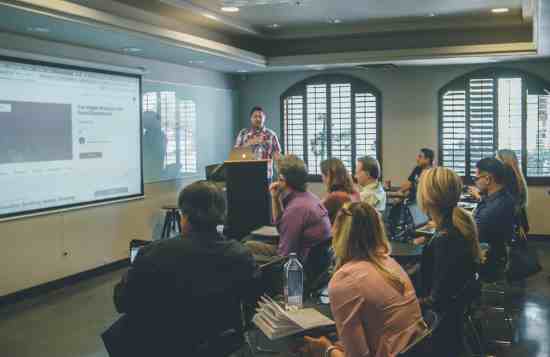
Beyond salary, there are different ways of valuing people: flexibility, training and knowledge, better work tools, involvement, and so on.
Early on, it is worth aiming for companies offering extensive training and coaching, whereas flexibility becomes essential in senior positions.
Relationship with your direct manager
The quality of our working lives and our ability to express our potential are strongly influenced by our relationship with our manager.
I mean both the human and professional relationship: the ability to learn new things, attitudes and behaviours.
Building rapport and trust matters if we are to work well and express the best of ourselves.
Nothing is worse than lacking our manager's trust 😟
I have been fairly fortunate with direct managers, but have indirectly experienced the difficulties of less fortunate friends and colleagues.
Problems with a direct manager are among the main reasons for changing jobs!
Employees do not flee companies, but managers!
Relationships with colleagues
We spend much of our lives at work, often more time with colleagues than with family.
That makes the best possible working atmosphere important!
A good environment, informal and open, activates positive moods that underpin success in any field.

Major technology companies such as Google and Facebook have long understood these factors, recognising that shared values must be sought during recruitment, not imposed afterwards.
We need to encourage diversity while maintaining common values, selecting people who create a good environment and encourage improvement.
The saying remains true: "we are the average of the 5 people we spend time with"
Over time, I realised how important the social dimension was to me. Daily relationships fuel the brain and our mood.
Logistics
By logistics (not a beautiful term, but understandable), I mean:
How long does it take to get from home to the office? How much of our lives do we lose in traffic or on public transport? Where is our family?
After a hard day's work, facing a long, stressful journey home can crush even the most motivated and satisfied person!
Is the workplace in a green area, or an industrial zone that becomes a no-man's-land after dark?
Being able to take a short walk outside the office to switch off, reflect on a work problem or eat lunch matters greatly to me.
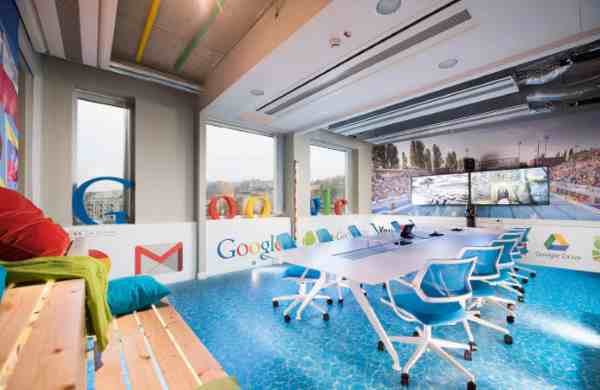
What are the workplaces like? Do they have plenty of light and windows, spacious meeting rooms and facilities such as break areas, canteens and showers?
Logistics typically become more important with age, because sacrifices become harder to absorb, psychologically more than physically.
Work–life balance
How many hours do we work? What do we give up? How does the stress we absorb affect our health?
We must recognise when we are exceeding our limits and stop in time, otherwise our bodies will signal it. The problem is what kind of signal that will be!
Unfortunately, I experienced this personally 😟, luckily without consequences.
I realise the importance we assign to this factor is highly subjective. For me, life's three pillars are family, work and health (without which we cannot enjoy the other two).

If we cannot find a balance, we need to reflect!
The importance of balancing private and working life is set to grow in coming years.
The remote working and flexibility in general (in place and time) will greatly help restore lost balance.
The COVID-19 health crisis greatly accelerated the move away from the office. Clearly, it did so by shifting everything to home working (WFO, work from home), but once that transition is made, it applies anywhere outside the company, allowing us to speak of WOO (work out of office).
We can work on a train, in the mountains, by the sea or while waiting for our children at sports activities. This lets us optimise available time.
Being able to work in nature exponentially increases our creativity and our ability to handle stress and pressure.
The story of my first interview and remote working
I remember my first interview as though it were yesterday — more precisely, my first important interview after graduating.
I had just graduated when an invitation letter arrived from Procter & Gamble. I put on the suit I had worn for my dissertation defence (great, getting more use out of it), and found myself in a room doing a business simulation with 15 others, all determined to display #leadership 😲 (I decided to stay quiet and only said a little at the end).
After the wild meeting, I was thrown into a small room to fill in sheet after sheet, test after test. By the end, I was ticking boxes at random!
A couple of days later, surprisingly, they invited me back for an individual interview (the random ticks had worked 💪).
That was when I gave a masterclass in how not to interview! I launched into a discussion of the future of #work, quality over quantity and #worklifebalance. I also said that maximum performance required dynamic working: some time in the office, some at home and some in nature! A madman! The #HR person is rightly still laughing 😂 (this was the 1990s).
It is interesting to see work changing profoundly, for the better. My only regret is that I am no longer twenty! But I can write this post looking at the sea 😂
Productivity gains in modern economies are driven by technological developments and how quickly and extensively we circulate information and people.
The Internet has revolutionised and accelerated the transport of knowledge, democratising it and making it accessible to everyone. Today, the only obstacles are laziness and poor concentration.
Transport has made enormous strides in moving people faster, but the real solution is to minimise physical travel and move only our bits. We could call it digital teleportation or simply video communication :-)
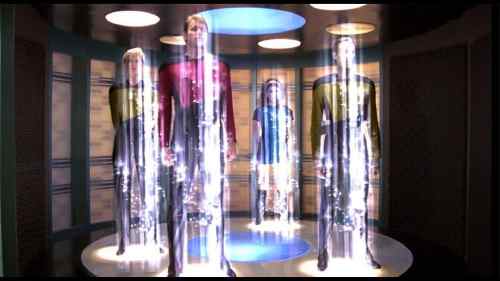
It is only a matter of habit and changing our mindset!
Productivity is not necessarily higher in the office; the opposite may be true. A solid foundation of mutual trust between company and worker is also essential.
I see a future of professionals able to work towards goals and projects, organise their own time and maintain a healthy balance.
Another concept helping us find work–life balance is taking a sabbatical or gap year.
This is widespread in English-speaking countries but less so in Italy, which began regulating it in 2000. Italian law allows leave only for parental or maternity leave, training, and serious family or health reasons.
I believe a year-long break will become normal in the future: stepping off the moving train to take stock of our journey.
Conclusions
Reflecting on work involves many aspects. Once basic needs are met, everything depends on how we see life and what our values are.
The work–wealth paradox is just around the corner, and it is up to us to define our goals.