
Whoever masters the art of learning masters the world!
This has always been true, but today more than ever. There is no field today that does not require continuous learning. We live in the age of the Lifelong Learning Society and knowing just one field is no longer enough: we need to combine it with others through T-, n- and m-shaped competency models.
That is why it is important to understand how learning works and how to hack it :-)
A teacher friend told me in a conversation that one of her students had said:
“Miss, school is an overrated institution!”
It reminded me of something Mark Twain said:
“I have never let my schooling interfere with my education.”
For a while I thought the same thing. I thought that, if I could go back, I would not choose university (“formal” study): I could have invested my time in teaching myself, and it would have prepared me better for the world of work.
With a little more maturity, I revised that view. Why?
The other day my daughter was watching the first Karate Kid (1984), the one famous for “wax on, wax off”.
That is how I picture “formal” study: like the waxing exercise that Mr Miyagi made Daniel LaRusso do.

When you study at school, it feels as though you are doing something far removed from your goal. Then one day you realise that you have trained the fundamental movements needed to achieve it.
When we have to tackle a new project or study a new subject, that training comes out and we move very naturally.
When preparing for exams or an oral test, we need to train our ability to organise ourselves and find our own learning methodology.
At the same time, digital technology is an integral part of our lives and should be used to the fullest to strengthen and supplement “formal” education.
As always, the secret is integration rather than opposition.
But how do we learn?
Are there techniques that can help us?
Over time I have collected various learning methods and styles, listed below, which I hope can be as useful to others as they have been to me.
Set yourself goals to learn
To improve our knowledge, it is essential to set ourselves goals! It may sound obvious, but sometimes we forget.
Do we want to learn a new language? Good: let us set the goal that in six months we will be able to watch a film in its original language and talk to a native speaker.
For every learning process, set a goal.
I remember becoming passionate about the Internet in the 1990s. To understand how it worked, I got hold of one of the few comprehensive books available. To make sure I did more than just read it, I set myself the goal of passing a mock exam (in the university style).
The exam would take place three months later, and I had to cover the entire book's syllabus.
When we set a goal, our brain works better: it is more focused and efficient.

Let us remember to write down the goal and set a date too 😉
Passing an exam is a goal if we objectively learn something.
On this subject, the famous physicist Richard Feynman was very critical of the education system and wrote:
“I could not see the point of a self-perpetuating system in which people pass exams to teach others how to pass exams, without anyone ever learning anything.”
There are techniques for passing university exams too, but they can be counterproductive for our future.
In exceptional cases (subjects we hate), and to supplement our preparation, we can use them.
I will share perhaps the most powerful exam-passing technique of all: sit in on the exams you will have to take and ask everyone who has taken them what questions the professors asked.
With a sufficiently large pool of cases, the probability of being asked one of those questions is close to 100%.
Clearly, it must be the same professor examining you.
Experiment, carry out a project and generally apply the knowledge you acquire to something
If we want to turbocharge learning, we need to apply what we learn as soon as possible.
If we want to learn how the Internet works, let us build a website, play with social media, create our own YouTube channel, and so on...

If we want to learn how marketing works, let us apply it to ourselves: personal brand is exactly that.
Much applied knowledge lends itself to experimentation.
Completing a project can itself become the goal discussed in the previous point.
Always make the goal concrete: knowing English is not concrete, but being able to watch a film in English and understand everything is.
Create a challenge
A very powerful technique I have learned recently is the challenge!
It works very well for more demanding learning and/or fields we know little about.

Frame the goal as a challenge. It can be a challenge to yourself, but it is even more effective with or against another person.
For example, challenge a friend that in xx days you will launch a YouTube channel about your travels.
Or at work, we can volunteer for a demanding project that requires skills we need to acquire.
Declare your learning goal
If you want to learn to write a book, declare that you will publish your first book in December.
This activates the psychological effect of “commitment and consistency”. Once we have committed to something, the mind does everything it can to remain consistent with that declaration.
The gap effect, or information gap theory
To increase learning and motivation to study, we only need to engage with people who know more than we do, so that we recognise our limitations and the knowledge gap we need to close.
Imagine comparing yourself with experienced programmers and realising that you cannot do what they can. Or in sport: if you want to improve, playing people you beat easily is no good.

The perceived gap creates emotional stress that pushes you to improve. Better still if you then seek help and advice from the best.
It is no coincidence that one of the laws of personal improvement is to spend time with people who are better than us (whatever the field).
Identify and follow the best people in the field you want to learn.
The power of emotions and meaning
Our brain works differently when its emotional side is activated, whether positively or negatively.
Try recalling events from the distant past. You will notice that your most vivid, clear memories involve situations with strong emotions: your first kiss, your first accident, and so on...
Applied to learning,emotion is a kind of performance-enhancing drug 💪
Let us set a goal and try to add an “emotional charge".
For example, if we set ourselves the goal of studying a new language, let us find our WHY: being able to work abroad, taking a new role in the company, travelling freely, and so on...
Let us charge ourselves emotionally whenever we need to study, by thinking about and visualising what learning will allow us to do in the future.
Let us enjoy the projected image of ourselves mastering the subject and doing what we had wished for (for example, working abroad while delivering a presentation in English).

When we are passionate about a subject, these mechanisms activate naturally. But for an extra boost, it is always worth clarifying goals and analysing the “why”.
Emotion also works negatively: I study a language to avoid embarrassing myself on my next trip or in a business meeting.
Fear and emotional pain can be used to learn better.
In our brain, the amygdala handles very pleasant or painful events and stores them deeply so that their memory is preserved.
When we activate emotion, our concentration is at its highest level, and we can easily reach what English speakers call the state of “flow” (a state of grace)!
Emotional people have an advantage because it takes very little for them to get “fired up” (and sometimes to freeze). I would not be surprised to find the most emotional people among the best students!
Just as eating without appetite is harmful to health, so study without desire spoils the memory and retains nothing of what it takes in. (Leonardo da Vinci)
Charlie Munger's latticework
In a famous speech in the 1990s, Charlie Munger explained his approach to learning and managing knowledge, saying:
“Well, the first rule is that you cannot really know anything if you simply remember isolated facts and try to cram them in. If the facts do not fit together on a latticework of theory, you do not have them in a usable form. You must have models in your head. And you must organise your experience, both indirect and direct, on this latticework of models. You may have noticed students who simply try to remember and repeat what they have memorised. Well, they fail at school and in life. You must hang experience on a latticework of models in your head.
Charlie Munger, born on 1 January 1924, is a remarkable mind spanning finance, physics, mathematics (which he studied before joining the US Army), biology, history and philosophy. He is vice-chairman and a shareholder of the famous holding company Berkshire Hathaway (one of the world's largest), and right-hand man to another brilliant mind: Warren Buffett.
During the Second World War he worked as a meteorologist for the army, and later graduated with top honours from Harvard Law School.
The book “The TAO of Charlie Munger” is a famous book containing Charlie's story, quotations, anecdotes and interesting facts.
."Those who keep learning will keep growing”. — Charlie Munger
The desire to learn is certainly one of the secrets of Munger's longevity.
In practice, this means having concept maps through which we associate different concepts, so that they support one another and work together.
Whenever we study something new, we look for its proper place in our mental map.
If we want to improve recall and/or work on creativity we can instead use mind maps.
A good technique is to start with a concept map to outline a subject's topics and content, then turn it into a mind map containing graphic and emotional elements to improve recall.
The Feynman technique
Nobel Prize-winning physicist Richard Feynman was famous for his discoveries in quantum electrodynamics and his brilliant mind. He was also an excellent teacher and communicator, able to explain very complex concepts simply.
These qualities earned him the nickname “The Explainer".
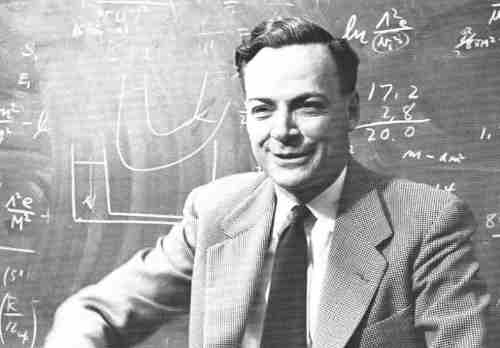
His teaching abilities translated into various lessons on how to learn.
The most famous technique involves four steps.
- Identify a concept, topic or subject you want to learn
- Explain it to a child
- Review and refine your understanding in light of the difficulties encountered in step 2
- Organise and consolidate your notes, and review them regularly
In the first step, we take notes, gather material and study it.
The second step is the heart of the Feynman technique, the ultimate test of whether you have understood what things mean:
can you explain it to a child in a way they understand?
Or, alternatively, to someone completely unfamiliar with the subject: a parent, grandparent, and so on...
When explaining concepts to a child, we need visual support (drawings, sketches, pictures) and simple words rather than jargon. The aim is to be simple but rigorous.
After step 2, we analyse where we had difficulties explaining things. These are usually also the topics we understood least well.
We go back to studying to grasp the essence of the concepts better and explain them again simply.
Finally, after several rounds of refinement, we consolidate what we have learned by reorganising our notes.
For Feynman, the secret lay in understanding the true essence of a concept rather than simply knowing its jargon and terminology.
“If you cannot explain it simply, you do not understand it well enough.” (Albert Einstein)
In the following video, Bill Gates explains why he considers Feynman the best teacher he has ever had. It includes short clips of the physicist explaining Kepler or how fire starts.
Empathy and imagination
A technique used by many great scientists to understand complex phenomena is empathy.
Feynman and Einstein were two great practitioners of this technique.
Here empathy does not mean putting yourself in another person's shoes. Instead, using imagination, you put yourself in the shoes of the phenomena you want to understand.
Feynman imagined himself as atoms, molecules and all his theoretical models.
The anecdote about Einstein imagining himself riding a beam of light is famous.
Take notes with pen and paper and put the computer aside
Today, if we walk into many university classrooms, all the students attend lectures and take notes on their laptops.
The obvious question is: does using a computer during lectures help learning?

Research into laptop use in lectures had previously shown lower effectiveness due to multitasking and students' loss of concentration caused by distractions (for example, checking the content of a social media notification).
To answer this question, several studies were carried out at various universities. The most frequently cited are those from Princeton and the University of California.
The experimental protocol randomly assigned laptops to students for taking notes during lectures, then measured their understanding afterwards using a standard test.
The students were all digital natives accustomed to using laptops, and they could not access other applications that might distract them.
All the studies, across different faculties, produced the same answer:
understanding of the lecture was greater among those who used pen and paper instead of a laptop!
Those who took notes on a computer scored lower on the test on average.
More specifically, these students performed worse on conceptual questions than students who took notes by hand.
Those taking notes on a laptop transcribed lectures verbatim rather than processing information and rephrasing it in their own words.
The researchers inferred that, because students can type faster than they can write, what the lecturer says passes directly from their ears to the laptop through their fingers, without stopping in the brain for processing and preliminary digestion.
By contrast, students who write by hand must process, rephrase and condense what professors say to keep up with the lecture.
We can therefore summarise that taking notes with pen and paper is fundamental to learning for two main reasons:
- the physical storage of what is being learned
- the cognitive encoding of that content
After taking notes on paper, we can later transfer what we have written to our computer, potentially applying another level of cognitive encoding.
The studies therefore found that using a laptop is more effective for storage, but has a negative effect on the encoding process.
The same phenomenon occurs at work. It is worth taking both a laptop and a notebook to meetings, using the latter to take notes or write down our reflections (with the added benefit of the ease of expression a pen on a blank sheet offers, which can increase our creativity).
The negative side effect is paper use, but if we are resourceful, we can draw on the abundant supply of scrap paper available in offices and every home.
Clearly, it depends on the circumstances. If we are studying a programming language or any subject that requires computer processing, it is fairly obvious that we cannot do without a laptop.