A worker asked his supervisor, "Can I eat a sandwich while I work?" The supervisor said no. The worker thought about it and next time asked, "Can I work while I eat a sandwich?" This time the supervisor agreed.
This is an amusing example of framing: humans choose partly according to the context in which an option is presented, violating the principle of complete rationality.
Stracchino cheese has 25% fat -80% fat.
Roger Dooley's Brainfluence gives two shampoo offers: A, 33% off; B, 50% extra product free. At the same displayed price, which would you choose? Less spending or more product? – thewebpsychologist.com. If you chose B, you are in good company. Even when the total numerical benefit is identical, we show a marked preference for the option that makes us believe we got more for the same money. This strategy specifically produced a 71% sales increase; now that you know it, you can consider applying it to your online business.
There are several framing techniques; one interesting example concerns the perceived benefit of a promotion.
For example, a PC costing €600 can have the same discount expressed in two ways: 20% off or €120 off.
Research has shown that customers will be much more interested in the second option.
This effect is called "the rule of 100".
Benefits below €100 are more attractive as percentages, while above €100, stating the discount amount works better.
Conversely, for a €10 product, saying 20% off is more effective than saying €2 off.
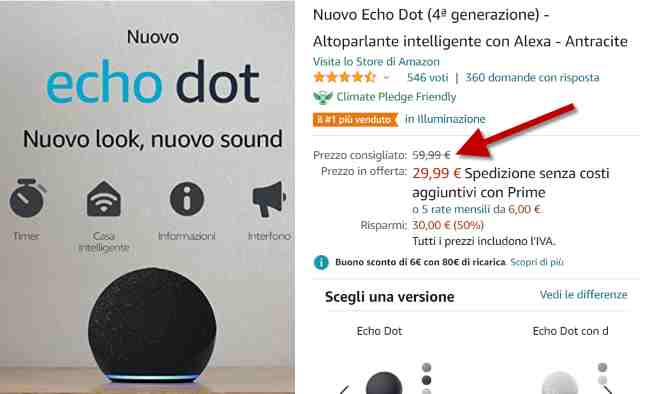 Amazon makes extensive use of psychological pricing and anchoring