
What is a nudge?
To understand it, imagine having to solve a very practical problem: keeping an airport’s toilets cleaner. Thousands of people pass through every day and, whenever someone misses the target, the result is dirty facilities and more work for the cleaners.
Is there a way to encourage everyone to take a little more care? Sometimes a fly can help.
A fly drawn on the porcelain. This is the famous example of the urinals at Amsterdam Schiphol Airport described by Richard Thaler and Cass Sunstein in their book Nudge. That tiny target catches the eye and encourages better aim.
The suggested action is simple, and the benefit is shared: a cleaner toilet for those who use it and those who look after it (the benefit was an 80% reduction in "spillage"👏).
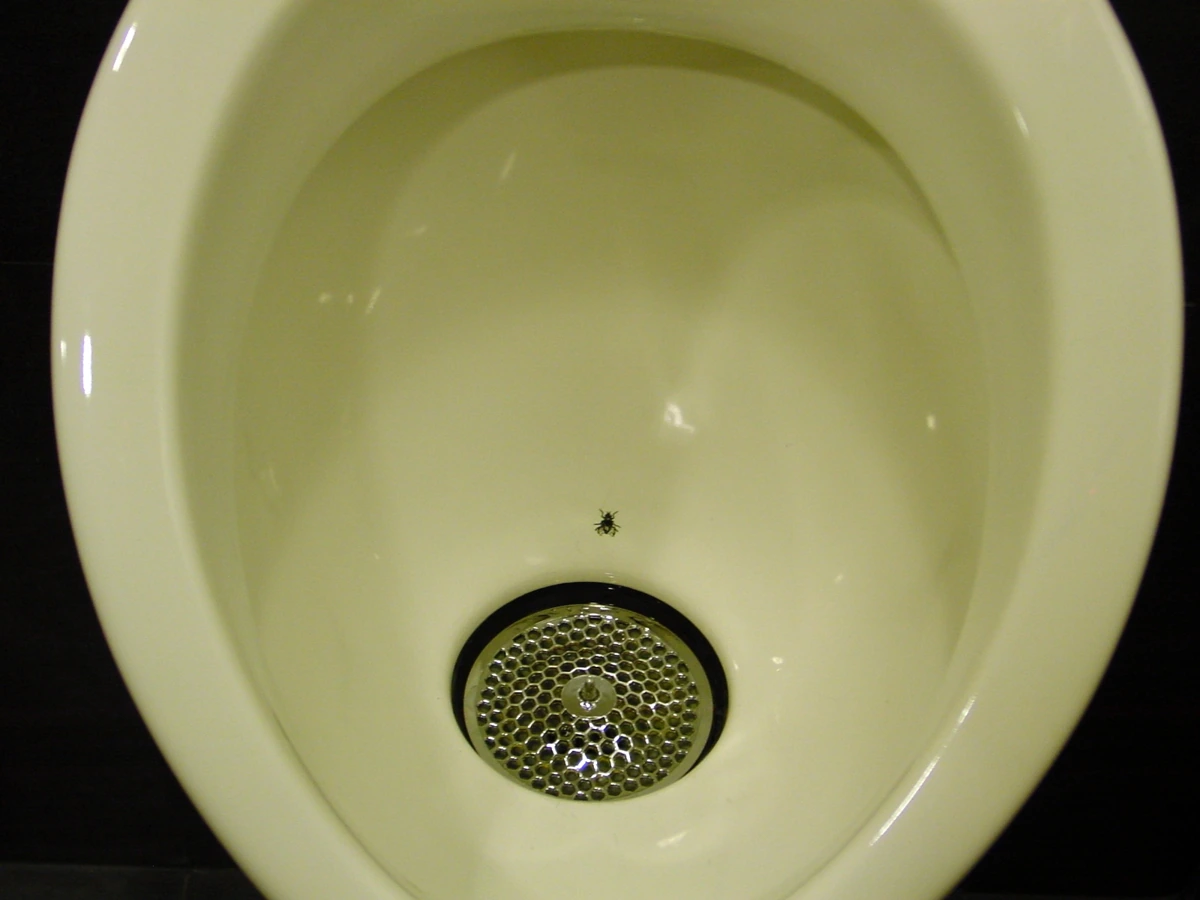
This is an example of a nudge: a “gentle prompt”.
Nobody forces you to behave in a certain way, promises you a reward or threatens you with a fine. The setting itself suggests what to do. The fly catches your eye and makes a small adjustment feel natural.
Think of a canteen, too. If fruit is at eye level and easy to reach, people are more likely to notice and choose it. Desserts can remain available: what changes is how you encounter the alternatives.

This is the work of choice architecture, the design of the setting in which we make decisions.
More precisely, a nudge steers behaviour without banning options or significantly changing economic incentives. Choosing differently must be easy and inexpensive. A substantial discount works through price; a nudge works through details such as visibility, convenience or a preselected option.
A basketball hoop attached to a laundry bag can turn tidying up into a small challenge. In the video that follows, a boy shoots his clothes through the hoop, which channels them into the bag; his mum can then collect them for washing.
The boy gets the pleasure of scoring a basket. The person doing the laundry benefits from finding the clothes gathered together. It is a playful way to encourage useful behaviour, consistent with the logic of nudges.
Richard Thaler, Cass Sunstein and the origins of nudge theory
Have you ever spent a refund more freely than your salary?
Or put off saving money when you had planned to?
Richard H. Thaler has devoted his work to understanding these apparent contradictions, among others. He is an economist and a leading figure in behavioural economics, which studies economic decisions by taking account of how people actually think and behave. In 2017, he received the Nobel Prize for his contributions to this field, of which nudges are one part.
Take that refund. Its value is no different from the money in your salary, yet in your mind it may end up in a different drawer: the extras you can spend without thinking too hard. Thaler calls this mechanism “mental accounting”. He has also studied why immediate satisfaction can take precedence over future plans, and how our sense of fairness influences economic choices.
In 2008, Thaler published Nudge with legal scholar Cass R. Sunstein.
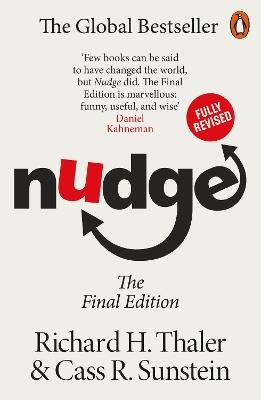
The book brings these ideas into everyday life: how can we organise choices so that making good ones becomes easier?
Daniel Kahneman and Amos Tversky’s research on judgement and decision making is part of the foundation of this approach. Thaler and Sunstein give it a framework and introduce it to a much wider audience.
The two authors call it “libertarian paternalism”: suggest a choice that helps someone, while leaving them free to refuse.
The question of who decides what is best for others always remains open🤔.
How to use nudges in marketing
But which way should we nudge?
That is a fundamental question, especially when we think in terms of marketing and business. For Richard Thaler and Cass Sunstein, the aim is to help people make better choices according to their own interests. A business may benefit too, but the seller’s advantage alone does not make a nudge a good one; indeed, in that case we move from gentle prompts to dark patterns😮.
In marketing, nudges can be used to improve the customer experience or as an engagement tool.
For example, if the brand does something positive for society or the individual (such as getting them to do some exercise that benefits their health). In practice, the brand uses the halo effect and tries to transfer the positive mood generated by the experience onto itself.
Let’s look at a few famous examples.
Volkswagen: stairs that become a piano
If a staircase played a note with every step, would you want to try it?
That was the idea behind the musical stairs in The Fun Theory, the campaign launched in 2009 by Volkswagen Sweden. A staircase in the Stockholm underground was turned into a keyboard: climbing it also meant producing a sequence of sounds.
Curiosity gave people another reason to move. The brand became part of the story through an experience people could enjoy and share.
It is an example of experiential marketing close to the logic of nudges, where fun makes a useful action more appealing.
Bins that engage people
Throwing away rubbish can be as much fun as shooting dirty socks through a basketball hoop.
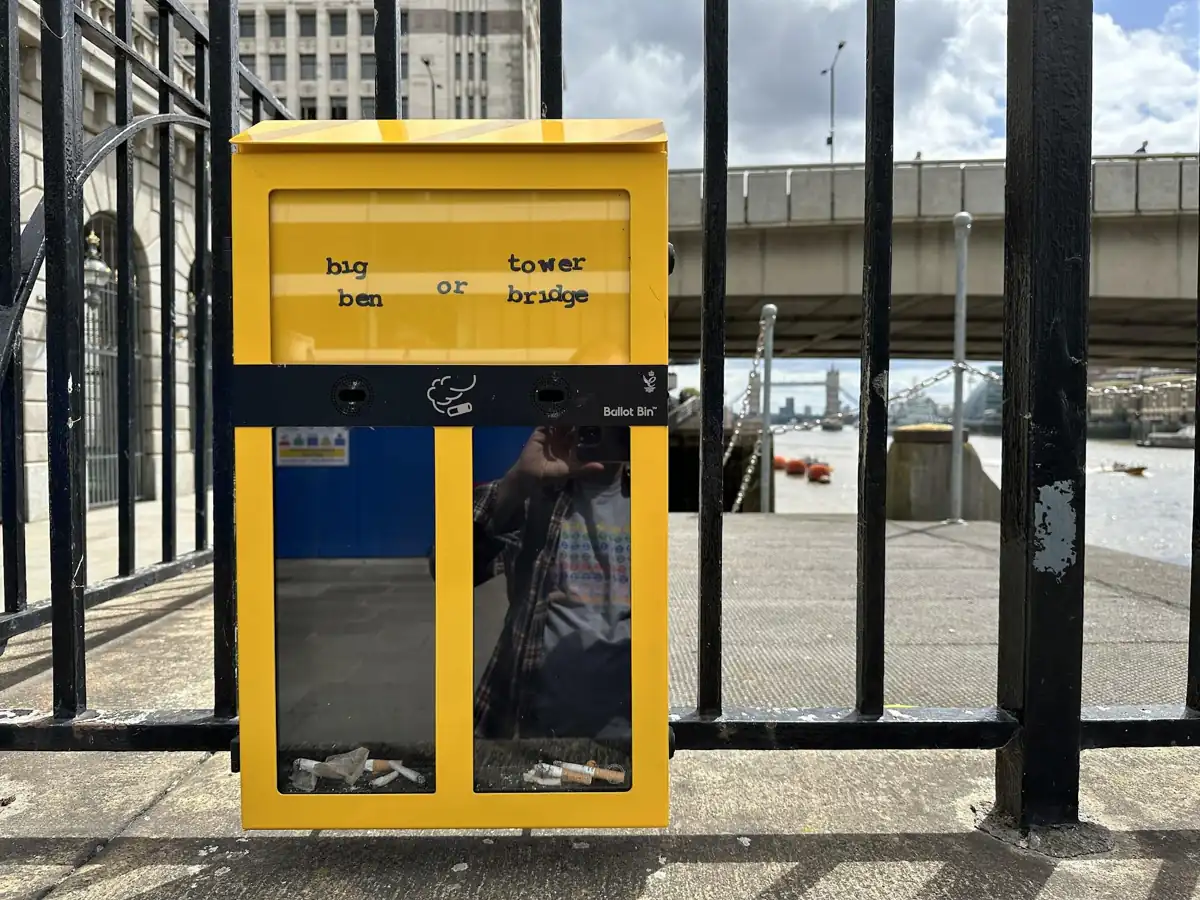
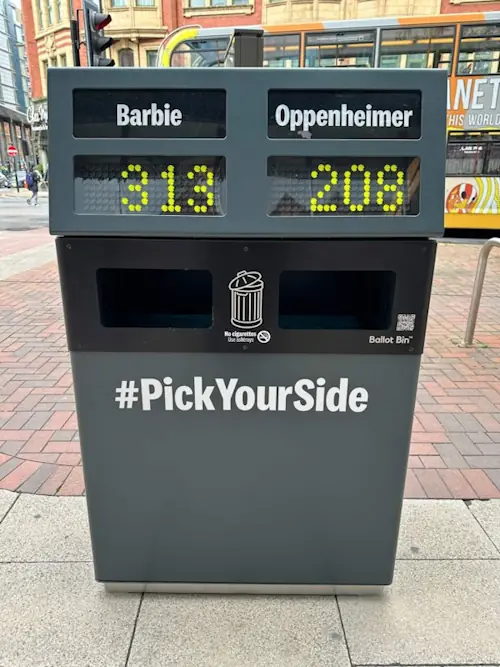
Do you prefer Big Ben or Tower Bridge? Barbie or Oppenheimer? To answer, simply choose where to put your cigarette butt or rubbish.
Hubbub’s Ballot Bin is an ashtray with a question, two answers and two compartments. An ordinary action becomes a vote, and the collected cigarette butts make participation visible.
With the Pick Your Side campaign, Hubbub and KFC brought a similar approach to general waste using Big Ballot Bins. Passers-by could join in a small game and help keep public spaces clean. This gave the brand something practical to offer people.
To assess the results, we need to distinguish between litter actually prevented, attention paid to the campaign and any benefits for the business.
Default options
Designing a useful nudge
To design a nudge, it is best to start with a practical scenario.
Where does the customer experience get stuck? What would someone like to do but finds inconvenient, unclear or easy to forget? What positive behaviour do we want to encourage?
Once you have identified the problem, you can choose whether a visual cue, a reminder, a default or an element of play might help.
Imagine, for example, a detergent cap with the correct dose immediately visible and clear markings for different loads.
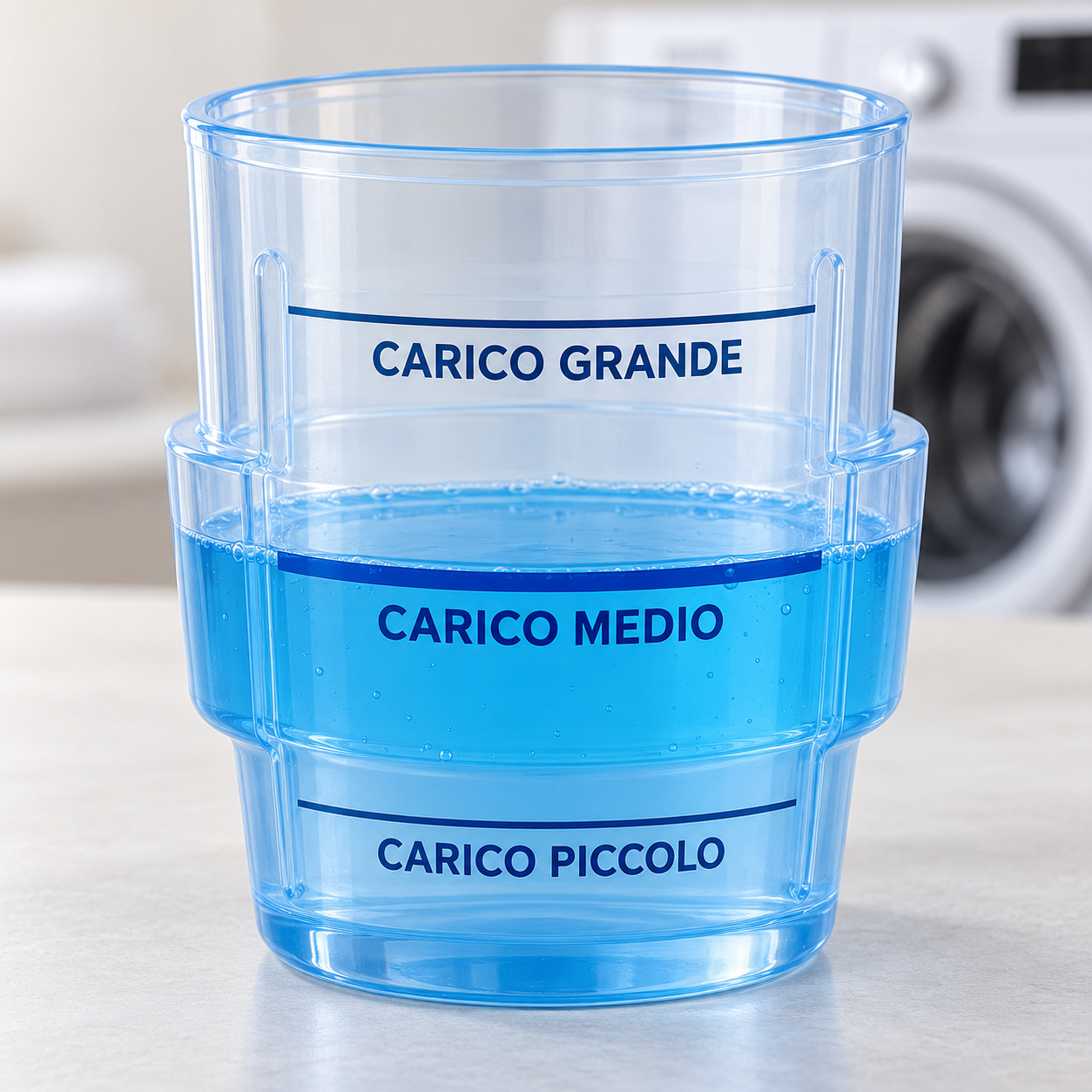
Customers could pour the amount they need, avoiding overdosing.
Clearly, tests are needed to understand how customers perceive it.
But this is a case where there is a benefit for society (less pollution) and a benefit for the customer (less waste and money saved). For the business, a possible short-term disadvantage is offset by the return from providing greater value to the customer.