
Every new tool changes the rules of the game. The most obvious change is speed: we do something we already knew how to do, only faster. But the most important change, in my view, is in our perspectives and goals.
When what we can do changes, so does what we can imagine. A lever allows us to lift a weight we could not move with our arms alone. Writing lets us preserve and pass on knowledge beyond the limits of our memory and our lifetime. By building tools, human beings have found ways to extend their physical and intellectual abilities.
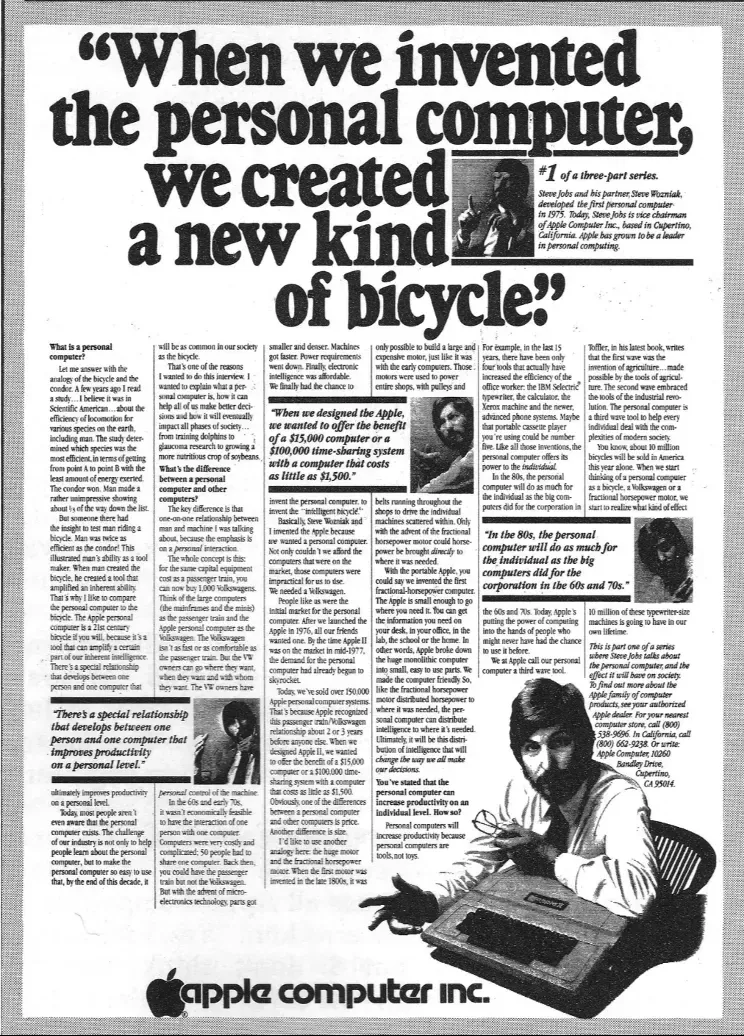
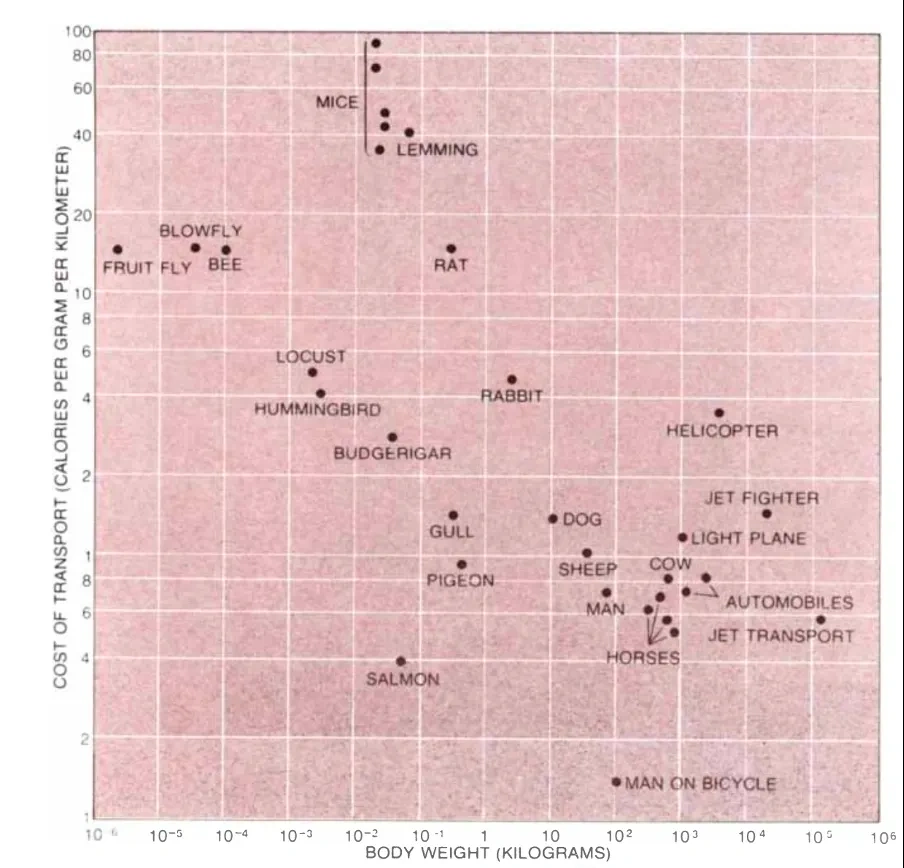
Steve Jobs explained this relationship through a story. He spoke about a study published in Scientific American comparing the energy efficiency of movement across animal species. In his account, the condor came out on top, while a person on foot was nowhere near the lead. Then someone thought of adding a person on a bicycle to the comparison. And the result was reversed (see the chart and details further down the article).
This was the idea behind his description of the computer:
A bicycle for the mind
Steve Jobs, on the computer
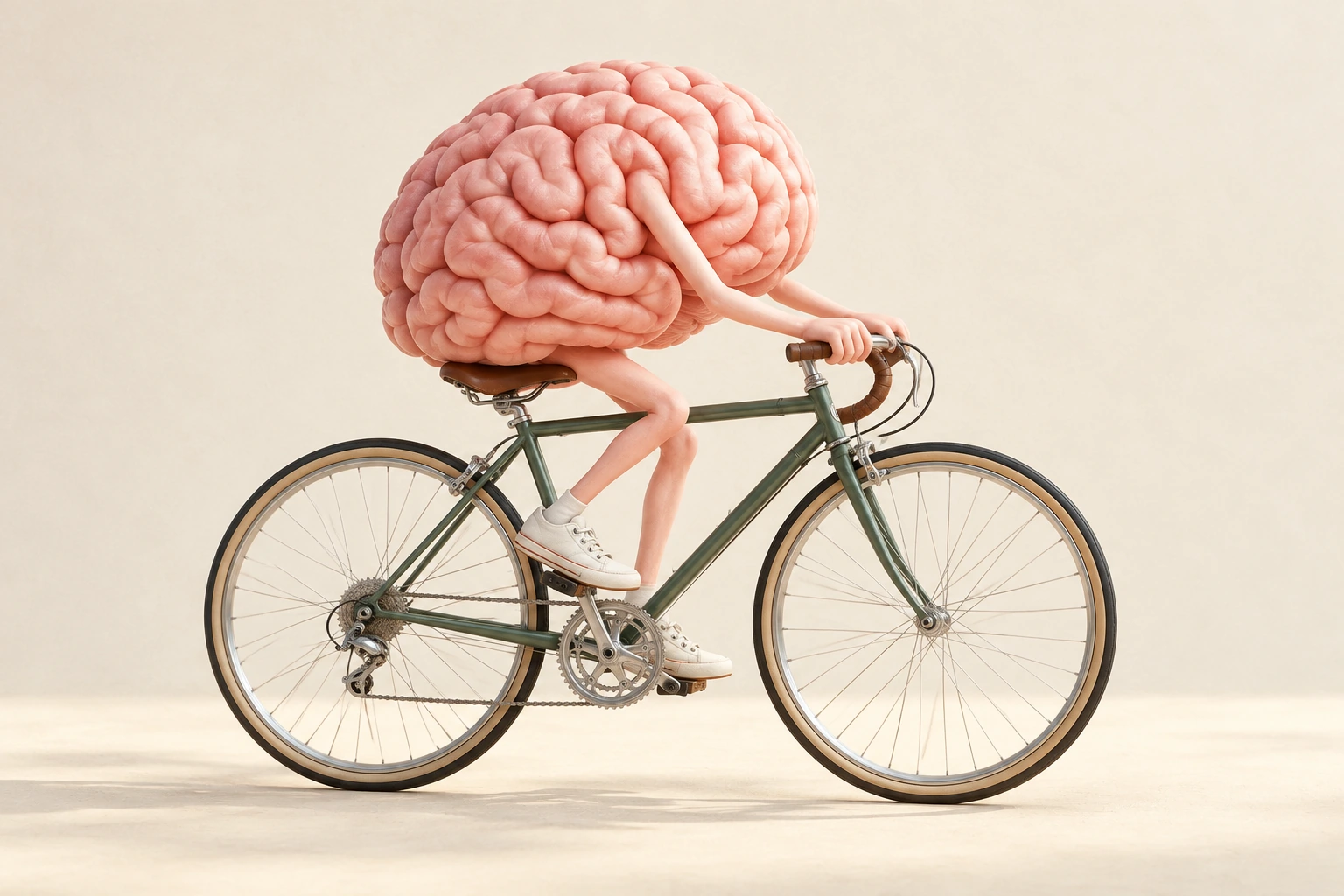
The power of that image lies in the combination of person and tool. The bicycle makes better use of the rider's energy; the computer amplifies our ability to process information. Those capabilities open up activities that were previously beyond our reach: from publishing a newspaper to making a film, or working with people on the other side of the world.
Out of curiosity, I tracked down Bicycle Technology by S. S. Wilson, published in Scientific American in March 1973. The condor does not appear in the chart: the salmon is the most efficient of the animals shown. The comparison measures energy consumed relative to weight and distance travelled; the person on a bicycle does better than the salmon too. Why Jobs mixed them up remains uncertain, but the meaning of his metaphor is unchanged.
What would Steve call AI today?
With artificial intelligence, this process continues. Think of an idea we had put aside because bringing it to life required skills, time or resources we did not have. AI can help us explore it, build an initial version and put it to the test. A project we had ruled out can become something we decide to invest in.
For me, this is where the most interesting part of our relationship with technology lies: in the opportunity to question the limitations that have shaped our goals. To seize it, we need to be willing to experiment, including beyond the activities we already know.
Sometimes the right tool is all it takes to pick up the pace and get further than we thought we could, as the little tortoise in the following video shows us😉
Human beings have relied on tools since the dawn of time. With the same tool, some have hurt themselves while others have helped society move forward. As always, we are the architects of our own future 🤗