
OpenAI has launched ChatGPT Wallet for its AI agents, “dots”: a digital wallet that lets an agent pay for purchases on our behalf. Wallet was developed in collaboration with American Express, Chase, Mastercard and Visa.
Let’s take a step back. Dots, introduced at DevDay in September, are always-on agents launched with GPT-6 Astra: each has its own computer and browser in the cloud and can access more than 4,000 connected apps. They could already find products, compare prices and fill a basket. The final step was missing: paying. That is what Wallet adds.
🔐 How ChatGPT Wallet works
You save a card in Wallet. When the dot reaches checkout, it shows a summary with the retailer, items, total, selected card and any shipping or recurring payment terms. We approve it with a security check, such as biometric verification using Face ID or Touch ID. OpenAI’s demo video shows the move from conversation to approval.
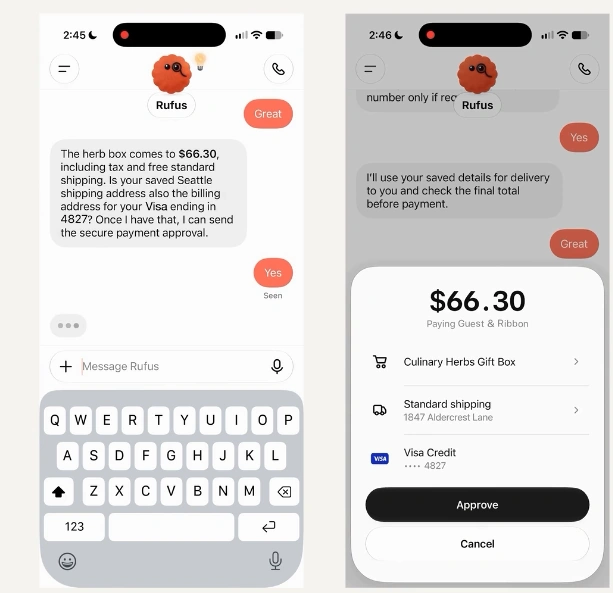
The real innovation lies in what happens next: the dot never receives the actual card details, because the payment network supplies a token for the authorised purchase. Tokenisation replaces the card details with dedicated payment credentials. Neither the agent nor the retailer sees the real card number.
You also retain your card rewards and protections for eligible disputes. For now, OpenAI does not take a commission on transactions.
🚧 The current limits
Access at launch is very limited. The service is restricted to adult Pro subscribers in the United States with an eligible US-issued card. It works in conversations with a dot, rather than ordinary chat, Work or Codex. Spending limits and pre-approved purchases are still missing: every payment requires manual confirmation.
Then there are the retailers. Some are wary of personal agents and some have opted out, while others unintentionally block them with their anti-bot systems. OpenAI has therefore published a Commerce Partner Playbook, a guide asking businesses to configure their CDNs and firewalls to recognise agent requests signed using Web Bot Auth.
This is not the first attempt: Instant Checkout, launched with Stripe in September 2025, aimed to let people complete purchases directly inside ChatGPT, but saw limited adoption.
🔮 From assistant to agentic commerce
We are entering the era of agentic marketing and agentic commerce: commerce in which an agent buys on a person’s behalf. ChatGPT has more than 1.2 billion weekly active users and almost 100 million paying subscribers. It is already where many people research their purchases. Now it wants to become the checkout too.
The first hurdle is getting e-commerce businesses to welcome agents and recognise their purchases. The second step is pre-authorised buying. OpenAI expects users to be able to delegate purchases entirely to their agent, setting clear parameters such as spending limits, product categories or time periods.
Think of something like: “Buy more coffee when it’s running low, up to €30 a month.” This is the kind of delegation that could make an agent part of our shopping habits.
At that point, a great deal changes for online retailers. The site’s “visitor” will increasingly be an agent reading structured data, prices and availability, and assessing offers against the request it has received.
How websites will interact with agents
Websites and online shops will need to learn to interact with agents through different tools, each serving a purpose:
- Structured data, such as Schema.org markup, helps make information about products and offers understandable.
- The emerging WebMCP standard exposes structured, machine-callable actions to agents, avoiding the need to scrape HTML or simulate clicks.
- Commerce protocols such as ACP (Agentic Commerce Protocol) and UCP (Universal Commerce Protocol) organise purchase-related interactions.
- AP2 (Agent Payments Protocol) addresses authorisation for payments made by agents.
For now, however, ChatGPT Wallet does not require a retailer to adopt one of these protocols. The dot visits the normal website in its browser, reaches the standard checkout and pays using the token. That is why OpenAI’s Playbook primarily asks retailers to avoid blocking the agent, recognise it through Web Bot Auth and work with their payment and fraud prevention providers.
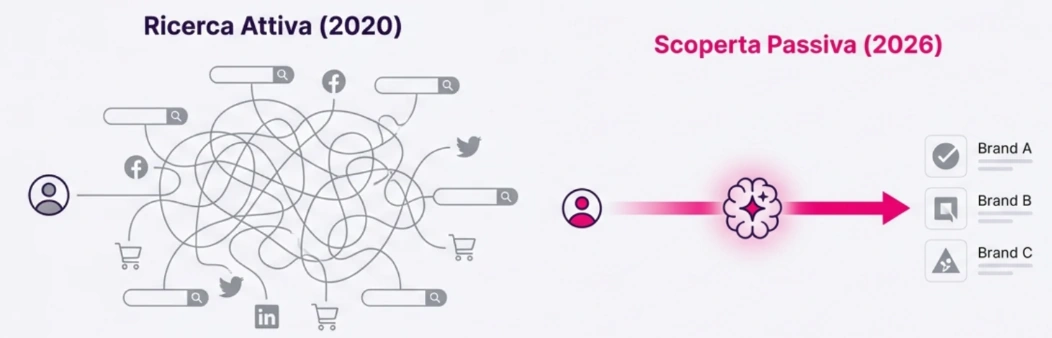
The customer journey is set to change profoundly over the coming years, but in very different ways depending on the market, brand and shopping experience. In many scenarios, I expect a dialogue between the customer’s and the brand’s agents that leads directly to a purchase.
Marketers, and others too, should study these developments carefully, because there will be no single recipe for every product and service.