
On 12 November 2026, NVIDIA announced Jensen Huang’s resignation as president, CEO and board member, effective immediately. Formally, he resigned. My reading is that he was forced out: the Wall Street Journal had just reported that the board was preparing to remove him, and CNBC had confirmed that directors were meeting to decide whether to do so. Huang moved first, and the board accepted his resignation on 11 November. CFO Colette Kress has taken over as interim CEO.
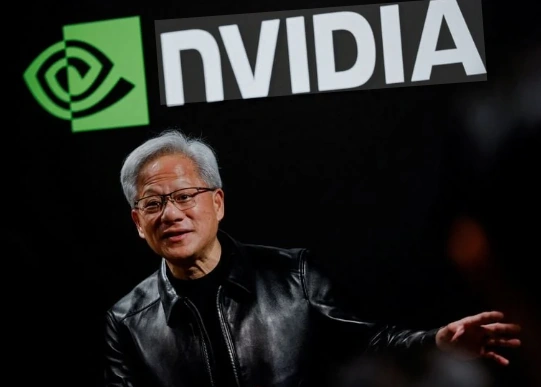
From private life to national security
Let’s start with one point. Extramarital affairs are not the issue: if they were the criterion, half the world’s top executives would have to resign 🤣🤣. Jensen certainly seems to have been busy.

The point is who the woman he was involved with was. Alice Huang, who is not related to Jensen, is a Chinese citizen and former executive at Megaspeed, a Singapore company that became an NVIDIA Cloud Partner, an authorised reseller of NVIDIA computing capacity. According to press reports, US authorities have been investigating Megaspeed and Alice Huang since 2024 over concerns that export controls, the rules restricting sales of advanced AI chips to China, were being circumvented.
Press accounts of US intelligence assessments suggest she may have ties to Beijing. These are suspicions, not an established finding of espionage; Singapore has stated that it has never investigated her for that offence.
When the CEO of the most strategically important company in AI has a relationship of this kind, it becomes a matter of national security.
Key-person risk: when a company depends on its founder
Huang founded NVIDIA in 1993 and owns 3.58% of it: he is its largest individual shareholder, with a stake worth around $135 billion at the prices considered here. He has lost his job, but not his shares.
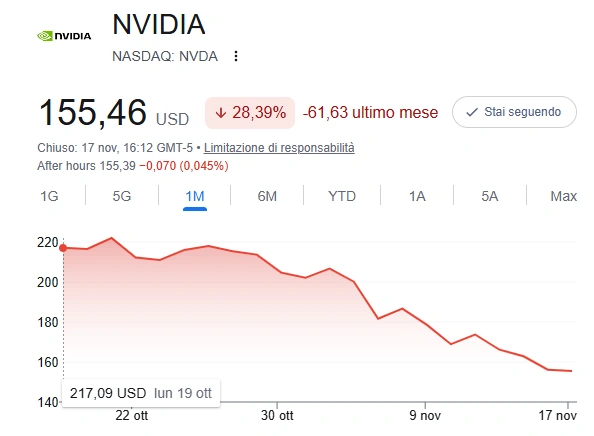
From the first reports to his departure, the shares fell sharply. On Tuesday 17 November, NVIDIA closed at $155.46, its lowest level since June 2025; in October it had reached $239.24. This is key-person risk, the risk that a company’s value depends on a single person, and this case has made it very clear.
Other scenarios are already being imagined. When someone on X asked Elon Musk to hire him, Musk replied that it would be an honour. It is also easy to imagine a role at Google or another major AI company.
A return like Sam Altman’s?
Three years earlier, on 17 November 2023, another figurehead of AI was shown the door. Remember the famous OpenAI episode, when the board dismissed Sam Altman? He went out through the door and came back through the window just five days later!
Personally, I think exactly the same thing could happen with Huang. It might take a little longer.
Many people want him back at NVIDIA. At the time of writing, a petition has passed 186,000 signatures, including Elon Musk’s; Travis Kalanick and Shopify CEO Tobias Lütke have also signed. There is support from the White House too: Trump said he would not mind seeing him return, although Treasury Secretary Bessent has called for a drastic shake-up.
Inside the company, an internal post has attracted more than 1,600 comments, several calling for his return. According to the Financial Times, Huang is considering a comeback and discussing it with allies.
For completeness, the Wall Street Journal’s account also deserves attention: it describes a controversial corporate culture that allegedly treated the Huang family like royalty, reporting accusations of abusive behaviour towards other executives. This is another part of the story to consider, while keeping press accounts distinct from established facts.
The financial results and the board’s response
Then, overnight on 17–18 November, came the results for the third quarter of fiscal 2027, and the numbers speak clearly. NVIDIA reported revenue of $115.8 billion, up 103% year on year, above both analysts’ estimates of around $109 billion and the company’s own forecast of $108 billion.
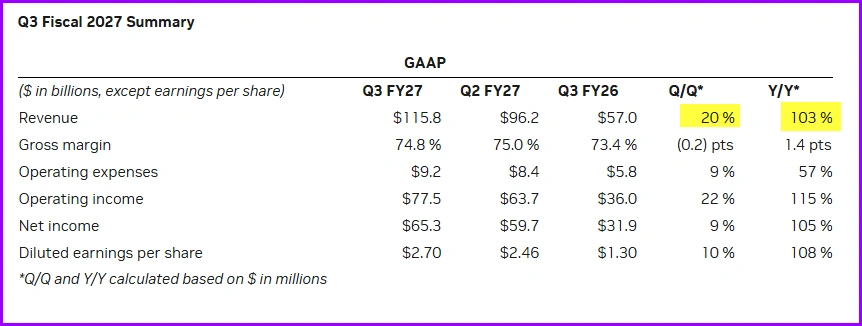
Data centres, meaning sales of AI chips and systems, alone account for $107.6 billion, up 110%. NVIDIA expects $130 billion in revenue for the following quarter, excluding any data centre compute revenue from China, and has raised its fiscal 2028 revenue growth forecast to around 75%, from 70%. Interim CEO Colette Kress spoke of “business as usual”, and the shares rose almost 5% in after-hours trading.
The interesting news came at the start of the analyst call. A few hours earlier, Huang had written on X that he had fallen short of the standards expected of everyone at NVIDIA. He said he was ready to cooperate with the investigation and would be honoured to return as CEO if the board judged it to be in the interests of shareholders, employees, the company and America.
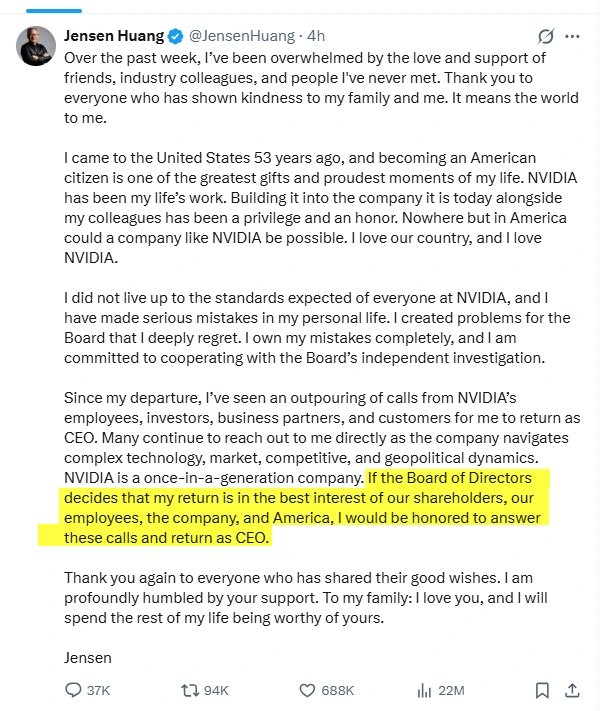
The response was firm. New chairman Harvey Jones said the board had unanimously accepted the resignation and did not intend to reinstate Huang as CEO. He also declined questions about the circumstances of the resignation and the ongoing investigation.
According to the summons reported in the press, Huang is due to appear behind closed doors before House committees on 1 December, and the Senate has requested a public hearing on 3 December. Chip exports to China are at the centre of it. This will be the real test: if he emerges cleared, the door the board has closed might reopen.
The leadership gap Huang leaves behind
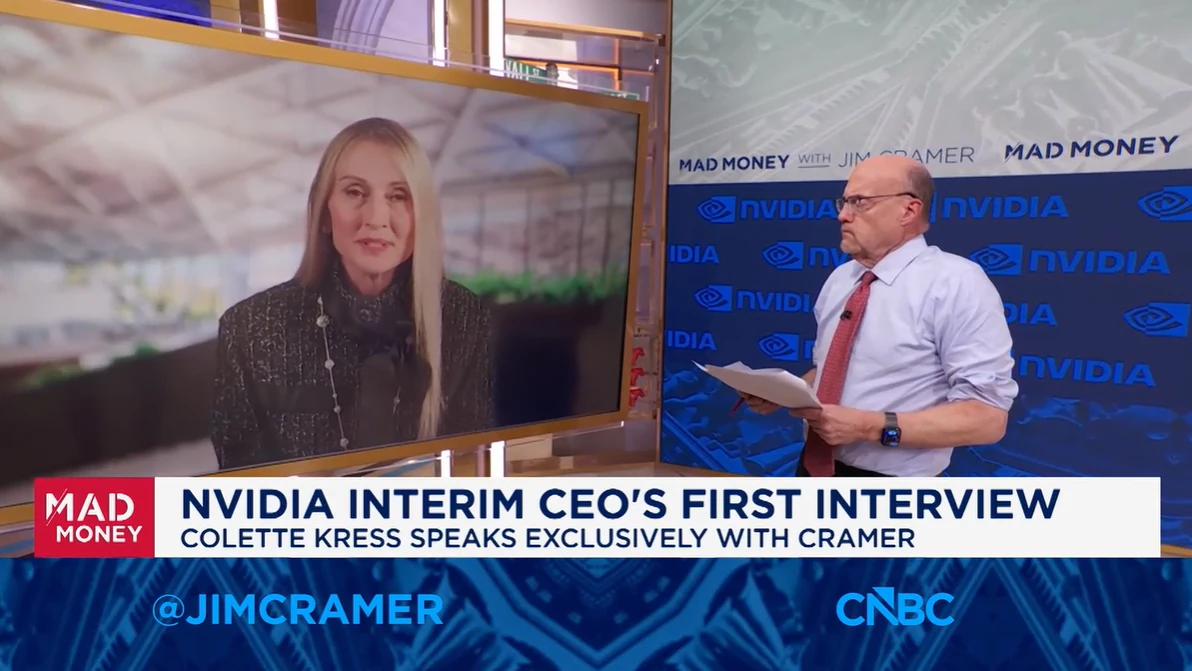
The interviews with interim CEO Colette Kress give me the impression of a capable, well-prepared CFO focused on defending the numbers. I find it harder to see the vision of someone setting the direction. This is the gap Huang leaves. As often happens in these situations, I think a lack of vision and enthusiasm will exact its price over the medium and long term.
I think that, once the storm has passed and if it is established that NVIDIA’s secrets have not ended up in Beijing, bringing him back will make sense for everyone’s benefit. Failing to do so would be madness.
I say this for the company and its employees, but above all for an AI market that constantly sees a bubble around the corner and needs stability more than further shocks. NVIDIA is the engine of the entire sector, and that engine has now lost the driver who built it—who, incidentally, remains its largest individual shareholder and whose children still work at the company.
BTW, for a bit of fun, I bought some NVIDIA shares in the past few days, effectively betting on Jensen’s return and the financial results 😉🤞.